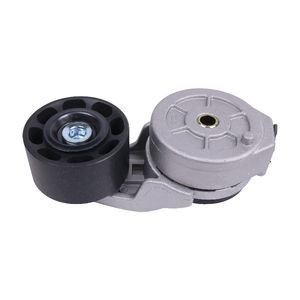
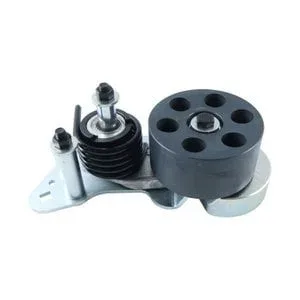
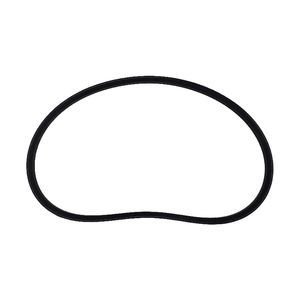
Matched Drive Sets — This tensioner ships verified against the specific Cummins engine serial variant and serpentine belt routing of your rebuild.
Technical Specifications
| Parameter |
Value |
| Part Number |
3976832/3911621 |
| Product Type |
Belt Tensioner |
| Cross-Reference |
3976832, 3911621, 3937556, 3936207, 3934823, 3922901, 3973825, 3936208, 3934824, 3928748, 3279446, 4063951 (reference only) |
| Machine Fitment |
Hyundai R305LC-7, R290LC-7, R290LC-3, R250LC-7, HL757-7, HL740-9B, HL740-9S, HL760, HL740-3, HL740TM-3, HL750TM, HL720-3C, HL730-3, HL730TM-3, HL7303C, HL730TM3C, HL740-3ATM, HL740TM-3A, 42HDLL, 39HDRB, HDF35AII, HDF45AII; M939, M939A1, M939A2, M923, M931, M936, M925 series |
| Brand Compatibility |
Compatible with Cummins and Hyundai engine platforms |
| Housing Material |
Die-cast aluminum alloy (A380) with T6 heat treatment |
| Pivot Shaft Material |
42CrMo steel (HRC 48–52) |
| Spring Material |
ASTM A228 music wire torsion spring |
| Surface Treatment |
Chromate conversion coating (MIL-DTL-5541 Class 3) |
| Mounting Tolerance |
CNC-machined bolt holes ±0.05 mm |
| Assembly State |
Complete unit, ready to install |
| Condition |
New Aftermarket |
| Warranty |
3–12 months against manufacturing defects |
| MOQ |
1 piece |
| Standards |
ISO 9001, SAE J2044, ISO 10002, MIL-DTL-5541 Class 3 |
Application Suitability
| Engine System |
Related Components |
| Front-End Accessory Drive (FEAD) |
Serpentine belt, idler pulleys, alternator, water pump, cooling fan |
| Cummins 4B3.9 / 6B5.9 Overhaul |
Timing components, vibration damper, belt guards, tensioner bracket |
| QSB5.9 Rebuild with Prior Work |
Oversize bearings, matched piston sets, updated gasket profiles |
| Hyundai R-Series Excavator Engine Bay |
Fan drive assembly, A/C compressor clutch, power steering pump pulley |
| Military Logistics Vehicle Powerplant |
Heavy-duty alternator, dual-belt configurations, auxiliary drive components |
When the Wrong Tensioner Variant Reaches the Bench
A belt tensioner that doesn't match the engine serial prefix or previous rebuild state fails within hours of startup.
Every Cummins 4B3.9, 6B5.9, and QSB5.9 engine has specific FEAD bracket geometry and belt routing requirements. Installing a Belt Tensioner for Cummins engine rebuild / replacement without verifying the CPL number and engine serial variant leads to premature belt slippage, accessory drive failure, and destroyed new belts [NEED_CITE: Cummins FEAD configuration variations by serial prefix]. Rebuild shops that skip the variant check often face comebacks where the root cause was misalignment from the wrong tensioner arm length.

System-Level Matching for Cummins 4B/6B/QSB Platforms
The front-end accessory drive is an integrated system. This Belt Tensioner for Cummins engine rebuild / replacement must match the serpentine belt routing, pulley count, and accessory load of your specific engine build. A tensioner designed for a three-pulley system cannot maintain correct tension on a five-pulley layout, causing rapid wear on the tensioner bearing and adjacent components.
Addressing Root-Cause Failures Before Installation
When a tensioner fails prematurely, the fault often lies in misalignment, worn idler pulley bearings, or bracket fatigue—not the tensioner itself. Inspect all adjacent pulleys for axial play, check the tensioner bracket for cracks or deformation, and verify belt alignment with a straightedge before installing the replacement unit [NEED_CITE: FEAD diagnostic procedures for belt-driven accessory systems]. Replacing only the failed component without diagnosing the system fault guarantees repeat failures.
Material Specifications That Affect Service Life
The die-cast A380 aluminum housing with T6 heat treatment provides dimensional stability under the thermal cycling typical of diesel engine bays. The 42CrMo steel pivot shaft hardened to HRC 48–52 resists wear at the bearing interface, while the ASTM A228 music wire torsion spring maintains consistent tension across the operating temperature range. CNC-machined mounting holes held to ±0.05 mm ensure correct alignment with the bracket bolt pattern.

The Cost of Overlooking Superseded Numbers
Cummins has issued multiple part number revisions across the 4B/6B/QSB platform generations. A tensioner listed under an obsolete number may physically bolt on but position the pulley outside the correct belt plane. This misalignment destroys belts, damages alternator and water pump bearings, and forces teardown of components that were functioning correctly before the incorrect tensioner was installed [NEED_CITE: Cummins part number supersession and interchange documentation].
Why Rebuild Shops Source Here
This facility produces selected part lines in-house and sources the remainder from ISO-certified manufacturing partners, with both channels carrying identical warranty terms. Eight product categories mean tensioners, belt kits, gasket sets, and overhaul components ship as one consignment under one account. The technical team verifies cross-references against superseded and alternate numbers before dispatch. Sample units are available for fitment confirmation before bulk commitment on fleet-standardization programs.
Documentation & Verification
- Commercial invoice and packing list with part numbers and quantities itemized
- Cross-reference sheet showing all superseded OEM numbers (reference only) and verified alternates
- Dimensional inspection record covering bolt hole spacing, pulley offset, and arm travel
- Warranty certificate stating coverage period and manufacturing defect terms
- Packing photographs showing unit condition and protection before crate closure
- HS code classification and customs documentation support for international shipment
Installation & Rebuild Sequence
- Clean the tensioner bracket mounting surface and verify bolt holes are undamaged before installation
- Inspect idler pulleys for bearing play and replace any with axial movement exceeding specification
- Torque tensioner mounting bolts to engine manufacturer specification using a calibrated wrench
- Route the serpentine belt per the engine-specific diagram, ensuring no twists or misalignment
- Rotate the engine two full revolutions by hand and re-check belt tracking before initial startup
- Run the engine at idle for a break-in period and monitor for abnormal noise or belt flutter
Requesting a Fitment-Confirmed Quote
Provide the engine model, serial number prefix, and CPL number to receive a verified parts list covering the tensioner and all associated FEAD components. If the engine has undergone previous rebuild work, include that history so oversize or variant-specific components can be identified. Photos of the existing tensioner and bracket assist in confirming the correct configuration before shipment.
Frequently Asked Questions
Q: How do I confirm which tensioner variant fits my specific Cummins engine serial?
A: Provide the engine serial number, CPL number, and current part number if visible. The technical team cross-references these against Cummins platform documentation to identify the correct bracket geometry, arm length, and pulley offset for your specific build, then verifies compatibility before shipment.
Q: My engine was previously rebuilt — does that change the tensioner I need?
A: Previous rebuilds may have introduced non-standard brackets, updated belt routing, or aftermarket accessory configurations. Disclose the rebuild history and any component substitutions so the supplied tensioner matches the current engine state rather than the original factory specification.
Q: What other components should I inspect or replace when changing the belt tensioner?
A: Inspect all idler pulleys for bearing play, check the tensioner bracket for fatigue cracks, examine the serpentine belt for glazing or cracking, and verify alternator and water pump pulley alignment. Replace any component showing wear to prevent premature failure of the new tensioner.
Q: The old part number is superseded — which current number is correct for my engine?
A: Cummins has issued multiple revisions across engine generations. Provide the obsolete number along with your engine serial and CPL. The cross-reference verification covers all superseded and alternate numbers to identify the correct current configuration for your specific application.
Q: Can I get a sample to verify fitment before ordering for the whole fleet?
A: Sample units ship for fitment confirmation on one engine before bulk commitment. This verifies bracket bolt pattern, belt alignment, and pulley clearance in your specific fleet configuration, preventing costly mismatches across multiple machines.