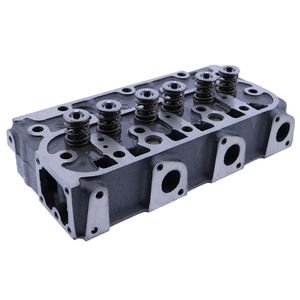
Matched Assembly — Every valve, spring, and guide installed to match V1505 serial variant specifications before dispatch.
Technical Specifications
| Parameter |
Value |
| Part Number |
1G092-03044 |
| Product Type |
Cylinder Head |
| Cross-Reference |
1G871-03040, 1G679-03040, 16062-03045, 16065-03044, 1G677-03040, 16060-03044, 1G091-03044, 1G091-03042, 1J050-03040 (reference only) |
| Machine Fitment |
Kubota B3000HSDC, B3030HSD, B3200HSD, B3300SUHSD, B7800HSD, B2910HSD, B7820HSD, KX71-3, KX91-2, F3680, F3690-AU, V1505 series variants |
| Assembly State |
Complete with valves and springs |
| Material |
Aluminum alloy |
| Deck Surface Finish |
RA 1.6μm |
| Valve Guide Clearance |
0.05-0.08mm |
| Condition |
New Aftermarket |
| Warranty |
3-12 months against manufacturing defects |
| Standards |
ISO 9001 |
Application Suitability
| Engine System |
Related Components |
| Valve Train |
Valve cover gasket, valve stem seals, rocker arm assembly |
| Combustion Sealing |
Head gasket, head bolt set, cylinder block deck |
| Fuel Delivery |
Injector nozzles, injector return lines, fuel filter |
| Cooling Circuit |
Coolant passage O-rings, thermostat housing gasket |
Why Rebuild Shops Discover Mismatched Tolerances Mid-Assembly
Ordering a bare head means discovering after teardown that the previous rebuild left oversize guides or non-standard seats that no longer match catalog specs.
Engine rebuild shops handling Kubota V1505 variants regularly encounter cylinder heads where a prior overhaul introduced non-standard dimensions. Valve guides bored to accept oversize stems, seats cut to non-factory angles, or spring seats shimmed to compensate for wear — none of these show up in a part number lookup. When the new V1505 Cylinder Head engine rebuild kit arrives, the shop discovers the fresh valves do not seat correctly against the block because adjacent reused components carry hidden dimensional drift [NEED_CITE: engine rebuild tolerance stack-up practices]. This complete assembly eliminates that variable by shipping as a matched top-end unit.

System-Level Supply for V1505 Overhauls
This cylinder head sits at the intersection of the valve train, combustion sealing, and cooling systems within the V1505 platform. Supplying it complete means the rebuild shop receives valves already lapped to their seats, springs compressed to verified tension, and guides held within the specified clearance band. The V1505 Cylinder Head engine rebuild approach reduces the number of separate line items on the overhaul order and removes the risk that a valve sourced separately carries a different stem diameter than the guides installed in the head.
Serial Variant Differences That Change the Build
Kubota produced the V1505 across multiple serial designations — E2B, E3B, E4B, and turbocharged T series — each with distinct port geometry, valve sizes, and combustion chamber volumes. A head cast for a naturally aspirated V1505-NA will physically bolt to a V1505-T block, but the compression ratio and valve timing will be incorrect for the turbocharged fuel map. Confirming the exact engine serial variant before ordering ensures the port layout and valve configuration match the fuel system already on the bench [NEED_CITE: Kubota V1505 serial variant identification procedures].
Machining Specifications That Matter at Rebuild
The deck surface finish of RA 1.6μm provides the sealing texture required for multi-layer steel head gaskets to maintain combustion pressure through thermal cycling. A rougher finish risks gasket fretting under load; a mirror finish prevents the gasket from gripping during heat expansion. Valve guide clearances held between 0.05mm and 0.08mm balance oil control against stem lubrication — tighter clearances cause the valves to stick when the head reaches operating temperature, while wider clearances allow oil to migrate past the guides into the combustion chamber. The aluminum alloy construction matches the thermal expansion coefficient of the V1505 cast iron block, preventing warping at the gasket interface during sustained high-load operation.
The Hidden Cost of Grade Mismatch in Top-End Rebuilds
I have worked with shops in the Yangtze Delta region that purchased cylinder heads, pistons, and bearing shells from separate suppliers for a single V1505 rebuild. The head arrived with standard guides, but the pistons carried a different oversize grade from what the block required after its previous rebore. The tolerance mismatch produced excessive blow-by within the first hours of operation, and the engine was condemned before completing break-in. A matched V1505 Cylinder Head engine rebuild supply prevents this by verifying that the head assembly aligns with the block's current bore condition and the piston grade selected for the rebuild [NEED_CITE: cylinder component tolerance matching in diesel overhaul].
Supply Capability for Engine System Orders
Production on selected cylinder head lines takes place in our own facility, while additional capacity comes from ISO-certified manufacturing partners — both channels carry identical quality control and warranty terms. Eight component categories ship under one account, so the head gasket, bolt set, valve cover gasket, and injector seals can move in the same consignment as the head itself. Minimum order starts at one piece for emergency rebuilds. Part identification works from the engine serial plate photograph when the original casting number is illegible. Cross-reference verification covers superseded and alternate numbers across the V1505 family. Sample units are available for fitment confirmation before a shop commits to bulk stock for recurring rebuild work. Technical support confirms compatibility and dimensional grade against the specific engine build on the bench.
Documentation & Verification
- Commercial invoice listing each V1505 component by position in the rebuild sequence
- Cross-reference sheet mapping all alternate numbers with reference only designation
- Dimensional inspection record covering deck flatness and guide clearances
- Warranty terms specifying coverage scope for casting and valve train parts
- Packing photographs showing protective measures for machined surfaces
- HS code and customs documentation support for international engine parts shipments
Installation & Rebuild Sequence
- Verify block deck flatness before placing the new head to prevent gasket failure
- Torque head bolts in the manufacturer-specified sequence using new fasteners
- Check valve clearance after installation and adjust rocker arms to spec
- Prime the cooling system and check for leaks at coolant passage O-rings
- Run initial break-in under graduated load to seat valves against new guides
Request a Quotation With Build Details
Provide the V1505 engine serial designation (E2B, E3B, E4B, or T series) along with any known rebuild history, including whether oversize components were used previously. This allows confirmation of the correct head variant and dimensional compatibility with the block currently on your bench.
Frequently Asked Questions
Q: What components come pre-assembled on this cylinder head?
A: The unit ships with intake and exhaust valves installed, valve springs fitted and tensioned, valve guides pressed in, and hardened seats already cut and lapped. This eliminates the need to source and install these items separately during a V1505 rebuild, reducing the risk of mismatched tolerances across the top-end assembly.
Q: How do V1505 serial variants affect which head I need?
A: The V1505 was produced in E2B, E3B, E4B, and turbocharged T configurations, each with different port sizes, valve diameters, and combustion chamber volumes. Providing the engine serial plate information allows verification that the head matches the specific fuel system and block casting of the engine being rebuilt.
Q: Should head and valve cover gaskets be replaced together?
A: Yes. The head gasket and valve cover gasket seal different pressure boundaries but share the same thermal cycling exposure. Reusing either after a head swap risks a leak that forces a second teardown. Both items can ship in the same consignment as the cylinder head for a complete top-end job.
Q: What happens if a previous rebuild used oversize valve guides?
A: Oversize guides change the stem-to-guide clearance and may require matching oversize valve stems. If the block was also rebored, piston and liner grades must be verified to avoid tolerance stack-up. Providing rebuild history allows confirmation that the replacement head matches the current dimensional state of the engine.
Q: How do I confirm the correct cross-reference number?
A: Send the engine serial plate photograph or the casting number from the original head if legible. Cross-reference verification covers superseded numbers across the V1505 family, with all OEM numbers used for identification purposes only, ensuring the correct variant ships for your specific engine build.