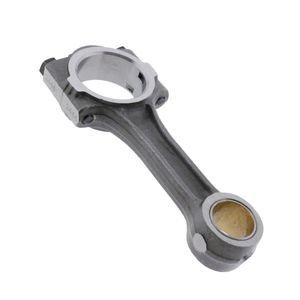
Matched Sets by Rebuild Grade — Every connecting rod bolt we ship for the D722 is verified against the engine's crankshaft regrind history, not just the part number.
Technical Specifications
| Parameter |
Value |
| Part Number |
16851-22140 |
| Product Type |
Connecting Rod Bolt |
| Cross-Reference |
16851-22140, 1685122140, 16851-2214-0 (reference only) |
| Engine Fitment |
Kubota D722 |
| Material |
High-strength alloy steel |
| Surface Treatment |
Heat treated |
| Condition |
New Aftermarket |
| Warranty |
3-12 months against manufacturing defects |
| Manufacturing Standard |
ISO-certified production |
Application Suitability
| Engine System |
Related Components |
| D722 Bottom-End Assembly |
Connecting rod bearings (STD/undersize), crankshaft journals, piston pin bushings |
| D722 Rotating Assembly |
Piston sets, piston rings, cylinder liners, main bearings |
| D722 Lubrication Circuit |
Oil pump, oil filter, sump gasket — verified before restart |
| D722 Overhaul Kit Context |
Full gasket set, crankshaft seals, valve stem seals, freeze plugs |
Why a Connecting Rod Bolt Failure Is Rarely Just About the Bolt
The connecting rod bolt for Kubota D722 engine rebuild is the last component to fail — and the first to reveal what went wrong upstream.
A rod bolt that stretches or shears almost always points to a system-level issue: oil starvation at the journal, bearing crush that was out of specification during a previous rebuild, or an over-revving event that overloaded the rotating assembly. I have opened D722 engines where the rod bolt was blamed, only to find the real story written on the bearing shells — wiped surfaces, embedded debris, or crush heights that never seated. Replacing the fastener without reading those signs guarantees the next failure [NEED_CITE: root cause analysis methodology for diesel engine rotating assembly failures]. The same applies when a previous shop ground the crankshaft and fitted undersize bearings but left the original bolts in place. Those bolts were torqued to match the original journal geometry, and the interface has since changed.
Bottom-End System Dependencies
The connecting rod bolt for Kubota D722 engine rebuild sits at the center of a clamping system that includes the rod cap, the bearing shells, and the crankshaft journal surface. When any one element in this stack is out of tolerance, the bolt absorbs the imbalance. During an overhaul, the rod bolt must be evaluated not just for thread condition but for stretch — a bolt that has yielded during a prior torque cycle will not deliver the required clamping load again, even if it looks intact on the bench.
Rebuild History and Dimensional Verification
Every D722 that crosses our bench has a history, and not all of it is documented. An engine may have been rebuilt once with STD bearings, then rebuilt again after a crankshaft regrind to 0.25mm undersize. The connecting rod bolt for Kubota D722 engine rebuild must match the current journal configuration, and we confirm this by checking the engine serial variant and any visible regrind markings on the crankshaft [NEED_CITE: Kubota D722 crankshaft regrind specifications and bearing size progressions]. A mismatch here is not an inconvenience — it is a bearing failure waiting to happen within the first operating hours after reassembly.
Material Grade and Heat Treatment Rationale
The alloy steel specification and heat treatment applied to this connecting rod bolt are selected to maintain clamping force under the cyclic loading typical of the D722 operating range. High-strength alloy steel provides the tensile capacity needed at the thread root and under-head fillet, where stress concentrates during each power stroke. Heat treatment ensures the core retains ductility while the surface resists thread galling during torque application. Substituting a lower-grade fastener may hold torque on the bench but loses clamp load as thermal cycles accumulate in service.

What Happens When the Fastener Grade Does Not Match the Rebuild
A bolt specified for a standard journal fitted into a reground assembly alters the bearing crush and oil wedge geometry. The immediate symptom is often silent — the engine runs, the operator hears nothing unusual. Within a short operating window, the bearing begins to wipe, oil pressure at the journal drops, and the rod knock returns. This time the damage extends to the crankshaft journal itself, converting what would have been a bearing-and-bolt replacement into a crankshaft repair or exchange [NEED_CITE: diesel engine bearing failure progression and journal damage assessment]. The cost and downtime compound from a single unchecked variable.
Verified Supply for D722 Overhaul Programs
Our production lines and sourcing partners operate under a single quality and warranty framework, so every connecting rod bolt in a matched overhaul set carries the same traceability. Eight product categories across the D722 system — from block internals to gasket sets to seal kits — consolidate under one account, meaning the entire bottom-end job list ships as one consignment with one set of documentation. Minimum order starts at one piece, and sample supply is available for fitment confirmation before bulk commitment on fleet-level rebuild programs. Part identification can proceed from a part number, a machine model, or a photograph of an existing fastener when markings are worn.
Documentation & Verification
- Commercial invoice listing each rod bolt by part number and quantity matched to the rebuild work order
- Cross-reference sheet confirming interchange with 16851-22140 variants (reference only)
- Dimensional inspection record covering thread pitch, shank diameter, and overall length
- Warranty terms specific to fastener components within an engine rebuild context
- Packing photographs showing bolt sets bagged and labeled per cylinder position
- HS code and export documentation support for international engine rebuild shops
Installation & Rebuild Sequence
- Verify bearing crush height and journal clearance before fitting the connecting rod bolt
- Clean bolt threads and under-head surface; apply specified lubricant to achieve accurate torque reading
- Follow torque-angle or torque-to-yield procedure per D722 service data, never reuse a yielded bolt
- Check rod cap alignment marks match; rotate crankshaft by hand to confirm free movement
- After initial run-in, recheck torque at the first service interval and inspect for oil leaks at the rod cap parting line
Inquire with Engine Details for Correct Sizing
To confirm the correct connecting rod bolt for your D722 application, share the engine serial number and any known crankshaft regrind history. If the engine has been opened previously, photographs of the existing bolts and bearing shells help us verify the dimensional grade before we quote a matched set.
Frequently Asked Questions
Q: What other bottom-end components should be replaced together with the connecting rod bolts during a D722 rebuild?
A: Rod bearings should always be replaced as a matched set with the bolts. Main bearings, piston rings, and the oil pump are typically included in the same overhaul scope. We verify each component against the engine's current crankshaft grade and serial variant so the entire bottom-end kit arrives dimensionally consistent.
Q: Does this bolt fit all D722 engine serial variants or are there production run differences?
A: The D722 has been produced across multiple serial ranges with running changes to fastener specifications. We confirm fitment against your specific engine serial number rather than relying solely on the model designation. Share the serial plate data and we will verify the correct bolt variant for your build.
Q: How do I confirm whether my engine has been previously rebuilt and what fastener grade is installed?
A: Check the crankshaft journals for regrind stamps and measure the existing bearing shell thickness. Undersize bearings or non-standard bolt markings indicate prior rebuild work. Photographs of these surfaces allow our technical team to cross-reference the current configuration before we supply replacement fasteners.
Q: Can I order a matched set of rod bolts and bearings as a bottom-end rebuild package?
A: Yes. We assemble bottom-end packages with rod bolts, rod bearings, main bearings, and associated seals matched to the engine's current dimensional grade. Provide the engine serial number and any known regrind history, and the complete set ships consolidated under one part list and one warranty.