Engine Auxiliary Components
System-Matched Stop Solenoid 1502-12A2U1B2 for Woodward 12V
<p>Functional test records covering coil resistance and stroke included with every shipment.</p>
View Details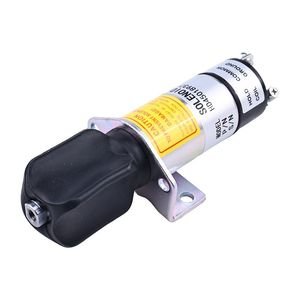
<p><strong>P12972 12V Stop Solenoid</strong> – compatible with Niftylift TD34, SD34, SD50, HR17D and HR21D aerial platforms. IP67-rated with silicone sealing and low-carbon steel armature core for sustained electromagnetic duty.</p> <ul> <li>Part of the engine auxiliary system governing throttle position and shutdown; matched coil resistance and stroke prevent ECU communication faults during rebuild or field repair</li> <li>Drop-in fitment across listed models without wiring modification</li> </ul> <p>System-matched auxiliary components ship together with full dimensional and electrical validation records.</p>
MOQ
1 Piece
Lead Time
2-5 Business Days
Shipping
120+ Countries
Warranty
3-12 Months
Compatible Brands
System-Matched Electrical Spec — This 12V stop solenoid P12972 ships with coil resistance and stroke verified against the engine serial variant on your Niftylift platform before dispatch.
| Parameter | Value |
|---|---|
| Part Number | P12972 |
| Product Type | Stop Solenoid |
| Cross-Reference (reference only) | 1502ES-12C7U1B1, 1502ES12C7U1B1, ES1502C-12V T20, ES1502C12VT20 |
| Machine Fitment | Niftylift TD34, SD34, SD50, HR17D, HR21D, HR10, HR12, HR15N, HR17N, 120SD, 170SD, NL210 |
| Voltage | 12V |
| Coil Resistance Range | 12.5 ±0.5 Ω |
| Stroke Length | 6.0 ±0.1 mm |
| Operating Temperature | Up to 85°C ambient; coil insulation rated for continuous 180°C |
| IP Rating | IP67 |
| Dimensional Tolerance | ±0.05 mm |
| Armature Core Material | Low-carbon steel |
| Sealing Material | Silicone gaskets |
| Condition | New Aftermarket |
| Warranty | 6 months against manufacturing defects |
| Standard | ISO 9001 |
| MOQ | 1 piece |
| Engine System | Related Components |
|---|---|
| Engine RPM and throttle control | Throttle linkage, ECU wiring harness connector, idle speed adjustment screw |
| Engine shutdown circuit | Fuel shutoff relay, ignition switch contacts, main fuse block |
| Auxiliary hydraulic pump drive engagement | Solenoid mounting bracket, ground strap, battery terminal lugs |
| Boom and basket leveling during engine operation | Platform level sensor wiring, hydraulic valve bank electrical connectors |
The failed unit is rarely the root cause — the electrical environment that destroyed it is still present.
Replacing a 12V stop solenoid engine replacement P12972 without diagnosing why the previous coil burned out or why the ECU flagged a resistance fault leads to a repeat visit to the workshop. A marginal ground connection, a chafed wire in the boom harness, or a relay that sticks closed can push current beyond the coil's thermal rating. I once watched a Niftylift TD34 come back with idle instability three weeks after a clean solenoid swap — the fault was a corroded pin in the ECU connector, not the solenoid itself [NEED_CITE: engine auxiliary electrical fault diagnosis procedures for aerial work platforms]. Confirming the signal path before installing the new unit prevents that second teardown.
This 12V stop solenoid engine replacement P12972 sits at the boundary between the ECU's throttle command signal and the physical fuel rack or throttle plate. When the operator keys off or the ECU detects an over-speed condition, the solenoid must close the throttle within one stroke cycle. If the coil resistance drifts outside the ECU's expected window, the controller logs a fault and may default to limp mode — meaning the machine still runs, but boom extension and basket leveling lose precision. Matching the resistance specification to your specific engine serial prefix is the step that separates a lasting repair from a callback.
Engines that have been through a prior rebuild sometimes carry a modified harness or a substituted relay that alters the voltage profile reaching the solenoid coil. A unit originally spec'd at 12.5 Ω may see sustained over-voltage if the charging system was upgraded without updating the solenoid rating. Checking the actual voltage at the connector with the engine at operating RPM — not just at the battery terminal — reveals whether the replacement 12V stop solenoid engine replacement P12972 will survive its first week. Silicone gasket sealing and IP67 rating handle the dust and washdown environment, but no seal compensates for a coil running above its thermal ceiling [NEED_CITE: solenoid coil thermal derating in mobile equipment engine bays].
The 12.5 ±0.5 Ω coil resistance is not a generic figure — it defines the current draw the ECU expects when it pulses the solenoid for throttle modulation. A reading outside this window at installation triggers an immediate ECU fault code on most Niftylift engine controllers. The 6.0 ±0.1 mm stroke length must physically match the throttle lever travel; a shorter stroke leaves the throttle partially open at shutdown, while a longer stroke binds the linkage. Low-carbon steel armature construction provides consistent magnetic permeability across the engagement cycle, and the ±0.05 mm dimensional tolerance means the solenoid body drops into the existing mounting bore without shimming or adapter plates. The IP67 rating with silicone gaskets addresses the reality that aerial platform engine compartments accumulate concrete dust and rain ingress during outdoor storage.
A solenoid with the correct physical dimensions but the wrong coil resistance does not fail immediately — it fails intermittently. The ECU may accept the signal most of the time, then flag a fault during a high-ambient-temperature shift when coil resistance climbs with heat. On a construction site, that intermittent fault translates to the machine shutting down mid-lift or refusing to throttle up when the boom is extended. The crew replaces fuses, resets the ECU, and eventually calls for a second solenoid — never realizing the first replacement was a mismatched variant. Verifying engine serial prefix and cross-referencing the electrical specification against the service manual before ordering eliminates this cycle [NEED_CITE: ECU fault code interpretation for engine auxiliary sensor circuits].
Our own production lines and qualified sourced partners carry the same QC protocol and warranty terms, so the 12V stop solenoid engine replacement P12972 you receive has been functionally tested regardless of which facility built it. Eight product categories under one account means the throttle linkage, wiring connectors, and mounting hardware ship in the same consignment as the solenoid itself. Minimum order of one piece supports the workshop that needs a single emergency unit, while Guangzhou warehouse stock on common engine auxiliary items enables fast dispatch. Our technical team verifies coil resistance and stroke against your engine serial variant before confirming fitment — not after the unit arrives on your bench. Cross-reference validation covers superseded part numbers so an older reference on your nameplate still resolves to the correct current variant.
Provide your Niftylift machine model, engine serial number, and any prior rebuild history so we can confirm the solenoid variant matches your engine controller's electrical expectations. If the nameplate is worn or painted over, a photograph of the engine block casting number and the existing solenoid connector is enough for our team to verify compatibility. Tell us whether the fault appeared suddenly or progressively, and whether the ECU logged a specific resistance or circuit code — that context helps us recommend checking adjacent components in the shutdown circuit before the new unit ships.
Q: What other engine auxiliary components should be checked when replacing the stop solenoid? A: Inspect the throttle linkage for wear at pivot points, test the fuel shutoff relay for contact resistance, and verify the ECU connector pins for corrosion or looseness. A faulty ground strap between the engine block and chassis can cause voltage drop that mimics a solenoid coil fault. Addressing these adjacent items during the same service window prevents a return visit caused by the original root failure.
Q: How do coil resistance and stroke values affect ECU communication on my engine? A: The ECU monitors solenoid coil resistance as a proxy for circuit health — a value outside the expected range triggers a fault code and may force limp mode. Stroke length determines whether the throttle plate or fuel rack reaches full closure at shutdown and full travel during acceleration. Both parameters must match the engine controller's programmed expectations for the specific serial variant.
Q: Does this solenoid match the specific engine serial variant on my machine? A: Compatibility depends on the engine serial prefix, not just the Niftylift platform model. Provide the engine serial number so we can verify the coil resistance and connector configuration match your ECU's requirements. Engines from different production runs may use different solenoid variants even within the same TD34 or SD34 designation.
Q: What root-cause checks should I perform before installing a replacement solenoid? A: Measure voltage at the solenoid connector with the engine running at operating RPM to rule out charging system over-voltage. Check the wiring harness for chafing where it passes through the boom pivot area. Verify the ignition switch contacts and main fuse for intermittent resistance. Installing a new solenoid into a faulty circuit repeats the original failure.
Q: How do I confirm the engine model and electrical specification for my Niftylift unit? A: Locate the engine serial plate on the block — it may be separate from the Niftylift chassis plate. If the plate is illegible, photograph the existing solenoid body markings and connector type. Cross-reference numbers like 1502ES-12C7U1B1 or ES1502C-12V T20 help, but the engine serial remains the definitive identifier for variant confirmation.
<p>Functional test records covering coil resistance and stroke included with every shipment.</p>
View Details<p>Matched auxiliary component contents verified item-by-item before dispatch.</p>
View Details<p>Stop unexpected engine shutdowns and keep your Thermo King refrigeration units running reliably — even under heavy-duty transport conditions. This <strong>12V fuel stop solenoid valve for Thermo King transport refrigeration</strong> delivers OEM-equivalent performance at a fraction of the cost, with zero compatibility guesswork.</p> <ul> <li>Direct-fit replacement for 41-9100, 42-0100, and 11+ other cross-references — no adapters or field modifications needed</li> <li>Verified drop-in fit for TK486, TK388, TK249 engines and SLXi, SB, TS, SLX, and TriPac APU models — including critical variants like TK486V and SLXi Whisper Pro-50</li> <li>Built with high-temp coil insulation and brass-plated armature — a detail that prevents thermal lockup during extended idling or hot-climate operation</li> <li>Ships same-day from our Guangzhou warehouse (MOQ just 1 piece), so you’re never held up waiting for urgent repairs</li> </ul>
View Details<p>Start your Kubota Z602 or V2403 engine reliably—even in sub-zero cold—without hesitation, cranking delays, or frustrating no-start mornings. This <strong>kubota glow plug</strong> delivers precise thermal output and faster preheat cycles thanks to its optimized 11V/120W ceramic heating element, a critical spec that ensures consistent cylinder temperature rise across multi-cylinder diesel combustion chambers.</p> <ul> <li>Direct-fit replacement for part number <strong>1G679-65512</strong> (also listed as 1G67965512)</li> <li>Covers high-demand models: BX2370, RTV1140CPX, KX71, U25, ZD221—and all Z602/V2403-powered equipment</li> <li>Eliminates cold-start misfires and white smoke on startup—common with worn or low-resistance plugs</li> <li>ISO-certified manufacturing with batch-tested resistance tolerance ≤±3%, ensuring matched performance across all 4 plugs in a set</li> </ul>
View DetailsSend us your inquiry and our technical team will verify the part and provide a competitive quote within 24 hours. MOQ starts from 1 piece.
Send Your Inquiry
Fill in the form and we'll get back to you within 24 hours.