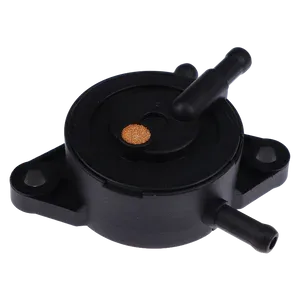
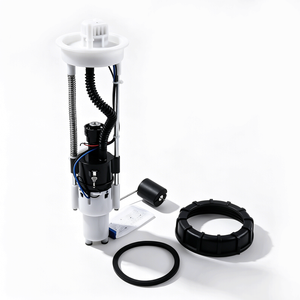
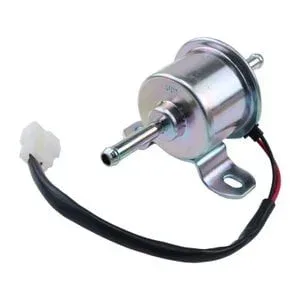
System-Level Verification — Diaphragm material and check valve seats matched to fuel chemistry and crankcase vacuum pulse characteristics before dispatch.
Based in Southeast Asia supporting field operations, my background started in warehouse part number verification before shifting to engine system technical support. A recurring pattern across generator and mower fleets is the repeated stalling fault where only the fuel pump is replaced while the underlying vacuum leak or contaminated fuel line remains unaddressed. This vacuum fuel pump covers multiple cross-reference numbers across Briggs & Stratton, Kohler, and Honda platforms, but correct fitment depends on confirming the engine serial variant and inspecting the entire fuel delivery circuit. Replacing the pump without diagnosing why the previous unit failed is the most common reason machines return to the bench within weeks. [NEED_CITE: small engine fuel system contamination and vapor lock diagnostics]
Technical Specifications
| Parameter |
Value |
| Part Number |
808492, 808656, 491922, 692313, 691034 |
| Product Type |
Fuel Pump |
| Cross-Reference (reference only) |
491922, 808656, 808492, 692313, 691034, BS-491922, BS-808656, BS-597338, LG808656, M138498, M145667, 24 393 04-S, 24 393 16-S, 16700-Z0J-003, 16700-ZL8-013, 190 248 |
| Machine Fitment |
Briggs & Stratton Horizontal Engines: 161430-0199-01, 161430-0199-02, 161432-0010-01, 161432-0010-02, 161432-0011-01 through -05, 161432-0014-01/02, 161432-0016-01 through -04, 161432-0020-01/02, 161432-0021-01/02, 161432-0023-01/03/04, 161432-0024-01/02, 161432-0026-01; Craftsman 580.327201; White Outdoor ZT-50, ZT-54 |
| Operating Principle |
Vacuum type |
| Fuel Line Compatibility |
Fits 1/4" fuel line |
| Diaphragm Material |
Nitrile rubber (NBR) |
| Internal Check Valve Material |
Brass with spring-loaded stainless steel seats |
| Housing Material |
Die-cast aluminum |
| Sealing Interface Standard |
SAE J1928 |
| Fuel Type Limitation |
Not compatible with fuel containing more than 10% ethanol |
| Warranty |
3–12 months against manufacturing defects |
| MOQ |
1 piece |
Application Suitability
| Engine System |
Related Components |
| Fuel delivery circuit |
Fuel filter, fuel lines, tank vent valve, carburetor float bowl gasket |
| Crankcase ventilation |
Breather hose, crankcase pulse fitting, reed valve assembly |
| Engine overhaul |
Carburetor rebuild kit, fuel shut-off solenoid, primer bulb |
| Generator set maintenance |
Fuel tank sediment bowl, in-line strainer, fuel stabilizer treatment |
Why the Same Part Number Ships Across Multiple Engine Builds
The correct vacuum fuel pump depends on engine serial variant, not just model designation.
Briggs & Stratton horizontal engines within the 161432 series use this pump family, but port orientation and pulse fitting configuration vary between sub-variants. A pump ordered solely by machine model may physically bolt on but deliver incorrect fuel volume if the crankcase pulse port geometry differs. Engine rebuild shops encounter this when a replacement pump causes lean running at high RPM despite matching the original part number stamping. The cross-reference table consolidates superseded and alternate numbers, but the engine serial number and service manual schematic remain the definitive confirmation. [NEED_CITE: Briggs & Stratton engine serial number variant identification procedures]

Fuel System Position and Adjacent Component Dependencies
This vacuum fuel pump sits between the fuel tank and carburetor, driven by crankcase vacuum pulses rather than mechanical cam actuation. Its performance is directly influenced by fuel line condition, tank venting integrity, and the absence of restrictions in the pulse hose connecting to the crankcase. A deteriorated fuel line introducing air bubbles or a blocked tank vent creating negative pressure will cause fuel starvation symptoms that mimic pump failure. When this vacuum fuel pump is replaced during an engine fuel system overhaul, the adjacent components must be inspected to prevent repeat failure.
Ethanol Blended Fuel Compatibility and Diaphragm Degradation
The NBR diaphragm in this pump is rated for hydrocarbon resistance and high-cycle fatigue typical of commercial zero-turn mowers and portable generators running extended daily shifts. However, fuel containing more than 10% ethanol accelerates diaphragm swelling and check valve seat corrosion, leading to internal leakage and reduced fuel delivery pressure. In regions where blended fuels are standard, engines may experience stalling or hard starting within months of pump installation if the fuel chemistry exceeds the material tolerance. This is a systemic issue affecting the entire fuel delivery circuit, not an isolated component defect. [NEED_CITE: ethanol blended fuel effects on small engine elastomer components]
Diaphragm Material Selection and Check Valve Seating Pressure
The nitrile rubber diaphragm provides hydrocarbon resistance and flexibility across the operating temperature range encountered in air-cooled horizontal engines. The brass check valves with spring-loaded stainless steel seats maintain sealing integrity under the low-pressure differential typical of vacuum-actuated systems, preventing fuel drain-back when the engine is stopped. The die-cast aluminum housing resists warping under thermal cycling and provides precise mounting surface flatness for the SAE J1928 sealing interface. These material choices address the specific failure modes observed in small engine fuel systems: diaphragm fatigue cracking, check valve seat erosion, and housing distortion causing gasket leakage.
The Hidden Cost of Replacing the Symptom Instead of the Cause
Installing a new pump without inspecting the fuel lines, tank vent, and crankcase pulse fitting often results in repeat failure within weeks. The original pump may have been functioning correctly while a cracked pulse hose or restricted tank vent prevented proper actuation. Rebuild shops that replace only the failed component without diagnosing the system root cause accumulate warranty returns and customer dissatisfaction. The cumulative cost of multiple pump replacements, labor hours, and machine downtime exceeds the time required for comprehensive fuel system inspection during the initial repair. [NEED_CITE: small engine fuel system diagnostic sequence and root cause analysis]
Why Procurement Happens Here
Own production on selected fuel system components plus qualified sourced supply under one account and one warranty term. Eight product categories allow a complete engine overhaul parts list to ship as one consignment, eliminating split freight and mismatched lead times. Minimum order from one piece supports emergency single-unit repairs without blocking on quantity thresholds. Guangzhou warehouse stock enables fast dispatch on common fuel pump configurations. Part identification from engine serial number, cross-reference number, photograph, or nameplate image resolves ambiguity when documentation is incomplete. Cross-reference verification covers superseded and alternate numbers across multiple engine platforms, with technical team confirmation available for variant-specific fitment questions.
Documentation & Verification
- Commercial invoice and packing list detailing fuel pump part numbers and cross-reference identification
- Part compatibility sheet listing verified engine serial variants (reference only)
- Quality inspection record showing dimensional checks on port spacing and diaphragm seal surfaces
- Warranty terms covering manufacturing defects for 3–12 months
- Packing photographs documenting unit condition before dispatch
- HS code and customs documentation support for international shipment
Installation & Rebuild Sequence
- Verify crankcase pulse hose integrity and absence of restrictions before pump installation
- Confirm fuel line inner diameter matches 1/4" specification and inspect for internal delamination
- Check tank vent valve operation to prevent negative pressure affecting pump prime
- Install pump with SAE J1928 compliant gasket and torque fasteners to specification
- Prime fuel system and verify delivery volume at carburetor inlet before engine start
- Monitor for fuel leaks at all connection points during initial operation
Inquiry Guidance
Provide the engine model designation, serial number, and any cross-reference numbers stamped on the original pump. If the nameplate is worn or unreadable, supply a photograph of the engine block casting numbers and the carburetor mounting configuration. Include details of the fault symptoms observed and any recent fuel system work performed. This information enables confirmation of the correct pump variant and identification of related components that should be inspected or replaced during the repair.
Frequently Asked Questions
Q: What other fuel system components should be inspected or replaced with this pump?
A: The fuel filter, tank vent valve, crankcase pulse hose, and carburetor float bowl gasket should be inspected during pump replacement. Deteriorated fuel lines introducing air or a blocked tank vent creating negative pressure will cause repeat failure. Replacing these adjacent components during the same service event prevents secondary downtime and warranty returns.
Q: My engine serial number differs slightly from the fitment list — does this pump still fit?
A: Engine serial variants within the same model family may have different port orientations or pulse fitting configurations. Provide the complete serial number and service manual schematic reference for verification. The cross-reference table covers multiple superseded numbers, but physical confirmation of mounting pattern and hose connection positions is required before installation.
Q: Why did my previous fuel pump fail so quickly — is it a system issue?
A: Premature pump failure often indicates an unresolved system problem such as ethanol-blended fuel exceeding material tolerance, a restricted tank vent, or a cracked pulse hose. The pump may be the symptom rather than the root cause. Comprehensive fuel system inspection including fuel chemistry verification and vacuum integrity testing is recommended before installing the replacement unit.
Q: Can this pump handle ethanol-blended fuels commonly available in my region?
A: The NBR diaphragm is compatible with fuel containing up to 10% ethanol. Higher ethanol concentrations accelerate diaphragm degradation and check valve seat corrosion, leading to internal leakage. If your region's standard fuel exceeds this threshold, fuel stabilizer treatment or alternative fuel sourcing may be necessary to achieve acceptable component service life.
Q: How do I confirm the correct cross-reference number for my engine build?
A: Provide the engine serial number, original pump part number if legible, and a photograph of the mounting interface. The cross-reference table consolidates alternate and superseded numbers across multiple platforms, but variant-specific confirmation requires matching the physical port configuration and pulse hose connection type to your specific engine build.