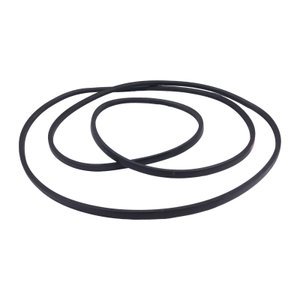
Matched belt-drive sets — each V-Belt ships alongside tensioner and pulley references verified against Toyota 4Y engine serial variants.
Technical Specifications
| Parameter |
Value |
| Part Number |
9001A-96003 |
| Cross-Reference |
9001A-96003 (reference only), 9001A96003 (reference only) |
| Product Type |
Belt |
| Width |
33mm |
| Length |
960mm |
| Cord Material |
High-tensile polyester |
| Body Material |
Heat-resistant rubber compound |
| Profile |
Precision-molded cog profile |
| Condition |
New Aftermarket |
| Warranty |
3-12 months against manufacturing defects |
| MOQ |
1 piece |
| Machine Fitment |
02-7FG30, 02-7FGJ35, 02-7FGK30, 40-7FG15, 40-7FG20, 40-7FG23, 40-7FG25, 40-7FGK20, 40-7FGK25, 42-7FG15, 42-7FG18, 42-7FG20, 42-7FG25, 42-7FGK20, 42-7FGK25, 7FG30, 7FGJ35, 7FGK30, 02-7FGF30, 02-7FGJF35, 42-7FGF15, 42-7FGF18, 42-7FGF20, 42-7FGF25, 02-7FGN30, 40-7FGN15, 40-7FGN20, 40-7FGN25, 42-7FGN15, 42-7FGN20, 42-7FGN25, 7FGN30, 02-8FGF15, 02-8FGF18, 02-8FGF20, 02-8FGF25, 02-8FGF30, 02-8FGJF35, 02-8FGKF20, 32-8FGF15, 32-8FGF18, 32-8FGF20, 32-8FGF25, 32-8FGF30, 32-8FGFJ35, 30-8FG10, 30-8FG15, 30-8FG20, 30-8FG25, 30-8FG30, 30-8FGJ35, 32-8FG10, 32-8FG15, 32-8FG18, 32-8FG20, 32-8FG25, 32-8FG30, 32-8FGJ35, 32-8FGK20, 32-8FGK25, 32-8FGK30, 30-8FGN15, 30-8FGN20, 30-8FGN25, 30-8FGN30, 32-8FGN15, 32-8FGN20, 32-8FGN25, 32-8FGN30, 7FGCSU20, 7FGCU15, 7FGCU18, 7FGCU20, 7FGCU25, 7FGCU30, 7FGCU32, 7FGU15, 7FGU18, 7FGU20, 7FGU25, 7FGU30, 7FGU32, 8FG18B, 8FG25B, 8FG30B, 8FGCSU20, 8FGCU15, 8FGCU18, 8FGCU20, 8FGCU25, 8FGCU30, 8FGCU32, 8FGU15, 8FGU18, 8FGU20, 8FGU25, 8FGU30, 8FGU32, FGZN20, FGZN25, FGZN30 |
Application Suitability
| Engine System |
Related Components |
| Alternator drive circuit |
Alternator mounting bracket, charging system wiring |
| Water pump drive circuit |
Water pump assembly, thermostat housing gasket |
| Power steering assist drive |
Power steering pump, hydraulic fluid reservoir seals |
| Full 4Y engine overhaul |
Overhaul gasket kit, tensioner assembly, idler pulley |
| Scheduled maintenance service |
Belt tensioner spring, pulley bearings, accessory drive inspection |
When a Belt Fails but the Root Cause Lives Elsewhere in the Drive System
A cracked V-Belt for Toyota 4Y Engine rebuild work is rarely the sole fault — the tensioner, pulley alignment, or accessory bearing usually started the damage weeks earlier.
Rebuild shops see the same pattern repeat: a fresh belt goes on, the forklift returns to service, and within a short window the sidewalls glaze or the cog profile shows uneven wear. The belt was blamed and replaced, but the worn tensioner spring or the slightly seized idler pulley bearing continued to load the new belt asymmetrically. Over years of sourcing belt-drive components for engine rebuilds, I have learned that treating the V-Belt as an isolated line item rather than part of a matched system leads to repeat teardowns [NEED_CITE: belt drive system diagnostic protocols for industrial LPG engines].

The Belt-Drive Circuit Map on the Toyota 4Y
This V-Belt for Toyota 4Y Engine rebuild projects sits at the center of three critical circuits: alternator charging, water pump circulation, and power steering hydraulic assist. When one of these accessories develops drag — a failing water pump bearing, a misaligned alternator bracket — the belt absorbs that misalignment as localized heat and sidewall abrasion. Replacing the belt without mapping the full accessory drive path leaves the underlying load imbalance unaddressed.
Matching Belt Grade to Rebuild History and Engine Serial Variants
The 4Y engine family spans multiple serial variants across the 7FG and 8FG forklift ranges, and accessory configurations can differ between early and late production runs. Some variants route the belt around an additional idler, changing effective tension requirements. During any overhaul, confirming the engine serial against the belt routing diagram prevents fitting a belt that is dimensionally correct but tensioned incorrectly for that specific accessory layout [NEED_CITE: Toyota 4Y engine serial variant belt routing differences]. A belt fitted to the wrong routing variant wears prematurely at the cog root, showing symptoms that mimic a defective batch when the fault is actually a configuration mismatch.
What the 33mm Width and Cog Profile Actually Control
The 33mm width determines how much flank surface contacts the pulley sheave, directly governing torque transmission capacity for the combined accessory load. The precision-molded cog profile allows the belt to flex around smaller-diameter pulleys without generating excessive internal heat — a smooth-back belt of equivalent length would build heat at the bend point and degrade the rubber compound from the inside outward. High-tensile polyester cord resists stretch under continuous load, maintaining correct tension over the service interval rather than requiring repeated manual adjustment. Heat-resistant rubber compound in the body prevents the sidewalls from glazing when ambient bay temperatures and accessory friction combine.
The Compounding Cost of Skipping Adjacent Component Inspection
When a rebuild shop installs a new belt onto a worn tensioner, the uneven clamping force creates localized slip on one flank. That slip generates heat, which accelerates rubber hardening on that side only — the belt tracks off-center and throws dust from one edge. The forklift comes back with a noise complaint, the belt is swapped again, and the tensioner remains untouched. Three belt changes later, the cost in labor and repeat downtime exceeds what a matched set replacement would have required from the start [NEED_CITE: belt drive cascading failure cost analysis in fleet maintenance].
System-Level Supply from One Account
Selected belt-drive product lines are manufactured in our own facility, with remaining items sourced from qualified ISO 9001-certified partners — both channels carry identical QC and warranty terms. Eight component categories mean the belt, tensioner, pulley, overhaul gasket kit, and accessory seals ship under one account and one warranty. Identification works from part number, machine model, photograph, or nameplate image. Cross-reference verification covers superseded and alternate numbers to catch serial-variant mismatches. Sample supply is available for fitment confirmation before bulk commitment, and the technical team confirms grade and compatibility against specific engine build data.
Documentation & Verification
- Commercial invoice and packing list referencing 9001A-96003 and matched belt-drive components
- Part compatibility and cross-reference sheet noting reference only status for OEM numbers
- Quality inspection record covering belt width, length, and cog profile dimensional checks
- Warranty terms specifying coverage against manufacturing defects for 3-12 months
- Packing photographs documenting belt condition and protective wrapping before dispatch
- HS code and customs documentation support for international belt-drive shipments
Installation & Rebuild Sequence
- Inspect tensioner spring force and pulley bearing play before fitting the new 960mm belt
- Verify belt routing matches the specific 4Y engine serial variant diagram for correct accessory wrap
- Seat the 33mm belt fully into each pulley sheave before applying tensioner load
- Confirm alternator, water pump, and power steering pulley alignment with a straightedge across sheave faces
- Run the engine at idle and check for lateral belt tracking drift or cog-root squeal during initial break-in
Request a Belt-Drive System Quote
Provide the Toyota 4Y engine serial number, the forklift model designation, and any known rebuild history so we can verify belt routing variant and confirm matched tensioner and pulley references. If the existing belt part number is unreadable, send a photograph of the engine nameplate or the accessory drive layout for identification.
Frequently Asked Questions
Q: What other belt-drive components should be replaced together with this V-Belt?
A: The tensioner assembly, idler pulley bearings, and accessory mounting bracket bolts should all be inspected during any belt replacement. On high-hour 4Y engines, the tensioner spring loses force over time, and replacing the belt without a fresh tensioner leads to early sidewall glazing. We supply matched sets so the entire drive circuit arrives in one consignment.
Q: Does the 4Y engine have serial variants that use different belt lengths or profiles?
A: Yes. Early and late production 4Y engines across the 7FG and 8FG ranges can differ in accessory configuration and idler placement, affecting effective belt routing. Confirming the engine serial number against the routing diagram ensures the 960mm length is correct for your specific build variant.
Q: How do I confirm 9001A-96003 is the correct cross-reference for my forklift?
A: Cross-reference 9001A-96003 (reference only) against the number printed on the old belt, the machine nameplate, or the engine data tag. If the printed number is worn away, send a photograph of the engine bay and the forklift model plate — we verify compatibility from image and model data alone.
Q: What system faults cause this belt to fail prematurely and how do I diagnose them?
A: A seized accessory bearing, a misaligned alternator bracket, or a fatigued tensioner spring all transfer abnormal load to the belt. Check each pulley for free rotation and axial play, verify alignment across sheave faces, and measure tensioner deflection against specification before fitting the replacement belt.
Q: Can belt-drive parts be supplied together with overhaul gasket kits in one shipment?
A: Yes. Belt-drive components, overhaul gasket sets, engine seals, and adjacent service items all ship from the same Guangzhou warehouse under one account. Consolidating the full rebuild scope into a single consignment avoids partial-fit delays and split freight costs across multiple suppliers.