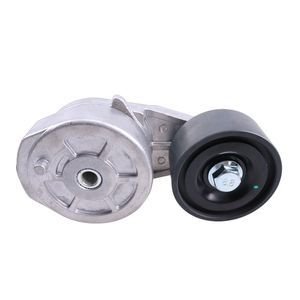
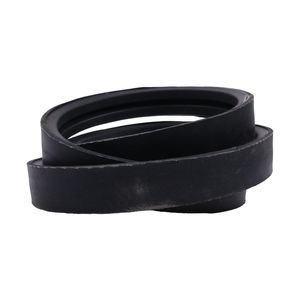
Engine Serial Variants Confirmed — Belt profile and length verified against Kubota 05-series engine build records before dispatch.
Technical Specifications
| Parameter |
Value |
| Part Number |
1G062-97012 |
| Product Type |
Belt |
| Cross-Reference |
1G062-97012 (reference only), 1G06297012 (reference only) |
| Machine Fitment |
F2560, F2680E, F2880, F3680, B2100, B7510, B7610, B8700, F2260, F2680, F2690, F2690E, F3060, F3080, F3990, ZD1511LF, ZD1511RL, ZD1511RLF |
| Engine Compatibility |
Kubota D905, D1005, D1105, V1205, V1305, V1505 |
| Material |
High-tensile synthetic rubber with polyester cord reinforcement |
| Condition |
New Aftermarket |
| Warranty |
3–12 months against manufacturing defects |
| Standards |
ISO 9001, ISO 4184, SAE J243 |
Application Suitability
| Engine System |
Related Components |
| Cooling system drive |
Fan clutch, water pump pulley, radiator hose connections |
| Front-end accessory drive |
Alternator, tensioner assembly, idler pulley |
| Overhaul kit complement |
Thermostat, front crankshaft seal, timing cover gasket |
Why Repeat Fan Belt Failures Trace Back to the Drive System
A Kubota fan belt engine replacement often fails not because the belt itself was defective, but because the root cause in the belt drive or cooling system was never diagnosed.
Correct fitment starts with matching the belt to the exact engine serial variant and inspecting every pulley in the drive loop before installation.
In our Shandong workshop, we dismantled a D1105 that had burned through two belts within a few dozen hours after a full overhaul. The tensioner bearing had seized, pushing lateral load onto the new belt until it shredded from the inside out. [NEED_CITE: belt drive system failure root cause analysis for small diesel engines] Shops that swap the belt without checking tensioner free-spin, pulley runout, and fan clutch engagement are setting up the next failure before the first hour of operation is complete.

Where This Belt Sits in the Kubota 05-Series Cooling Architecture
This fan belt transmits crankshaft rotation to the cooling fan and, depending on the engine variant, the alternator and water pump. On D905 through V1505 platforms, the V-belt profile must seat fully in each pulley groove to avoid edge loading during sustained high-RPM operation. A Kubota fan belt engine replacement that rides high in the groove will slip under thermal cycling, accelerating wear on the belt sidewalls and starving the cooling system of airflow.
Matching Belt Variants Across Engine Serial Ranges
The D905, D1005, and D1105 share a common block family but differ in accessory mounting positions and pulley spacing. The V1205, V1305, and V1505 introduce additional front-end loads that may alter belt length or cross-section requirements. [NEED_CITE: Kubota 05-series engine variant identification and belt specification differences] Confirming the exact engine serial number against build records is essential before a bulk order ships, because a belt that fits a D1105 early production may not route correctly on a later revision with a repositioned alternator bracket.
Material and Geometry That Define Service Life
The high-tensile synthetic rubber compound resists thermal degradation across the temperature range encountered in continuous-duty mowing and field work. Polyester cord reinforcement maintains tensile stability under the cyclic loading of fan start-up and alternator drag. The cross-section geometry is manufactured to match OEM tolerances so that full sidewall contact is achieved in the pulley grooves, distributing load evenly and reducing the slippage that causes glazing and premature cracking. [NEED_CITE: SAE J243 belt material and dimensional standards for industrial V-belts]
The Cost of Skipping Adjacent Component Inspection
When a belt drive system component is overlooked during a cooling system service, the consequences compound. A worn tensioner that no longer maintains correct preload will allow the new belt to flutter, generating heat that degrades the rubber compound from the inside. A pulley with axial play will carve into the belt sidewall, producing a failure that looks like a defective part but is actually a misalignment problem. Rebuild shops that document each adjacent component's condition at teardown avoid the diagnostic loop that wastes labor hours and erodes customer confidence. [NEED_CITE: adjacent component inspection checklist during engine belt drive servicing]
What We Verify Before Your Order Ships
Every belt line we supply — whether produced in our own facility or sourced from qualified ISO-certified partners — carries the same warranty terms and quality inspection protocol. For this fan belt, our technical team cross-references the engine serial number against variant tables to confirm the correct length and profile before dispatch. We provide compatibility and cross-reference sheets with each shipment, and we can ship a sample unit for physical fitment confirmation before you commit to a production quantity. Our Guangzhou warehouse maintains stock on high-turnover Kubota 05-series belt drive components for consolidated dispatch alongside overhaul gaskets, seal kits, and tensioner assemblies.
Documentation & Verification
- Commercial invoice listing engine serial variant and cross-reference numbers for fleet records
- Part compatibility sheet mapping belt to D905–V1505 serial ranges, marked reference only
- Quality inspection record covering cross-section dimensional check and tension test
- Warranty terms document covering manufacturing defects for 3–12 months
- Packing photographs showing individual polybag labeling and carton condition before seal
- HS code and customs documentation support for international consignments
Installation & Rebuild Sequence
- Inspect tensioner bearing free-spin and pulley runout before routing the new belt
- Clean pulley grooves of old rubber residue to ensure full sidewall contact on the new V-belt
- Verify belt seating depth in each groove after initial tension application
- Run engine at idle for initial warm-up cycle and recheck tension before returning to service load
Request a Fitment Verification
Provide your engine model, serial number, and any previous rebuild history so our technical team can confirm the correct belt variant and identify adjacent components that should be inspected or replaced during the same service window.
Frequently Asked Questions
Q: What other belt drive system components should be inspected or replaced alongside this fan belt?
A: The tensioner assembly, idler pulley, and water pump pulley should all be checked for bearing play and groove wear during a belt replacement. On Kubota 05-series engines, a seized tensioner bearing is a common root cause of repeat belt failure. We can supply matched tensioner and pulley components in the same consignment for a complete system service.
Q: Do all Kubota 05-series engines use the same belt part number?
A: No. The D905, D1005, D1105, V1205, V1305, and V1505 share a platform family, but accessory mounting positions and pulley spacing vary across serial ranges. Some variants require a different belt length or cross-section profile. Always confirm the exact engine serial number before ordering to avoid fitment mismatch.
Q: How do I confirm the correct belt variant for my specific engine serial number?
A: Send us your engine model, serial number, and a photograph of the existing belt or nameplate if legible. Our technical team cross-references the serial against variant build records and returns a confirmed compatibility sheet. For bulk orders, we recommend requesting a sample for physical fitment verification first.
Q: What root causes in the cooling or belt drive system should I check to prevent repeat failure?
A: Beyond belt condition, check tensioner preload, pulley alignment, fan clutch engagement, and water pump bearing play. A misaligned pulley or failing tensioner will destroy a new belt within hours. Documenting these adjacent components at teardown prevents the diagnostic cycle that causes repeat downtime.