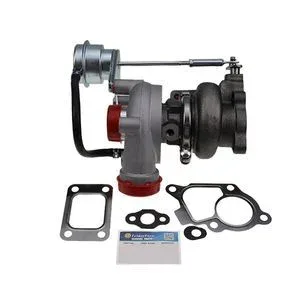
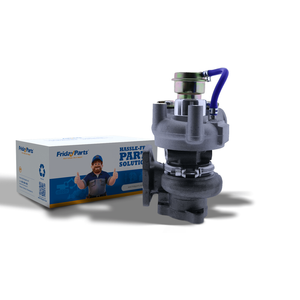
Matched Set Shipped Together — Engine serial variants verified before dispatch to ensure correct oil port orientation for your specific V3307 build.
Technical Specifications
| Parameter |
Value |
| Part Number |
7008469 |
| Product Type |
Turbocharger |
| Cross-Reference |
7008469 (reference only) |
| Machine Fitment |
Kubota Engine V3307-DI-TE3-Q, V3300T; Bobcat Skid Steer Loader S630, S650, T630, T650 |
| Turbo Model |
TD04L4 |
| Condition |
New Aftermarket |
| Turbine Wheel Material |
Forged steel |
| Dynamic Balancing Grade |
G2.5 |
| Turbine Housing Coating |
Ceramic-coated |
| Journal Bearing Shaft Surface Finish |
Ra ≤ 0.4 μm |
| Internal Cleanliness Standard |
ISO 8573-1 Class 4 |
| Compressor Wheel Flow Validation |
150,000 RPM equivalent speed |
| Boost Pressure Test Range |
2,000–4,500 RPM |
| Oil Leak Test Pressure |
3.5 bar |
| Warranty |
3–12 months against manufacturing defects |
| MOQ |
1 piece |
Application Suitability
| Engine System |
Related Components |
| Intake and boost delivery |
Air filter housing, intake hose clamps, intercooler piping |
| Lubrication feed and return |
Oil supply line seals, return line gaskets, crankcase breather |
| Exhaust and emission downstream |
Exhaust manifold gasket, DPF or DOC mounting hardware |
| Combustion chamber sealing |
Cylinder head gasket, valve cover gasket, injector seat seals |
When a Turbo Fails, the System Has Already Spoken
The turbocharger TD04L4 engine rebuild replacement rarely dies alone — contaminated oil or a blocked crankcase breather usually delivers the first blow.
A single turbo swap without inspecting the oil feed circuit and air filtration path often results in a repeat failure within the first hundred operating hours. In my years supporting engine rebuilds across mining and construction sites, I have documented numerous cases where a replacement turbo failed because the root cause — a restricted oil return line or degraded air filter housing seal — was never addressed. [NEED_CITE: root cause analysis methodology for turbocharger failure in diesel engines]

The Turbo Inside the Kubota V3307 Intake and Emission Loop
The turbocharger sits at the intersection of the intake, lubrication, and exhaust systems on a Kubota V3307-DI-TE3-Q or V3300T engine. Correct boost delivery from this Turbocharger TD04L4 engine rebuild replacement directly influences combustion efficiency, cylinder head temperatures, and the service life of downstream emission components. Treating the turbo as an isolated part rather than a system node is how rebuild shops end up with comebacks.
Oil Port Variants Across Kubota V3307 Production Runs
The Kubota V3307-DI-TE3-Q engine has appeared in several production batches, and the oil return port angle on the turbo mounting flange can differ between early and late serial ranges. I once supplied a TD04L4 unit with the standard flange orientation, only to find the V3307-DI-TE3-Q variant on a Bobcat S650 required a slightly different return line angle. The interfaces appeared identical until the oil return hose was connected — then a persistent leak forced a second teardown. Confirming the engine serial number before ordering this turbocharger TD04L4 engine rebuild replacement eliminates that risk entirely. [NEED_CITE: engine serial variant identification practices for industrial diesel platforms]
Reading the Specs That Matter in the Workshop
The forged steel turbine wheel handles the thermal cycling typical of continuous-duty skid steer operation without the cracking seen in cast alternatives. Dynamic balancing to G2.5 grade means shaft vibration stays within limits that protect the journal bearing surface finish — held at Ra ≤ 0.4 μm — which is the threshold where oil film stability breaks down under sustained boost. The ceramic-coated turbine housing resists heat soak during the shutdown period after heavy loading, a phase where uncoated housings develop micro-cracks that eventually leak exhaust gas into the bearing cavity. Internal cleanliness verified to ISO 8573-1 Class 4 ensures no abrasive particles survive assembly to score the bearing surfaces during initial run-up.
The Real Cost of Skipping System-Level Diagnostics
Replacing the turbo without tracing why it failed sets the stage for the next breakdown. A blocked crankcase breather raises internal crankcase pressure, which restricts oil return from the turbo bearing housing — the oil then backs up past the turbine seal and enters the exhaust stream. The operator sees blue smoke, assumes the new turbo is defective, and orders another. The real fault was a twenty-dollar breather valve. [NEED_CITE: crankcase ventilation impact on turbocharger oil sealing performance]
Why Rebuild Shops Source This Turbo Here
Selected turbo lines are produced in our own facility while the remainder is sourced from qualified ISO-certified manufacturing partners, and both carry the same QC and warranty terms. Eight product categories mean the turbo mounting gaskets, oil feed seals, air filter elements, and exhaust clamps ship in one consignment under one account. Orders start from a single piece — there is no minimum blocking an emergency rebuild. Our Guangzhou warehouse holds common items in stock for fast dispatch, and part identification can be confirmed from a number, machine model, photograph, or nameplate image. Cross-reference verification covers superseded and alternate numbers, and sample supply is available for fitment confirmation before any bulk commitment.
Documentation & Verification
- Commercial invoice and packing list referencing turbocharger part number and engine fitment
- Part compatibility sheet listing verified Kubota and Bobcat cross-reference data (reference only)
- Pre-shipment quality inspection record including boost test and oil seal integrity results
- Warranty terms covering turbocharger and matched kit components together
- Packing photographs documenting turbo condition and protective packaging before dispatch
- HS code and customs documentation support for international engine parts shipments
Installation & Rebuild Sequence
- Verify engine serial and oil port orientation before unboxing the turbocharger unit
- Flush oil feed and return lines to remove residual contamination from the failed unit
- Install new gaskets and seals from the matched kit rather than reusing old hardware
- Torque mounting flange fasteners to engine manual specification in a cross-pattern sequence
- Pre-lube the turbo bearing cavity with clean engine oil before the first cranking cycle
- Run the engine at idle for the initial break-in period and monitor for oil or boost leaks
Requesting a Quote for Your Rebuild
Provide the engine model and serial number — ideally from the Kubota nameplate — along with any rebuild history or oversize work previously performed. If the turbo nameplate is unreadable, a photograph of the mounting flange and oil port area allows our technical team to confirm the correct variant. For fleet operations, sharing the machine hours and maintenance schedule helps us recommend stocking quantities.
Frequently Asked Questions
Q: What gaskets and seals should be replaced together with the turbo?
A: The turbo mounting gasket, oil supply line O-rings, oil return flange seal, and intake hose clamps should all be replaced during installation. Reusing old seals risks oil starvation or boost leaks that will shorten the life of the new turbocharger. We supply a matched kit covering these items for Kubota V3307 and Bobcat S-series applications.
Q: How do I confirm the correct turbo variant for my engine serial number?
A: Kubota V3307 engines across different production runs may carry different oil return port orientations. Share your engine serial number or a photograph of the existing turbo flange, and our technical team will verify the exact variant before shipment. This prevents fitment issues during installation.
Q: What system-level faults should I check before installing a replacement turbo?
A: Inspect the oil feed and return lines for restrictions, check the crankcase breather for blockage, and verify air filter housing integrity. A contaminated oil supply or elevated crankcase pressure will damage the replacement turbocharger just as it damaged the original. Addressing root causes ensures reliable long-term operation.
Q: Can I order a complete turbo plus installation kit in one shipment?
A: Yes. The turbocharger, mounting gaskets, oil seals, and associated fasteners can be bundled into a single consignment under one account with one warranty. This eliminates split shipments and ensures all components arrive together, so the rebuild can proceed without waiting for a second delivery.
Q: What test documentation ships with the turbocharger?
A: Each unit ships with a pre-shipment inspection record documenting boost pressure verification across the 2,000–4,500 RPM range, oil leak testing at 3.5 bar, and dynamic balancing confirmation. These records provide traceability for your workshop quality system and support warranty claims if needed.