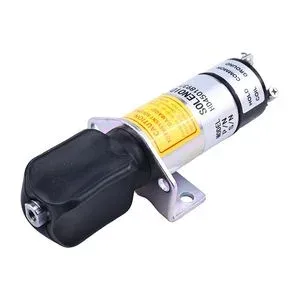
Matched Set Dispatch — Throttle solenoid P12972 ships alongside fuel system gaskets, wiring terminals, and fasteners as a verified engine auxiliary overhaul set for Niftylift platforms.
Technical Specifications
| Parameter |
Value |
| Part Number |
P12972 |
| Product Type |
Stop Solenoid |
| Cross-Reference |
1502ES-12C7U1B1, 1502ES12C7U1B1, ES1502C-12V T20, ES1502C12VT20 (reference only) |
| Machine Fitment |
Niftylift TD34, SD34, SD50, HR17D, HR21D, HR10, HR12, HR15N, HR17N, 120SD, 170SD, NL210 |
| Voltage |
12V DC |
| Coil Resistance |
2.8 ±0.2 Ω at 20°C |
| Operating Temperature |
-20°C to +85°C |
| IP Rating |
IP65 |
| Armature Core Material |
Cold-forged low-carbon steel (AISI 1018) |
| Actuation Cycle Rating |
500,000 cycles |
| Mounting Thread |
M8 x 1.25, depth 12mm |
| Overall Length |
62mm |
| Flange Diameter |
38mm |
| Condition |
New Aftermarket |
| Warranty |
6 months against manufacturing defects |
| MOQ |
1 piece |
| Standards |
ISO 9001 |
Application Suitability
| Engine System |
Related Components |
| Fuel shutoff and throttle control |
Fuel injection pump gasket set, throttle linkage bushings, relay harness connectors |
| Engine overspeed protection during boom retraction |
ECU driver circuit relay, wiring terminal crimps, mounting fasteners |
| Emergency descent engine management |
Return spring assemblies, fuel line seals, diagnostic connector adapters |
| High-cycle aerial platform duty |
Air intake gaskets, engine mount isolators, coolant hose clamps adjacent to solenoid bracket |
Why a 12V Throttle Solenoid Engine Rebuild Fails After First Start-Up
The solenoid is rarely the root cause — upstream fuel timing or relay circuit faults destroy the replacement within days.
When rebuild shops swap a failed stop solenoid without tracing the electrical driver circuit or verifying fuel injection pump timing, the new 12V throttle solenoid engine rebuild component inherits the same overload condition. I have seen relays with welded contacts feed continuous current into a fresh coil, burning it out before the machine leaves the bay. Niftylift TD34 and SD34 platforms run high cycle counts on construction sites, meaning the electrical system endures constant thermal stress [NEED_CITE: electrical relay failure modes in mobile hydraulic equipment]. Matching the replacement solenoid with verified relay components and connector terminals eliminates the second teardown that no rebuild schedule can absorb.

The Auxiliary System Behind Every Throttle Response
This stop solenoid sits at the boundary between the ECU driver output and the mechanical throttle linkage on Niftylift aerial platform engines. When the operator commands boom retraction or initiates emergency descent, the solenoid must modulate fuel flow within the coil resistance tolerance of 2.8 ±0.2 Ω to prevent RPM overshoot. A 12V throttle solenoid engine rebuild that ignores this system boundary often introduces mismatched hold-current characteristics, forcing the ECU to compensate until the driver circuit overheats. Supplying the solenoid together with its mating connector terminals and relay ensures the entire signal path meets the original electrical specification.
Engine Serial Variants Across the Niftylift Range
Niftylift HR, SD, and TD series machines may carry different engine builds even within the same model designation. The solenoid mounting thread M8 x 1.25 at 12mm depth and the 38mm flange diameter apply to specific engine serial ranges — a variant difference of even 2mm in flange diameter causes misalignment on the fuel pump body. Cross-reference numbers like 1502ES-12C7U1B1 (reference only) may map to several engine builds, but only one matches the physical installation and electrical duty cycle of the machine on the bench. Verification against the engine serial plate, not the machine model badge, prevents fitment rejection after the gasket surface is already disturbed [NEED_CITE: engine serial variant identification for aftermarket component fitment].
Reading the Specifications That Matter at Rebuild
The coil resistance specification of 2.8 ±0.2 Ω at 20°C defines how much current the ECU driver circuit must supply during both pull-in and hold phases. Resistance outside this window causes the driver transistor to operate beyond its thermal design margin, leading to premature ECU failure that is often misdiagnosed as a solenoid defect. The IP65 rating ensures the solenoid body withstands pressurized washdown on port terminals and construction sites, but only if the mating connector achieves the same sealing grade — a mismatched terminal boot negates the solenoid rating entirely. The AISI 1018 cold-forged armature core provides consistent magnetic permeability across the -20°C to +85°C operating range, maintaining predictable actuation force when ambient conditions shift from desert morning to midday heat. Actuation cycle rating of 500,000 cycles reflects the high-frequency throttle modulation demands of aerial work platforms, where operators make constant micro-adjustments for platform stability.
The Cost of Skipping System-Level Diagnostics
Replacing a failed solenoid without checking the relay circuit, wiring harness condition, and fuel pump drive coupling leads to repeat failures that consume more labour than a full system inspection would have required. A solenoid that failed from voltage spike damage will destroy its replacement if the spike source — often a failing alternator regulator or corroded ground strap — remains uncorrected. Rebuild shops that treat the 12V throttle solenoid engine rebuild as an isolated swap rather than a system-level intervention regularly see machines return within weeks [NEED_CITE: root cause analysis methodology for repeated solenoid failure in diesel engines]. The hidden cost is not the component itself but the second disassembly, the second set of disturbed gaskets, and the credibility loss with the fleet operator waiting for the machine.
Why Rebuild Shops Source This Solenoid Through XUNPO
XUNPO produces selected engine auxiliary lines in-house and sources the remainder from qualified ISO 9001 manufacturing partners, so both carry the same quality control and warranty terms — a single accountability point for the entire overhaul kit. Eight product categories under one account mean the solenoid, fuel gaskets, wiring connectors, and fasteners ship as one consignment with matched lead times, eliminating the situation where the main component arrives but the gasket set is still on back-order. Identification from engine serial number, photograph, or nameplate image resolves the variant ambiguity that copied cross-reference tables create. A sample supply option allows fitment confirmation on the bench before bulk commitment, catching flange or thread mismatches before the full order ships. Technical support is available to confirm coil resistance compatibility with specific ECU driver circuits across Niftylift engine builds.
Documentation & Verification
- Commercial invoice listing P12972 alongside matched gasket and connector line items
- Cross-reference sheet mapping 1502ES-12C7U1B1 and ES1502C-12V T20 variants with engine serial applicability
- Coil resistance test record at 20°C with voltage ramp and hold-current verification
- Warranty terms covering manufacturing defects with defined replacement process
- Packing photographs showing solenoid and associated components in consolidated shipment
- HS code classification support for customs clearance across destination markets
Installation & Rebuild Sequence
- Verify M8 x 1.25 mounting thread condition on the fuel pump body before solenoid installation
- Clean gasket mating surface to bare metal, confirming 38mm flange seats without gap or rock
- Route wiring harness away from exhaust manifold to maintain IP65 sealing integrity at the connector
- Perform coil resistance measurement at the installed connector pins to verify full circuit continuity
- Conduct initial engine start with diagnostic monitor attached to log solenoid pull-in and hold current
- Run throttle modulation cycle through full range before returning the aerial platform to service
Before You Request a Quote
Provide the engine serial number and build variant from the Niftylift nameplate, along with any previous overhaul records showing oversize grades or component substitutions already in place. If the existing solenoid is still on the bench, photographs of the mounting flange, connector type, and any legible markings allow cross-reference verification against your specific engine build. For shops planning recurring Niftylift service work, share the range of machine models and engine serials you service so we can confirm which solenoid variants your inventory should cover.
Frequently Asked Questions
Q: What other engine auxiliary components should be replaced when changing the throttle solenoid?
A: Gaskets disturbed during solenoid removal, wiring terminal crimps at the mating connector, and the relay in the ECU driver circuit should ship in the same consignment. Replacing these together prevents a second teardown caused by a marginal terminal connection or a relay that contributed to the original solenoid failure.
Q: How do I confirm the correct solenoid variant for my specific Niftylift engine serial?
A: Cross-reference numbers alone are insufficient because Niftylift HR, SD, and TD series machines may carry different engine builds. Provide the engine serial plate data so the mounting thread, flange diameter, and coil resistance specification can be verified against the exact engine assembly on your bench.
Q: Can associated gaskets, connectors, and fasteners ship in the same order?
A: Yes — consolidating the solenoid with fuel system gaskets, wiring terminals, and mounting hardware under one account ensures matched lead times and a single freight consignment. This avoids the common situation where the main component arrives but ancillary items delay the rebuild completion.
Q: What system-level faults should I check before replacing the solenoid?
A: Inspect the ECU driver relay for welded contacts, verify alternator output voltage under load, and check ground strap continuity. Uncontrolled voltage spikes from these sources can destroy a replacement solenoid within days if the root cause is not corrected during the rebuild.
Q: How is coil resistance verified before shipment?
A: Each solenoid undergoes resistance measurement at 20°C to confirm it falls within the 2.8 ±0.2 Ω specification, along with voltage ramp and hold-current testing. The quality inspection record accompanies the shipment so the rebuild shop can correlate bench test data with installed performance.



![1+0+7+0+0 = 8 8 mod 6 = 2 → [品类词] [规格或件号] | [站点修饰词] for [应用/机型] 站点修饰词池:Engine Grade / Rebuild Kit / Matched Set / Overhaul Component / Powertrain / System-Matched 8 mod 6 = 2 → Overhaul Component Fuel Shut Off Solenoid M138477 | Overhaul Component for John Deere Kawasaki](https://xunpomachineryparts.com/wp-content/uploads/2026/09/10700-8-8-mod-6-2-e28692-e59381e7b1bbe8af8d-e8a784e6a0bce68896e4bbb6e58fb7-e7ab99e782b9e4bfaee9a5b0e8af8d-for-e5ba94e794a8-e69cba-6ef017.webp)
