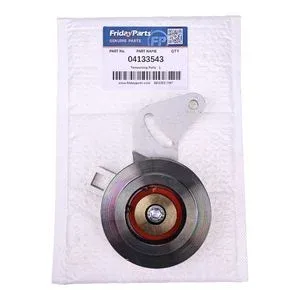
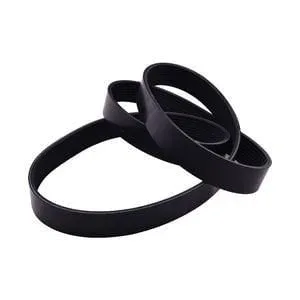
Matched Set Dispatch — Every belt tensioner ships verified against the specific D2.9L4/TD2.9L4 engine serial to ensure the complete drive system arrives ready for rebuild.
Technical Specifications
| Parameter |
Value |
| Part Number |
04133543 |
| Product Type |
Belt Tensioner |
| Cross-Reference |
04133543, 4133543 (reference only) |
| Machine Fitment |
D2.9 L4, TD2.9 L4, TD2.9L04 |
| Material |
Forged SAE 1045 steel |
| Surface Treatment |
Heat-treated to HRC 40–45 |
| Bearing Type |
Double-sealed deep-groove ball bearing (6202-2RS) |
| Bearing Protection |
IP54 |
| V-Groove Included Angle |
34° |
| Surface Finish |
Ra 0.8 μm on rotating interfaces |
| Runout Tolerance |
±0.3 mm |
| Condition |
New Aftermarket |
| Warranty |
6 months against manufacturing defects |
| MOQ |
1 piece |
| Standards |
ISO 9001, DIN 7190, ISO 286-1 |
Application Suitability
| Engine System |
Related Components |
| Belt drive – primary accessory drive |
V-belt, idler pulleys, alternator pulley, water pump pulley |
| Belt drive – timing and auxiliary |
Tensioner bracket, belt guard hardware, crankshaft pulley |
| Cooling system interface |
Fan drive belt, fan hub bearing, coolant pump seal |
| Overhaul kit supplementation |
Gasket set, front crank seal, accessory mounting bolts |
Why a Belt Tensioner Failure Stops More Than the Belt
A failed tensioner rarely acts alone — the fault that destroyed it usually lives elsewhere in the system.
When an engine rebuild shop pulls a D2.9 L4 or TD2.9 L4 apart, the belt tensioner is often the last component inspected but the first that failed. Slippage marks on the pulley groove, uneven bearing wear, or a cracked bracket all point backward to a root cause that a new tensioning pulley 04133543 alone will not cure. I have seen TD2.9L4 units return to the shop within weeks because the rebuilder replaced the tensioner without checking the idler pulley bearing clearance or the alternator mounting alignment. The accessory drag from a failing water pump bearing can overload the tensioner beyond its design range [NEED_CITE: belt drive system failure root cause analysis for diesel engines]. Addressing the upstream fault during the same teardown avoids a second dismantling and a second set of gaskets consumed for the same repair.

The Belt Drive System as a Rebuild Line Item
This belt tensioner sits at the center of the accessory drive loop on D2.9 L4 and TD2.9 L4 engines. It maintains correct belt deflection across the alternator, water pump, and any auxiliary-driven attachment. During an engine rebuild replacement cycle, the tensioner must be evaluated alongside every driven component it contacts. A belt tensioner engine rebuild replacement decision made in isolation — without checking the V-groove wear on adjacent pulleys or the runout on the crankshaft pulley — leads to premature belt wear on the new setup.
Engine Serial Variants and Dimensional Confirmation
Deutz produced the D2.9 and TD2.9 families across multiple serial ranges with variations in accessory bracket geometry and belt routing. The same base part number can appear across builds where the tensioner arm pivot point or mounting bolt spacing differs. Before confirming an order, the engine serial plate must be cross-checked against the tensioner variant. A mismatch here means the pulley sits slightly off-plane relative to the belt path, introducing lateral load that destroys the 6202-2RS bearing well before the planned overhaul interval [NEED_CITE: engine serial variant differences in belt drive geometry].
Reading the Specifications Against Service Conditions
The forged SAE 1045 steel body, heat-treated to HRC 40–45, gives the pulley groove enough surface hardness to resist abrasive wear from belt dust and particulate ingress common in quarry and demolition environments. The 34° V-groove included angle must match the belt cross-section specified for the particular TD2.9 L4 build — using a narrower or wider belt alters the seating depth and shifts the effective pitch diameter, changing the driven accessory speeds. The IP54-rated double-sealed bearing keeps fine silica and moisture out of the raceway, which matters on machines operating in wet cutting or washdown conditions. The ±0.3 mm runout tolerance ensures the belt tracks without oscillation at operating RPM, preventing the harmonic flutter that accelerates cord fatigue inside the belt carcass.
The Cost of Skipping the System Check
Replacing the tensioner without verifying the health of the idler, the alignment of the accessory brackets, and the condition of the crankshaft pulley damper invites a repeat failure. A worn idler bearing introduces cyclic load variation that the new tensioner bearing absorbs until it cannot. A slightly bent bracket — common after a front-end impact on compact excavators — forces the tensioner arm to operate at an angle, wearing the pivot bushing asymmetrically. These secondary faults show up as belt squeal or dusting within the first fifty hours, and the machine returns to the bench for a second teardown [NEED_CITE: repeat belt drive failure patterns in compact diesel engines]. The labor and gasket cost of that second opening exceeds the time needed to inspect the full drive loop during the first rebuild.
Why Source This Tensioner Through a System-Matched Supplier
Own production on selected lines and qualified sourced supply under one account means this tensioner and the adjacent overhaul components — gaskets, seals, bearings, and fasteners — arrive under one warranty and one quality standard. Eight product categories allow a complete belt drive and engine seal job to ship as one consignment rather than split across vendors with mismatched lead times. Minimum order from one piece supports the emergency single-unit rebuild without forcing a stock purchase. The Guangzhou warehouse holds common Deutz drive components for fast dispatch on urgent teardowns. Part identification works from the engine model, a photograph of the nameplate, or the worn component itself, and cross-reference verification covers superseded numbers that older service manuals still list. A technical team confirms the correct tensioner variant against your engine serial before the order ships, reducing the risk of a variant mismatch on arrival [NEED_CITE: aftermarket cross-reference verification practices for engine components].
Documentation & Verification
- Commercial invoice listing each belt drive component by part number and engine fitment
- Cross-reference sheet mapping 04133543 and 4133543 against superseded numbers (reference only)
- Dimensional inspection record covering V-groove angle, runout, and bearing specification
- Warranty terms document stating six-month coverage against manufacturing defects
- Packing photographs showing tensioner protected against groove surface damage in transit
- HS code and customs paperwork prepared for international engine parts shipment
Installation & Rebuild Sequence
- Clean the tensioner mounting bracket and pivot bore before fitting the new unit to prevent trapped debris from affecting arm movement
- Verify the 34° V-groove matches the belt profile specified for the specific D2.9 L4 or TD2.9 L4 serial variant
- Torque the tensioner mounting fasteners to the engine manual specification, then check arm travel through the full adjustment range
- Install the new belt and set deflection per the rebuild manual, then rotate the crankshaft two full turns and re-check tension
- Run the engine at idle for a break-in period, monitoring the tensioner bearing for noise or lateral movement
- Re-inspect belt tracking and tensioner position after the first operating cycle before closing the belt guard
Inquiries for Correct Fitment
Send the engine model designation, serial number from the nameplate, and any overhaul history — including whether the block has been bored or the accessory brackets replaced. If the nameplate is illegible, a photograph of the existing tensioner alongside a ruler for scale allows dimensional confirmation. Providing the full list of belt drive components needed for the rebuild enables a matched-set quotation that consolidates the tensioner, belt, idler, and hardware into one shipment.
Frequently Asked Questions
Q: What other belt drive components should be replaced together with the tensioner?
A: During a D2.9 L4 or TD2.9 L4 rebuild, the V-belt, idler pulley, and crankshaft pulley damper should all be inspected and typically replaced as a set. Reusing a worn idler or a fatigued belt alongside a new tensioner transfers uneven loads back into the fresh bearing. A matched belt drive kit ensures all contact surfaces and tension points are renewed together.
Q: How do I confirm the correct tensioner variant for my engine serial number?
A: The Deutz D2.9 and TD2.9 families span multiple serial ranges with differences in bracket geometry and belt routing. Provide the full engine serial from the nameplate or a photograph of the existing tensioner. Cross-reference verification against the serial range confirms whether the standard 04133543 applies or a variant is required.
Q: Is this tensioner included in standard overhaul kits or ordered separately?
A: Most standard Deutz engine overhaul gasket and seal kits do not include the belt tensioner as a line item. It must be ordered as a separate component alongside the overhaul kit. Confirming the kit contents before ordering prevents a missing-item delay when the engine is already on the bench.
Q: What system-level faults should be checked when replacing a failed tensioner?
A: Beyond the tensioner itself, check the idler pulley bearing for play, the alternator and water pump mounting alignment, and the crankshaft pulley for runout or damper separation. Accessory drag from a failing pump bearing can overload the tensioner. Addressing the root cause during the same rebuild prevents early repeat failure.
Q: How do I verify the engine model and serial when the nameplate is unreadable?
A: A clear photograph of the engine block casting numbers, the injection pump data plate, or the existing tensioner with a scale reference allows technical identification. Cross-referencing these details against the D2.9 L4 and TD2.9 L4 build records confirms the correct part variant without relying on the worn nameplate alone.