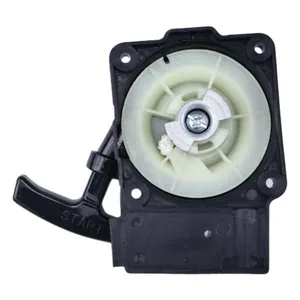
System-Matched Assembly Dispatch — Each recoil starter is verified against the specific engine serial variant before shipment, ensuring the pulley ratio and spring tension align with the target blower's auxiliary system requirements.
Technical Specifications
| Parameter |
Value |
| Part Number |
576594001 |
| Product Type |
Recoil Starter |
| Cross-Reference |
576594001 (reference only) |
| Machine Fitment |
EBZ6500, EBZ6500RH, EBZ7500, EBZ7500RH, EBZ8500, EBZ8550, EBZ8550RH, EBZ8560, EBZ8560RH |
| Condition |
New Aftermarket |
| Pull-Force Testing |
22–28 N·m range |
| Cord Rewind Cycle Validation |
≥5,000 cycles |
| Housing Material |
Glass-filled polypropylene (PP-GF30) |
| Internal Spring Steel |
ASTM A228 specification, Rockwell hardness C44–C48 |
| Pulley Gear Ratio |
1:1.02 tolerance |
| Bearings |
Sealed ball bearings (608ZZ) |
| Fasteners |
Stainless steel (A2-70) |
| Warranty |
3–12 months against manufacturing defects |
| MOQ |
1 piece |
Application Suitability
| Engine System |
Related Components |
| Cold-Start Auxiliary |
Pulley engagement mechanism, cord guide assembly, recoil spring housing |
| High-Dust Operation |
Sealed bearing interfaces, debris shield, air intake pre-filter |
| Scheduled Overhaul |
Complete engine gasket set, carburetor rebuild kit, ignition module |
| Fleet Maintenance |
Fuel line assemblies, throttle cable, engine mount fasteners |
Diagnosing the Real Cause Behind Repeated Starter Failures
A failed pull is rarely just about the starter itself.
I have opened up too many RedMax EBZ8500 units where the recoil starter was swapped two or three times before anyone looked at what was actually wrong. The starter cord snaps, the spring refuses to rewind, or the pulley grinds on engagement — and the immediate reaction is to order another assembly. But the auxiliary system tells a different story when you read it properly. Seized pulley bearings from grit infiltration, a worn crankshaft end that throws the pulley off-axis, or a flooded carburetor that makes the engine fight every pull — these are the conditions that destroy starters. Replacing the unit without addressing the root cause simply sets up the next failure [NEED_CITE: small engine auxiliary system failure root cause analysis methodology].
The Auxiliary System Context for This Recoil Starter
This recoil starter sits at the boundary between the operator and the engine's internal systems. When a blower on a demolition site or fire line refuses to start, the starter takes the blame, but its performance depends entirely on what lies behind it. The sealed 608ZZ bearings in this assembly are specified to resist grit ingress, which matters because construction dust and wildfire ash penetrate every unsealed interface. A recoil starter engine auxiliary replacement only solves the problem if the adjacent components — the pulley engagement surface, the cord guide, the crankshaft mounting face — are within tolerance.
System-Level Inspection Before Committing to a Swap
Before installing a new unit, check the crankshaft end for eccentric wear that creates uneven loading on the pulley. Verify that the clutch engagement mechanism moves freely and that the carburetor is not flooding from a stuck float needle, which creates compression resistance the starter was never designed to overcome. I once traced a RedMax EBZ8560 through three consecutive starter failures before finding the mounting boss had a hairline crack invisible until the housing was removed [NEED_CITE: engine auxiliary mounting integrity inspection standards]. The replacement starter was not the problem; the cracked mount was shifting under pull load.
Understanding the Specification Choices
The PP-GF30 housing material is glass-filled polypropylene at 30 percent fiber content, chosen for impact absorption in drop scenarios while maintaining dimensional stability across the temperature swings a blower sees from cold morning starts to midday heat. The internal spring steel meets ASTM A228 music wire specification with Rockwell hardness C44–C48, a range that balances rewind force against fatigue life — too hard and the spring snaps under repeated cycling, too soft and it loses tension within the first season. The 1:1.02 pulley gear ratio tolerance ensures the cord deploys and rewinds at the rate the operator expects, preventing the jerky engagement that accelerates cord fraying. Pull-force calibration in the 22–28 N·m range matches the effort a gloved operator applies during a cold start without overloading the spring or cord anchor [NEED_CITE: hand-held engine pull-force ergonomic specifications].

What Happens When You Skip the Root-Cause Step
Installing a fresh starter on a blower with a flooded carburetor means the new unit absorbs the same hydraulic lock resistance that killed the previous one. The spring overstresses within days, the cord anchor fatigues, and the machine is back on the bench. On high-dust sites, failing to clean the bearing seat before installation packs fresh grit directly into the new sealed bearings, defeating the entire purpose of the 608ZZ specification. The cost is not just the second starter — it is the crew standing around a dead blower during a time-critical operation [NEED_CITE: equipment downtime cost impact on landscaping and forestry operations].
What This Supply Arrangement Covers
This recoil starter is produced on qualified lines under the same quality terms and warranty as all other engine auxiliary components in the catalog, meaning the pull-force calibration and rewind cycle validation records carry the same weight regardless of which production facility built the unit. Identification support works from a part number, a machine model, or a photograph of a worn nameplate — which matters when the blower has been in the field long enough that the data plate is painted over or abraded away. A single unit ships on its own with no minimum order barrier, so an emergency replacement does not force a bulk purchase. Cross-reference verification covers superseded numbers and alternate references, reducing the risk of ordering a variant that physically fits but has the wrong spring rate for the engine. Sample supply is available for fitment confirmation before a fleet commitment locks in quantity.
Documentation & Verification
- Commercial invoice listing each blower model the starter is matched against
- Compatibility sheet with OEM 576594001 marked as cross-reference only
- Pull-force and rewind cycle test records included per batch
- Warranty terms covering manufacturing defects for 3 to 12 months
- Packing photographs confirming sealed box condition before dispatch
- HS code and customs paperwork prepared for cross-border shipment
Installation & Rebuild Sequence
- Clean the crankshaft mounting face and inspect for eccentric wear before seating the new housing
- Verify pulley engagement with the clutch mechanism by hand before securing the A2-70 fasteners
- Torque the stainless steel mounting bolts to specification, avoiding over-tightening on the PP-GF30 housing
- Perform five test pulls to confirm cord rewind tension and spring engagement before returning the blower to service
Request a Fitment Confirmation
Send the blower model designation, the engine serial number if legible, and any available photograph of the existing starter or nameplate. Include any known rebuild history or previous starter replacements so the correct variant and any adjacent system components can be confirmed together.
Frequently Asked Questions
Q: What other engine auxiliary parts should be inspected when replacing the recoil starter?
A: Check the pulley engagement surface for scoring, the cord guide for wear grooves that accelerate fraying, and the crankshaft end for eccentric runout. Inspect the carburetor float needle and the clutch engagement mechanism. These adjacent components often cause the conditions that destroy starters prematurely.
Q: How do I confirm whether the starter or another system component caused the startup failure?
A: Remove the starter and attempt to rotate the crankshaft by hand. If the engine resists rotation, the problem likely involves carburetor flooding, internal seizure, or clutch drag rather than the starter itself. A free-rotating engine with a failed pull points to the starter assembly.
Q: Do different blower serial ranges within the same model require different starter variants?
A: Yes. Production revisions within the EBZ series can alter the mounting pattern, pulley depth, or spring specification. Providing the full machine serial number allows verification of the correct variant before dispatch, avoiding fitment issues on arrival.
Q: What pull-force and rewind specifications does this replacement meet?
A: Each unit is tested in the 22–28 N·m pull-force range and validated for a minimum of 5,000 rewind cycles. The internal spring meets ASTM A228 specification with C44–C48 hardness, calibrated for consistent rewind across operating temperatures.