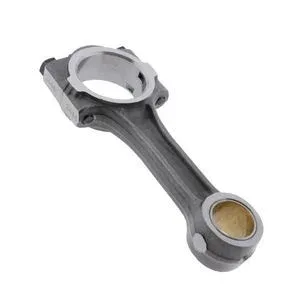
System-Matched Con-Rod Supply — Crankshaft regrind history verified before bearing grade selection to prevent clearance mismatch on Kubota D/V-series rebuilds.
Technical Specifications
| Parameter |
Value |
| Product Type |
Connecting Rod |
| Machine Fitment |
Kubota D905, D1105, D1005, D1305, V1205, V1305, V1405, V1505 engines |
| Material |
Forged 40Cr alloy steel |
| Surface Treatment |
Heat-treated with anti-rust oil |
| Assembly State |
New Aftermarket |
| Warranty |
6 months against manufacturing defects |
| Manufacturing Standard |
ISO 9001 |
Application Suitability
| Engine System |
Related Components |
| Bottom-end rotating assembly |
Main bearings, thrust washers, crankshaft seals |
| Piston and cylinder group |
Piston pin bushings, piston rings, cylinder liners |
| Lubrication circuit |
Oil pump, oil filter, gallery feed bolts |
| Fastener and balance group |
Rod bolts, flywheel bolts, balance shaft bearings |
Why Rebuilds Fail After a Con-Rod Replacement
A replacement connecting rod engine rebuild fails most often from mismatched bearing grades rather than defective material.
When a Kubota D905 or V1505 is torn down, the crankshaft journals have usually been reground at least once. If the connecting rod engine rebuild kit ships with standard-size bearing shells for a crank that is already 0.25 mm undersize, the oil clearance opens beyond specification. The rod knocks on first start-up and the engine comes apart again. Shops lose days of bench time chasing a fault that was really a procurement error. [NEED_CITE: bearing clearance measurement standards for small-bore diesel engines]
The Bottom-End as a Matched Set
The connecting rod does not work alone inside the Kubota D/V-series block. It depends on a bearing shell that matches the crankpin journal grade, a piston pin bushing pressed to the correct interference, and rod bolts torqued to the yield point specified for that exact rod variant. Sourcing these items from separate suppliers often produces a mix of grades: one vendor ships STD shells, another sends 0.25 oversize pistons, and the bushing supplier defaults to a different outer diameter. The parts arrive, but nothing assembles without machining. Keeping the connecting rod, bearings, bushings and bolts under one matched set removes the tolerance stack-up before the engine goes back together.
Serial Variants and Previous Regrinds
Kubota produced the D905 through V1505 family across several generations, and rod weight along with big-end bore diameter can shift between naturally aspirated and turbocharged variants. A rod pulled from a D1105 may physically fit a V1505 but upset the rotating balance. Equally important is the regrind history: a crank that was cut to 0.50 undersize on its last overhaul needs 0.50 shells on every journal, main and big-end alike. Missing that record means ordering by guesswork. Verification against the engine serial plate and any surviving machine records locks the correct connecting rod variant and the matching oversize grade across the whole bottom end. [NEED_CITE: Kubota D and V series engine serial identification practices]
Material and Heat Treatment in Context
The 40Cr alloy steel forging provides the tensile strength needed to handle combustion loads in a compact diesel that routinely operates above 2,200 rpm. Heat treatment after forging raises the yield point of the big-end cap and the shank, so the rod resists stretching under peak cylinder pressure. Anti-rust oil applied at the factory preserves the machined surfaces through storage and transit, meaning the bearing crush height remains within tolerance when the shell is fitted. These material properties matter only when the rest of the system—oil pressure, cooling flow, and fuel timing—is also correct. A connecting rod that meets spec will still fail if the oil gallery is blocked or the injector dribbles.

The Cost of Skipping Root-Cause Inspection
Pulling a failed rod and replacing it without diagnosing the original fault invites a repeat failure. Oil starvation from a clogged suction strainer, over-rev from a faulty governor, or localized overheating from a collapsed radiator hose each leave a distinct signature on the damaged rod—blueing on the big-end, stretched bolt threads, or a twisted shank. Installing a new connecting rod without correcting the upstream cause simply sets a timer for the next teardown. The second failure typically damages the crankshaft beyond regrind limits, turning a bearing-and-rod job into a short-block replacement. [NEED_CITE: diesel engine connecting rod failure mode analysis methods]
Why Source the Rebuild Package Here
Production on selected lines and qualified sourced supply sit under a single account and a single six-month warranty, so a matched connecting rod set and its companion bearings carry the same terms. Eight product categories allow the overhaul kit, gasket set, filters and seal kits to ship as one consignment, removing the second freight charge that follows a split order. Minimum order starts at one piece, supporting a single-cylinder repair or a sample fitment check before a fleet-wide overhaul commitment. The Guangzhou warehouse holds stock on common D/V-series items for prompt dispatch. Part identification works from an engine number, a photograph of the nameplate or an image of the old rod beside a caliper, and cross-reference verification covers superseded and alternate numbers so a discontinued listing does not block the order.
Documentation & Verification
- Commercial invoice listing each connecting rod variant and matched bearing grade
- Cross-reference sheet for superseded Kubota part numbers, marked reference only
- Dimensional inspection record covering big-end bore and bushing seat diameter
- Six-month warranty terms printed and included inside the carton
- Packing photographs showing anti-rust oil condition before crate closure
- HS code guidance for customs classification of forged steel engine components
Installation & Rebuild Sequence
- Clean oil galleries with solvent and compressed air before fitting the new connecting rod to prevent immediate bearing scoring
- Verify crankpin journal diameter with a micrometer and select bearing shells to the measured undersize grade
- Press piston pin bushings into the small-end at the interference fit specified for the D/V-series variant
- Torque rod bolts in the two-stage sequence using new fasteners; never reuse yielded bolts
- Rotate the assembly by hand after each rod is fitted to confirm free movement and check side clearance with a feeler gauge
- Prime the lubrication system and monitor oil pressure during the first thirty minutes of run-in before applying load
Requesting a Matched Overhaul Quote
Provide the engine model, serial number and any available crankshaft regrind records so the correct oversize grade can be confirmed across the full connecting rod and bearing set. If the nameplate is illegible, a clear photograph of the old rod next to a ruler or caliper allows identification from the big-end width and shank profile. State whether the requirement is a single-cylinder repair or a complete bottom-end overhaul so the kit contents can be matched to the job.
Frequently Asked Questions
Q: What other components should be replaced when a connecting rod fails?
A: Beyond the rod itself, plan for new rod bolts, con-rod bearing shells matched to the current crankpin grade, a piston pin bushing, and the corresponding main bearings. Inspect the oil pump and suction strainer, because debris from the failure often contaminates the lubrication circuit and will damage the replacement assembly if left in place.
Q: The crankshaft was reground previously—how do I select the right bearing grade?
A: Measure each crankpin journal with a micrometer and compare readings to the Kubota undersize chart. Order bearing shells to that measured grade, not to the last recorded overhaul card, because previous work may have gone one step further. Matching all main and big-end shells to the same grade keeps oil clearance uniform across every cylinder.
Q: Are connecting rods for the D905 and V1505 interchangeable?
A: They share the same block family but differ in rod weight, big-end bore and balance specifications between naturally aspirated and turbocharged variants. Swapping rods across variants upsets rotating balance and can cause vibration-induced bearing fatigue. Always confirm the exact engine serial number before ordering.
Q: What typically causes an original connecting rod to fail?
A: The most common causes are oil starvation from a blocked filter or failed pump, over-speed from governor malfunction, and coolant loss leading to localized overheating. Identifying the root cause from the fracture pattern and bearing surface prevents the replacement rod from failing under the same unresolved condition.
Q: Can a complete overhaul kit be matched to a specific engine serial number?
A: Yes. Supplying the engine serial number and any known regrind history allows the kit to be assembled with the correct connecting rod variant, bearing grades, piston sets and gasket specifications. This avoids the mismatched oversize situation where pistons arrive at one grade and shells at another.