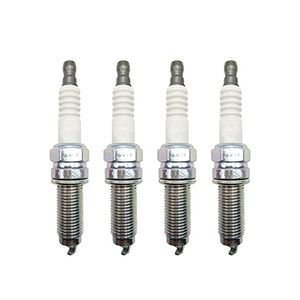
Engine Sequence Variants Confirmed — We verify heat range and thread reach against your specific engine code before dispatch, preventing misfire returns.
Technical Specifications
| Parameter |
Value |
| Product Type |
Spark Plug |
| Part Number |
SILZKR7C11S |
| Cross-Reference |
SILZKR7C-11S, 92932 (for identification purposes) |
| Machine Fitment |
Honda CR-V (2012–2016), Honda Accord (2008–2012) |
| Center Electrode Material |
Iridium, laser-welded 0.6 mm tip |
| Ground Electrode Material |
Nickel alloy |
| Spark Gap |
1.1 mm ±0.05 mm |
| Heat Range Rating |
7 |
| Dielectric Strength |
Exceeding 25 kV |
| Ceramic Insulator Purity |
95% Al₂O₃ |
| Sealing Design |
Triple-gasket |
| Standard Compliance |
ISO 9001, JIS D 0202, ISO 22822 |
| Condition |
New Aftermarket |
| Warranty |
6 months against manufacturing defects |
Application Suitability
| Engine System |
Related Components |
| Ignition System Overhaul |
Ignition coils, plug-well seals, valve cover grommets |
| Scheduled Engine Tune-Up |
Air filters, fuel filters, PCV valves |
| Fleet Preventive Maintenance |
Spark plug wire sets, coil-on-plug boots |
| Misfire Diagnostic Repair |
Engine mounts, intake manifold gaskets |
Why the Same Spark Plug Number Ships in Multiple Variants
The correct SILZKR7C11S Spark Plug engine replacement must align with the specific engine build and thermal load.
A simple plug swap that ignores worn coils, degraded plug-well seals, or the wrong heat range leaves misfire codes on the dash the day after the vehicle leaves the shop. We see this pattern constantly in regional repair hubs where the focus is on the failed part rather than the system fault that caused the failure [NEED_CITE: ignition system misfire diagnostic procedures for multi-cylinder engines]. Supplying this component requires checking the engine serial variant and the thermal history of the cylinder head.
System-Level Ignition Supply and Component Matching
This component sits at the heart of the ignition system. When a SILZKR7C11S Spark Plug engine replacement is requested, we look at the entire firing circuit. The 0.6 mm laser-welded iridium center electrode is designed to reduce the voltage demand on the ignition coils. If the coils are near the end of their service life, the new plugs will still arc, but the system will remain inefficient. Matching this plug with fresh coils and boots ensures the repair addresses the root cause.
Rebuild History and Thermal Range Verification
Heat range 7 is the standard specification for these Honda applications, but previous overheating events or modifications can shift the requirement. In Central Asian markets where I often verify fleet kits, we check if a previous rebuild altered the cylinder head surface or if the engine has been tuned for different thermal loads [NEED_CITE: spark plug heat range selection for modified engine thermal cycles]. Using the wrong heat range leads to either pre-ignition or carbon fouling, neither of which is a defect of the plug itself.
Decoding the Electrode and Ceramic Specifications
The 95% Al₂O₃ ceramic insulator provides the dielectric strength needed to contain over 25 kV of firing voltage. If the purity is lower, flashover can occur along the ceramic surface instead of across the gap. The triple-gasket sealing design prevents compression leakage at the cylinder head interface, which is critical for maintaining combustion chamber pressure during high-load highway duty cycles.
The Hidden Cost of Ignoring Adjacent Ignition Components
Replacing only the plug while leaving hardened plug-well seals in place allows oil to seep into the spark plug tube. This oil film eventually fouls the new iridium tip and degrades the silicone coil boot, leading to a repeat misfire within a few thousand miles. The workshop then faces a warranty claim for a part that never actually failed [NEED_CITE: common causes of repeat ignition misfire after component replacement].
Sourcing Accuracy from One Technical Account
XUNPO maintains a single warranty across both our own production lines and our qualified sourced supply, meaning every ignition component carries the same quality assurance. We verify cross-references against SILZKR7C-11S and 92932 variants to ensure the thread reach and hex size match your application. Samples are available for fitment confirmation before a distributor commits to bulk inventory, eliminating the risk of stocking the wrong variant for a regional fleet.

Documentation & Verification
- Commercial invoice and packing list for customs clearance.
- Compatibility sheet cross-referencing SILZKR7C-11S and 92932 (reference only).
- Quality inspection record verifying 1.1 mm gap tolerance.
- Six-month warranty terms against manufacturing defects.
- Packing photographs showing triple-gasket seals intact.
- HS code support for ignition component export documentation.
Installation & Rebuild Sequence
- Verify cylinder head thread condition before installing the SILZKR7C11S.
- Apply anti-seize only if specified; ceramic insulator purity requires clean handling.
- Torque to manufacturer specification to ensure triple-gasket seal engagement.
- Inspect plug-well seals for oil residue that could foul the iridium tip.
- Clear ECU misfire codes and perform a drive-cycle verification after fitting.
Technical Inquiry for Ignition Kits
Please provide the specific engine code (e.g., K24Z7) and model year to confirm the correct heat range and thread reach for your application. If you are sourcing for a mixed fleet, share the VIN or engine serial number so we can verify the cross-reference against SILZKR7C-11S variants. For overhaul kits, let us know the rebuild history so we can match the plug to the current cylinder head condition.
Frequently Asked Questions
Q: What else should be replaced when changing spark plugs on this engine?
A: We recommend inspecting the ignition coils, coil boots, and plug-well seals. Oil leakage from degraded seals will foul the new iridium electrode, while weak coils will not fully utilize the low-voltage demand of the 0.6 mm tip. Supplying these as a matched kit ensures the misfire does not return shortly after service.
Q: How do I confirm the correct heat range for my specific engine code?
A: Heat range 7 is the standard for most Honda CR-V and Accord applications in this range, but engine serial variants and previous rebuilds can shift the thermal requirement. Provide the engine code or VIN, and our technical team will verify if the standard rating or a modified heat range is necessary for your operating environment.
Q: Are SILZKR7C11S and SILZKR7C-11S the same plug?
A: Yes, these are typically interchange references for the same specification, but variations in thread reach or hex size can exist between different production runs. We verify the cross-reference against the engine serial number to ensure the physical dimensions match your cylinder head before dispatch.
Q: What ignition system faults cause premature spark plug failure?
A: Oil fouling from leaking valve cover grommets, flashover from cracked coil boots, and incorrect fuel mixtures can all degrade the iridium tip or ceramic insulator prematurely. Identifying these root causes before installing the new SILZKR7C11S prevents the replacement part from failing in the same manner.
Q: Can I get a sample for fitment verification before bulk ordering?
A: Yes, we provide samples for physical fitment checks, including thread reach and electrode gap confirmation. This is especially important for distributors stocking inventory for regional repair hubs where engine variants may differ from standard listings.