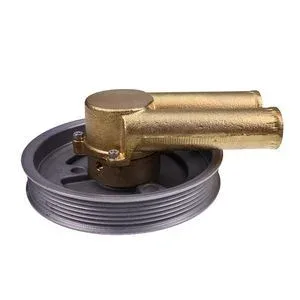
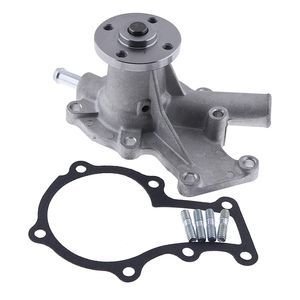
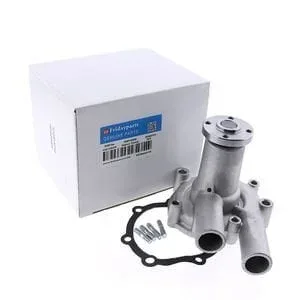
Variant-confirmed — Engine serial prefix checked against flange port layout and impeller configuration before this Sea Water Pump for Volvo Penta engine rebuild leaves our Guangzhou facility.
Technical Specifications
| Parameter |
Value |
| Part Number |
21214599 3812693 3862482 |
| Product Type |
Water Pump |
| Cross-Reference |
21214599, 3812693, 3862482, 3857202 (reference only) |
| Machine Fitment |
Volvo Penta 3.0GSMEFS, 3.0GSPEFS, 4.3GLPEFS, 4.3GXi-A through 4.3GXi-EF, 4.3OSi-B, 4.3OSi-E, 5.0GLPEFS, 5.0GiPEFS, 5.0GXi-A through 5.0GXi-EF, 5.0OSi-A through 5.0OSi-EF, 5.7GSPEFS, 5.7GSIPEFS, 5.7GXi-A through 5.7GXi-F, 5.7Gi-A through 5.7Gi-EF, 5.7OSi-A through 5.7OSi-DF |
| Impeller Material |
Reinforced nitrile rubber (NBR) |
| Housing Material |
Marine-grade aluminum alloy (AlSi10Mg), anodized |
| Shaft Seal Type |
Double-lipped Viton with stainless steel springs |
| Static Pressure Rating |
3.5 bar |
| Continuous Operation Speed |
5,000 rpm |
| Dimensional Tolerance |
±0.05 mm on mounting faces and bore diameters |
| Flow-Pressure Test |
30 L/min @ 2.8 bar |
| Corrosion Resistance Standard |
ISO 8502-3 |
| Flow Performance Standard |
SAE J1927 |
| Condition |
New Aftermarket |
| Warranty |
3–12 months against manufacturing defects |
| MOQ |
1 piece |
Application Suitability
| Engine System |
Related Components |
| Raw-water intake circuit (3.0–5.7L) |
Thermostat, raw-water hoses, exhaust manifold gaskets |
| Heat exchanger feed loop |
Heat exchanger end caps, tube stack O-rings, zinc anodes |
| Exhaust manifold cooling passage |
Manifold gaskets, riser gaskets, mixing elbow seals |
| Twin-engine planing hull installation |
Matched pump pairs, crossover hoses, shared strainer seals |
Why the Same Base Number Ships in Multiple Configurations
A Sea Water Pump for Volvo Penta engine rebuild is not a single universal casting — it is a family of pumps that share a base identifier but differ in port orientation, impeller spline, and flange bolt pattern depending on the engine serial prefix. Matching the engine serial number, not just the model designation, is the only reliable way to confirm fitment.
I spent years handling warranty claims where the pump arrived, the engine was torn down, and the bolt holes simply did not line up. One customer ordered for a 5.0GXi assuming all suffix variants were identical. The -B and -C variants share a base number but route the discharge port at different clock positions relative to the thermostat housing. [NEED_CITE: marine engine serial variant identification practices for cooling system components] The teardown was already underway, the old pump was off, and the vessel was sitting dead in the water waiting for the correct casting. These mismatches are not rare — they account for a meaningful share of cooling-system return shipments across the industry.
Raw-Water Circuit Positioning and Adjacent Component Dependency
This pump sits at the entry point of the raw-water side of the cooling loop. It pulls seawater through the hull strainer, pushes it past the thermostat housing, through the heat exchanger, and into the exhaust manifold cooling jacket. Every component downstream depends on the flow and pressure this pump delivers. When a Sea Water Pump for Volvo Penta engine rebuild is replaced without inspecting the thermostat, hoses, and manifold gaskets, the new pump inherits whatever restriction or leakage the old system left behind.
Serial Variant Differences Across the 3.0–5.7 Family
The 3.0, 4.3, 5.0, and 5.7 platforms share architecture but not interchangeable pump configurations. Suffix variants like -BF versus -CF indicate different accessory drive arrangements that shift the pump mounting face and port positions. [NEED_CITE: Volvo Penta engine suffix designation conventions for accessory mounting] Our verification process cross-checks the engine serial prefix against the casting drawing to confirm the discharge port clock position, the inlet bore diameter, and the flange bolt circle before anything ships. This step eliminates the most common cause of installation failure on these engines.
Material and Tolerance Interpretation for Marine Service
The AlSi10Mg housing with anodized surface treatment resists galvanic attack in saltwater circuits, while the ±0.05 mm tolerance on mounting faces and bore diameters ensures the pump seats flush against the block without shimming. The double-lipped Viton shaft seal with stainless steel springs handles continuous saltwater exposure at temperatures that would degrade standard nitrile seals. The reinforced NBR impeller maintains vane geometry under the 3.5 bar static pressure rating, which matters because impeller deflection at pressure directly reduces the 30 L/min flow output and starves the exhaust manifold of cooling water. [NEED_CITE: SAE J1927 flow performance criteria for marine raw-water pumps]

The Hidden Cost of Ignoring the Root Cause
When a raw-water pump fails from impeller erosion or shaft seal degradation, those are symptoms — not causes. The underlying fault is often depleted sacrificial anodes allowing stray current to attack the housing, or a collapsing suction hose creating cavitation that tears impeller vanes. Replacing only the pump without addressing anode depletion or hose condition means the new pump enters the same destructive environment. We see these repeat failures regularly in claim records. [NEED_CITE: marine cooling system root cause analysis for raw-water pump failures]
Why Procure Through This Channel
Our own production lines and qualified sourced supply carry identical QC and warranty terms, so whether your Sea Water Pump for Volvo Penta engine rebuild comes from our facility or a partner plant, the inspection standard is the same. We stock across eight core categories — engine, hydraulic, electrical, undercarriage, cabin, seal kits, tools, and general spares — so a complete cooling system overhaul ships as one consignment under one account. Minimum order is one piece, which matters when a single vessel is down. Serial-variant verification, cross-reference checks covering superseded numbers, and sample supply for fitment confirmation before bulk commitment are standard steps, not premium add-ons.
Documentation & Verification
- Commercial invoice and packing list with full cross-reference numbers marked reference only
- Part compatibility sheet mapping engine serial prefix to pump port orientation and flange pattern
- Flow-pressure test record at 30 L/min and 2.8 bar included with each unit
- Warranty terms document covering manufacturing defects for 3 to 12 months
- Packing photographs showing housing condition and impeller vane integrity before crating
- HS code and customs documentation support for marine parts import clearance
Installation & Rebuild Sequence
- Verify discharge port clock position against thermostat housing inlet before mounting the pump to the block
- Inspect suction hose for internal collapse and replace if the liner shows any delamination
- Torque flange bolts in star pattern to the engine manual specification to avoid housing distortion
- Prime the raw-water circuit through the strainer before first start to prevent dry-run impeller damage
- Run the engine at idle and check the exhaust water discharge for continuous flow before loading the vessel
Inquiry Guidance
Provide your engine model, full serial number, and any suffix designation from the nameplate or service records. If the nameplate is corroded beyond reading, send a photograph of the old pump's flange and port layout. Include any recent overhaul history so we can confirm whether matched components — thermostat, hose set, manifold gaskets — should ship together.
Frequently Asked Questions
Q: What other cooling system components should be replaced at the same time as this pump?
A: During a raw-water circuit overhaul, we recommend replacing the thermostat, raw-water hoses, exhaust manifold gaskets, and sacrificial anodes alongside the pump. This prevents a new pump from inheriting restrictions or leaks left by aging adjacent components, and it consolidates the entire job into one shipment.
Q: My engine has a suffix variant like 5.7GXi-C versus 5.7GXi-CF — does the same pump fit both?
A: Not necessarily. Suffix letters indicate different accessory drive configurations that can shift port orientation and flange bolt patterns. We verify your exact serial prefix against the casting specification before confirming compatibility, so provide the full designation from your engine nameplate.
Q: How do I determine if the pump failure came from a deeper cooling system problem?
A: Impeller erosion, housing corrosion, and shaft seal degradation often point to depleted anodes, collapsing suction hoses, or saltwater chemistry issues. Inspect the entire raw-water circuit during teardown and share findings with us so we can recommend matched replacements that address the cause.
Q: Can I receive a matched set covering the full raw-water circuit?
A: Yes. We supply the pump together with thermostats, hose sets, manifold gaskets, and anodes as a consolidated kit. This approach eliminates split shipments, ensures component compatibility within your specific engine build, and reduces the vessel's total downtime.
Q: How do I confirm my exact engine serial number if the nameplate is corroded?
A: Send a photograph of the block casting number, the old pump's flange pattern, and any service documentation you have. Our technical team cross-references these details against the engine build records to identify the correct pump variant without requiring a legible nameplate.