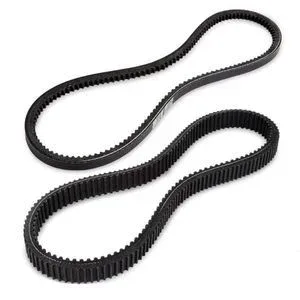
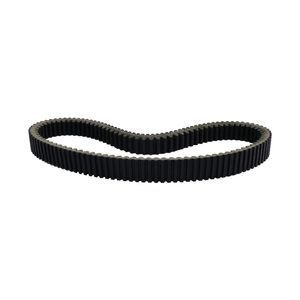
Matched Set Shipped — Both the 1/2" starter-generator belt and the 1" main drive belt arrive together so the Kawasaki 13 HP system runs with balanced tension from day one.
Technical Specifications
| Parameter |
Value |
| Part Number |
606136 606138 |
| Product Type |
Belt |
| Cross-Reference |
606138, 265-586, 265586, 606136, 16548G1 (reference only) |
| Machine Fitment |
EZGO RXV, TXT, ST, Workhorse (2008–present) with 13 HP Kawasaki Engine |
| Starter Generator Belt Dimensions |
1/2" W × 35.5" OD |
| Drive Belt Dimensions |
1" W × 35" OD |
| Starter Generator Belt Material |
EPDM rubber compound with aramid tensile cords, woven polyester outer fabric wrap with anti-abrasion coating |
| Drive Belt Material |
Trapezoidal profile, woven polyester outer fabric wrap with anti-abrasion coating |
| Drive Belt Angle Tolerance |
±0.5° |
| Dimensional Inspection Tolerance |
±0.3 mm (width, length, thickness) |
| Condition |
New Aftermarket |
| Warranty |
3–12 months against manufacturing defects |
| MOQ |
1 piece |
| Standards |
ISO 9001, SAE J1982 |
Application Suitability
| Engine System |
Related Components |
| Starter-Generator Drive |
Starter-generator pulley, tensioner assembly, idler bearing |
| Primary Propulsion Drive |
Drive clutch, driven clutch, torque converter sheaves |
| Accessory Load Path |
Cooling fan drive, engine front-mount hardware |
What Fails First When Only One Belt Is Changed
Replacing a single belt in a paired system shifts load to the remaining worn member.
I have opened more than a few Kawasaki 13 HP compartments in the Pearl River Delta where the Drive & Starter Belt kit engine rebuild was half-done: a fresh drive belt paired with a glazed, stretched starter-generator belt. The new belt takes excess load, runs hotter, and fails within a season. The shop blames the part quality, but the real fault was a system left half-corrected. Belt drives on small-displacement engines are tension-coupled; you cannot isolate one loop from the other [NEED_CITE: belt drive tension coupling in twin-belt small engine systems].

Why the Kawasaki 13 HP Demands a Paired Replacement
A Drive & Starter Belt kit engine rebuild addresses both loops on the Kawasaki 13 HP: the narrower 1/2" belt spinning the starter-generator and the wider 1" trapezoidal belt transferring torque through the drive clutch. These two belts share the same crankshaft pulley and operate under closely related tension settings. When the starter-generator belt stretches, the crankshaft pulley sees uneven radial loading, which transfers vibration into the main drive belt track. Replacing both at the same service event restores balanced loading and avoids the short-interval comeback.
Matching the Belt to Engine Serial and Model Year
EZGO platforms spanning RXV, TXT, ST, and Workhorse all use the 13 HP Kawasaki engine family, but belt dimensions shifted across production years and sub-models. The OEM reference numbers — 606138, 265-586, 606136, and 16548G1 — map to specific build configurations. Before ordering, confirm the engine badge and model year on the vehicle data plate. A belt stamped with a superseded number may still fit physically but operate at the wrong angle in the sheave groove, causing lateral slip and accelerated edge wear. Cross-reference verification catches these mismatches before the kit ships [NEED_CITE: EZGO belt dimension variations across Kawasaki 13 HP engine generations].
Reading the Material Spec Beyond the Label
The EPDM rubber compound with aramid tensile cords is not a marketing detail; it defines how the starter-generator belt handles heat. Standard neoprene belts soften noticeably above continuous operating temperatures common in high-ambient golf course and resort environments. EPDM maintains its modulus at higher temperatures, which keeps belt tension stable through long duty cycles. The woven polyester outer wrap with anti-abrasion coating reduces friction-induced heat at the sheave contact face. On the 1" drive belt, the trapezoidal profile with ±0.5° angle tolerance ensures the belt seats fully in the sheave groove without riding high, which would reduce contact area and increase slip.
The Hidden Cost of Skipping the Pulley Inspection
A belt that fails early is rarely the only problem. Slippage and glazing on a removed belt often trace back to worn sheave grooves or a seized idler bearing. If the groove profile has worn past the belt's trapezoidal angle, no new belt will seat correctly, and the replacement will show edge wear within weeks. I always recommend inspecting pulley grooves with a sheave wear gauge and spinning every idler and tensioner bearing by hand before the new Drive & Starter Belt kit engine rebuild goes on. Missing this step is the single most common reason a fresh belt set comes back as a warranty claim [NEED_CITE: sheave groove wear measurement standards for CVT belt drives].
Why This Source Works for Engine System Rebuilds
Our own production lines and qualified sourced supply share the same QC protocol and warranty terms, so a belt from either channel meets identical inspection standards. Eight product categories under one account means the belts ship with gaskets, seals, and tensioner hardware on a single commercial invoice. One-piece minimum applies, so a single fleet vehicle down in the field does not force a bulk order. Guangzhou warehouse stock on common Kawasaki 13 HP items allows fast dispatch when downtime is already accumulating. Part identification works from a number, a machine model, or a photograph of the worn belt and data plate, and cross-reference verification covers superseded and alternate numbers before dispatch.
Documentation & Verification
- Commercial invoice lists both belt part numbers with dimensional specs
- Cross-reference sheet maps 606138, 606136, 265-586, and 16548G1 (reference only)
- Dimensional inspection record confirms ±0.3 mm tolerance on each belt
- Warranty terms document covers manufacturing defects for 3–12 months
- Packing photographs show sealed polybags and reinforced carton before dispatch
Installation & Rebuild Sequence
- Clean sheave grooves thoroughly and inspect for wear before fitting either belt
- Install the 1" drive belt first, verifying full trapezoidal seat in both sheaves
- Route the 1/2" starter-generator belt, then set tension per engine service manual
- Rotate the crankshaft by hand to confirm no lateral walk on either belt
- Run the engine at idle for initial seating, then re-check tension after warm-up
What to Send with Your Inquiry
Provide the EZGO model designation, model year, and the engine serial number from the Kawasaki 13 HP data plate. If the old belt markings are still legible, a clear photograph of those numbers speeds cross-reference confirmation. Mention any prior rebuild history or tensioner replacements so the kit contents can be verified against the current engine build.
Frequently Asked Questions
Q: Should both belts be replaced even if only one has failed?
A: Yes. The starter-generator belt and the drive belt share crankshaft loading. A stretched or glazed remaining belt will shift tension unevenly onto the new one, causing premature wear. Replacing both as a matched Drive & Starter Belt kit engine rebuild restores balanced system tension and prevents short-interval comebacks.
Q: How do I confirm these belts fit my specific EZGO model year?
A: Check the vehicle data plate for the exact EZGO model and the Kawasaki engine serial number. Cross-reference those against the OEM numbers 606138, 606136, 265-586, and 16548G1 (reference only). Belt dimensions have varied across production years on the same 13 HP platform.
Q: What other components should I inspect during belt replacement?
A: Inspect all sheave grooves for wear using a profile gauge, spin every idler and tensioner bearing by hand, and check the tensioner spring for fatigue. Worn grooves or seized bearings will cause a new belt to fail early regardless of material quality.
Q: Do different EZGO years use different belt sizes on the Kawasaki 13 HP?
A: They can. Production changes across RXV, TXT, ST, and Workhorse model years have introduced dimensional variations. Always verify with the engine serial and model year before ordering, rather than relying on a general model family match.
Q: How do I verify material and dimensions before installation?
A: Request the dimensional inspection record that confirms ±0.3 mm tolerance on width, length, and thickness. The EPDM compound with aramid cords and the trapezoidal profile angle are documented in the quality record shipped with each kit.