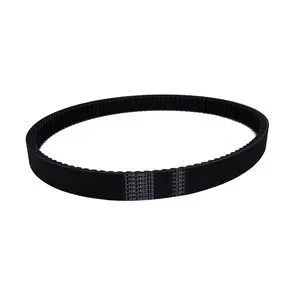
Engine Serial Variants Verified — every M174096 belt order starts with Yanmar 3TNV70 prefix confirmation before dispatch.
Technical Specifications
| Parameter |
Value |
| Part Number |
M174096 |
| Product Type |
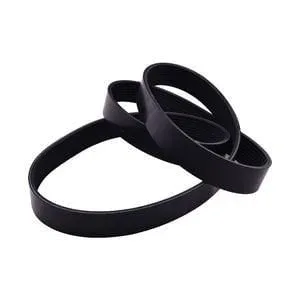
Belt |
| Cross-Reference |
M158189, M173005, UC33933, 31C4573 (reference only) |
| Machine Fitment |
Gator XUV 825i, 825i S4, 825E, 825M, 835E, 835M, 835R, 855D, 855D S4, 855M, 855M S4, 865E, 865M, 865R |
| Engine Compatibility |
Yanmar 3TNV70 |
| Cord Reinforcement |
Aramid |
| Rubber Compound |
Chloroprene |
| Heat Resistance |
Up to 120°C |
| Dimensional Tolerance |
±0.3 mm |
| Condition |
New Aftermarket |
| Warranty |
6 months against manufacturing defects |
Application Suitability
| Engine System |
Related Components |
| CVT Primary Clutch Assembly |
Primary clutch sheave, drive clutch spring, spider bearing |
| CVT Secondary Clutch Assembly |
Secondary sheave helix, driven clutch spring, slider buttons |
| Engine Output Drive |
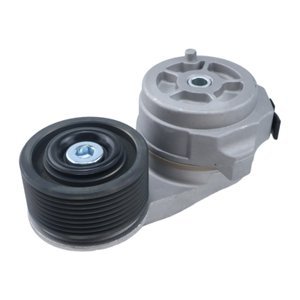
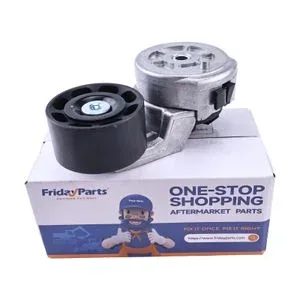
Crankshaft pulley, tensioner bracket, idler bearing |
| Cooling & Auxiliary Drive |
Cooling fan belt, water pump pulley alignment check |
Why the Same Superseded Number Still Causes Fitment Errors on Gator XUV Rebuilds
Cross-reference tables alone cannot confirm the correct clutch drive belt engine rebuild replacement — engine serial prefix must match the CVT variant.
When I moved from warehouse part number verification to assembling overhaul kits in Indonesia, I shipped an M174096 belt based solely on the model badge. The machine sat idle on site because the tensioner bracket bolt pattern had shifted on a later Yanmar 3TNV70 production run. That mistake cost a contractor days of diagnostic time before anyone realized the belt itself was dimensionally correct but the adjacent hardware had changed. [NEED_CITE: CVT belt drive system variant tracking across engine serial ranges]
The superseded numbers M158189, M173005, UC33933, and 31C4573 (reference only) appear across multiple Gator XUV generations, but they do not all map to the same tensioner geometry. A clutch drive belt engine rebuild replacement ordered without checking whether the engine block carries an early or late 3TNV70 serial prefix risks arriving on a machine where the belt tracks correctly but the tensioning hardware forces it into premature edge wear.

The Belt's Position Inside the CVT Power Transfer Chain
This clutch drive belt engine rebuild replacement sits at the intersection of engine output and CVT primary clutch input. It transmits rotational force from the Yanmar 3TNV70 crankshaft pulley to the drive clutch sheave, where centrifugal engagement transfers torque through the CVT system. If the primary clutch face shows scoring or the sheave bushing has axial play, the new belt inherits that misalignment and begins wearing within the first service cycle. Rebuild shops that address only the failed belt without inspecting the full clutch assembly routinely see repeat failures within weeks [NEED_CITE: CVT clutch sheave wear progression and belt tracking failure modes].
Engine Serial Variants That Change the Tensioner Interface
The Yanmar 3TNV70 engine was produced across several serial ranges, and the tensioner mounting bracket evolved between early and late builds. Early variants used a two-bolt tensioner base with a fixed idler position, while later production introduced an adjustable idler slot that changed the belt wrap angle on the crankshaft pulley. A clutch drive belt engine rebuild replacement that physically fits both variants may still track incorrectly on one of them, causing edge cupping or accelerated cord fatigue. Confirming the engine serial prefix before ordering eliminates this mismatch before the part leaves the warehouse. [NEED_CITE: Yanmar 3TNV70 tensioner bracket revision history and belt routing differences]
Material Selection and What It Means for Enclosed Engine Bay Service
The aramid cord reinforcement resists tensile stretch under the cyclic loading of CVT engagement and disengagement. Unlike polyester cords that elongate under sustained heat, aramid maintains dimensional stability across the operating temperature range encountered in enclosed Gator engine bays. The chloroprene rubber compound provides resistance to oil mist and coolant vapor that accumulate inside the engine compartment, preventing the belt surface from softening or developing micro-cracks along the rib faces. The ±0.3 mm dimensional tolerance ensures the belt seats consistently in the clutch sheave grooves without riding too high or bottoming out, both of which cause abnormal wear patterns within the first operating hours.
The Cost of Skipping Root-Cause Inspection During Belt Replacement
Replacing only the belt while leaving a worn tensioner bearing or a scored clutch sheave in place guarantees the new clutch drive belt engine rebuild replacement will absorb the same misalignment that destroyed the previous one. The result is a second teardown within one service season, doubled labor cost, and a machine that operators no longer trust for critical tasks. [NEED_CITE: repeated CVT belt failure root cause analysis in utility vehicle drivetrains] Fleet operators who track maintenance intervals report that belt-only replacements without adjacent component inspection lead to noticeably higher cumulative downtime compared to system-level service events.
What This Supply Approach Brings to the Rebuild Bench
Every belt ships from a single account covering eight component categories, so tensioner bearings, clutch springs, and sheave bushings travel in the same consignment. Part identification starts from the engine serial prefix, a machine photograph, or a worn belt marking — any one of these is enough to confirm the correct variant. A quality inspection record covering tensile and flex-cycle test results accompanies each shipment. Sample supply is available for fitment confirmation before a fleet-level commitment is placed. The technical team verifies compatibility and grade selection against the specific Yanmar 3TNV70 build record.
Documentation & Verification
- Commercial invoice listing M174096 with cross-reference numbers marked reference only
- Part compatibility sheet mapping engine serial prefix to belt variant
- Tensile and flex-cycle quality inspection record per batch
- Six-month manufacturing defect warranty terms in writing
- Packing photographs showing belt condition before crate closure
- HS code and customs classification support for international shipment
Installation & Rebuild Sequence
- Verify crankshaft pulley and tensioner idler alignment before belt routing
- Inspect primary clutch sheave face for scoring and bushing axial play
- Confirm belt tooth engagement depth in both clutch grooves by hand rotation
- Set tensioner to specification and check belt tracking after initial run-in
- Recheck tension after first operating cycle as the belt seats into sheave grooves
Before You Place the Order
Provide the Yanmar 3TNV70 engine serial number, the Gator XUV model designation, and any existing belt markings or tensioner hardware photographs. This information allows confirmation of the correct clutch drive belt engine rebuild replacement variant along with any adjacent CVT components needed for a complete system-level service event.
Frequently Asked Questions
Q: What other CVT components should be inspected when replacing this belt?
A: The primary and secondary clutch sheaves should be checked for face scoring and bushing wear. Tensioner idler bearings must spin freely without axial play. Clutch springs should be measured against specification, as a weakened spring alters engagement RPM and accelerates belt slip. Addressing only the belt while leaving worn adjacent components in place leads to premature re-failure within the same service cycle.
Q: Does the superseded number M158189 or M173005 still fit my Gator XUV model?
A: These numbers serve as cross-reference identifiers for the same belt family, but fitment depends on your specific Yanmar 3TNV70 engine serial prefix rather than the printed number alone. Early and late engine builds use different tensioner bracket configurations that affect belt routing and wrap angle. Providing your engine serial number allows verification of whether the superseded reference maps to your machine variant.
Q: How do I confirm my engine is the Yanmar 3TNV70 variant?
A: The engine serial plate is typically located on the cylinder block, and the serial prefix identifies the production variant. If the plate is worn or painted over, a photograph of the engine block casting number or the existing belt routing layout can also be used for identification. Our technical team can cross-match these details against known build configurations.
Q: What causes repeated clutch belt failure beyond normal wear?
A: Common root causes include a worn tensioner bearing allowing belt flutter, scored clutch sheave faces creating uneven contact pressure, and misaligned crankshaft pulleys forcing the belt to track off-center. Heat buildup from restricted airflow in the engine bay also accelerates compound degradation. Identifying and correcting the underlying cause prevents the replacement belt from failing within the same service window.