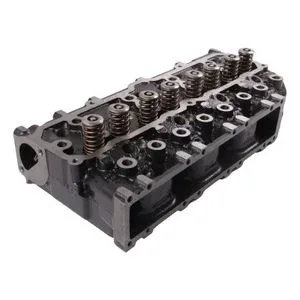
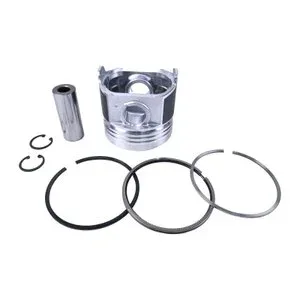
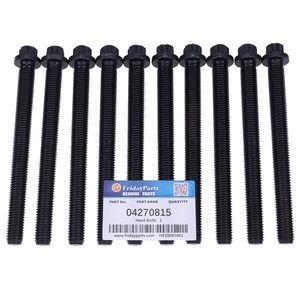
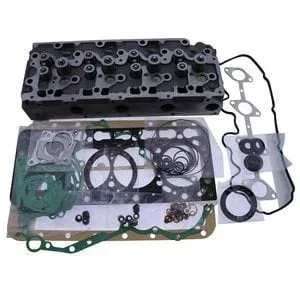
Matched Rebuild Grades — Cylinder head 179-1854 233-5500 supplied with valves and springs pre-assembled, verified against CAT 3044C and C3.4 engine serial ranges to prevent mismatched oversize grades during overhaul.
Technical Specifications
| Parameter |
Value |
| Part Number |
179-1854 233-5500 |
| Product Type |
Cylinder Head |
| Cross-Reference |
179-1854, 233-5500, 1791854, 2335500, CA1791854, CA2335500 (reference only) |
| Engine Fitment |
3044C, C3.4, C3.4 IND |
| Machine Fitment |
236B, 236B3, 242B3, 246B, 246C, 248B, 252B, 252B3, 256C, 257B3, 259B3, 262B, 262C, 262C2, 267B, 268B, 272C, 277B, 277C, 277C2, 279C2, 287B, 287C, 287C2, 289C2, 297C, 906, 906H, 907H, 908, 908H |
| Condition |
New Aftermarket – Complete with valves and springs assembled |
| Material |
Cast aluminum alloy (A380 equivalent) |
| Valve Seat Hardness |
45–48 HRC (induction-hardened) |
| Sealing Surface Flatness |
≤0.05 mm |
| Valve Guide ID Tolerance |
±0.005 mm |
| Surface Treatment |
Corrosion-inhibiting chromate conversion per MIL-DTL-5541F |
| Internal Cleanliness |
ISO 8573-1 Class 2 |
| Standards |
ISO 9001, ISO 8573-1 Class 2, MIL-DTL-5541F |
Application Suitability
| Engine System |
Related Components |
| Valvetrain and combustion sealing |
Valve cover gasket, intake and exhaust manifold gaskets, head bolts |
| Cooling and thermal management |
Thermostat, water pump, radiator hoses, coolant temperature sensor |
| Fuel delivery interface |
Injector seals, injector hold-down clamps, fuel return line fittings |
| Lower engine rotating assembly |
Head gasket matched to block deck condition, piston-to-valve clearance check |
Why a Complete Cylinder Head Engine Rebuild Demands System-Level Matching
Replacing the cylinder head without verifying the block's rebuild history or resolving the thermal fault that killed the last one guarantees a short service life.
When pistons, liners, and rings arrive in mismatched oversize grades, the block sits open on the stand while the workshop waits for the correct set. A Complete Cylinder Head engine rebuild faces the same risk when the head is sourced separately from its gasket set and fasteners — the assembly sequence stalls because one mating surface was not accounted for. [NEED_CITE: engine rebuild sequencing and component matching tolerances]
Over years of supporting mine-site workshops across Indonesia, I have watched teardowns stall because the cylinder head arrived but the valve stem seals or head bolts were on a different supplier's backorder. The machine is already down. Every day the block sits open, contamination risk grows and the rebuild timeline extends. Sourcing the head as part of a matched system eliminates these gaps.

The Valvetrain as a Matched System, Not a Single Part
A Complete Cylinder Head engine rebuild starts with understanding that the head, valve seats, valve guides, springs, and seals function as an interdependent set. If the camshaft lobes show wear beyond specification or the rocker arms have scored contact faces, installing a new head without addressing those adjacent components invites recurring valvetrain noise and compression loss within the first hundred hours. The system must be evaluated as a whole before any single assembly goes back on the block.
Rebuild History, Oversize Grades, and Serial Variants
If the block deck has been machined or the crankshaft ground during a previous overhaul, the compression height changes and the standard head gasket thickness may no longer be correct. CAT C3.4 IND and 3044C engines share the same base architecture but can differ in valve seat insert profile and injector pocket geometry across serial ranges. Confirming the exact engine serial number before dispatch ensures the head casting matches the specific variant on your stand. [NEED_CITE: engine serial variant differences in valve seat insert profiles]
Reading the Specifications That Matter on the Stand
The sealing surface flatness of ≤0.05 mm ensures the head-to-block interface maintains uniform clamp load across all cylinder bores, which directly governs head gasket life and combustion sealing. Valve seat hardness at 45–48 HRC through induction hardening resists recession under continuous high-temperature exhaust gas exposure — softer seats erode and lose valve lash within a single overhaul interval. The valve guide ID tolerance of ±0.005 mm controls oil consumption past the valve stems and maintains consistent valve seating concentricity. Internal cleanliness to ISO 8573-1 Class 2 means the assembled head ships free of particulate that could score new valve guides or lodge under valve seats during initial break-in.
The Hidden Cost of Skipping the Root Cause
Warped decks and burned valve seats rarely occur in isolation — they typically trace back to cooling system faults such as a stuck thermostat, a failing water pump, or a blocked radiator core. Installing a new Complete Cylinder Head engine rebuild assembly without diagnosing and correcting the thermal management failure means the replacement head will absorb the same uncontrolled heat loads and fail in the same pattern. The workshop then faces a second teardown, a second gasket set, and a second round of downtime charges. [NEED_CITE: cylinder head failure root cause analysis and cooling system diagnostics]
Why Rebuild Shops Source This Assembly Through Our Account
We produce selected part lines in our own facility and source the remainder through qualified ISO-certified partners, with both carrying identical QC and warranty terms — so this cylinder head ships under the same accountability regardless of production line. Eight product categories under one account mean the head gasket, valve cover gasket, head bolts, and manifold seals can consolidate into a single dispatch. One-piece minimum order eliminates the barrier when a single emergency rebuild cannot wait for a full container. Part identification works from a part number, machine model, photograph, or nameplate image, which matters when the engine plate is painted over or corroded. Cross-reference verification covers superseded and alternate numbers so that 179-1854 or 233-5500 (for identification purposes) resolves correctly against your serial range. A sample unit is available for fitment confirmation before you commit to bulk inventory for your overhaul program.
Documentation & Verification
- Commercial invoice and packing list referencing 179-1854 233-5500 with engine compatibility noted
- Cross-reference sheet mapping superseded numbers for 3044C and C3.4 variants (reference only)
- Quality inspection record covering pressure test, valve seat concentricity, and flatness measurements
- Warranty terms stating coverage period against manufacturing defects for this cylinder head assembly
- Packing photographs documenting crate condition and protective sealing before dispatch
- HS code and customs documentation support for international engine parts shipments
Installation & Rebuild Sequence
- Verify block deck flatness and measure compression height before placing the new head to ensure gasket selection matches any prior machining
- Confirm valve-to-piston clearance at TDC for each bore, especially if oversize pistons were installed during the lower-end rebuild
- Torque head bolts in the manufacturer-specified sequence and stages, using new fasteners if the original bolts are stretch-type
- Prime the cooling system and check for leaks at the injector pockets and coolant passages before the first start
- Run a controlled break-in cycle monitoring coolant temperature and exhaust gas readings to confirm combustion sealing
Before You Request a Quote
Provide the exact engine serial number from the nameplate so we can confirm whether your 3044C, C3.4, or C3.4 IND requires a specific valve seat insert profile or injector pocket geometry. Share any known rebuild history — particularly whether the block deck or crankshaft has been machined — so the correct head gasket thickness is included. If you are planning a full overhaul, send your component list and we will flag any missing adjacent parts that should ship in the same consignment.
Frequently Asked Questions
Q: What other components should be replaced alongside the cylinder head during a rebuild?
A: The head gasket, valve cover gasket, intake and exhaust manifold gaskets, and head bolts should all be replaced as a matched set. Valve stem seals and injector pocket seals are often overlooked but directly affect combustion sealing and oil consumption. Sourcing these together ensures the Complete Cylinder Head engine rebuild goes back together without waiting on a second delivery.
Q: How do I know if a previous rebuild used oversize parts that affect this head?
A: Measure the block deck height and check for machining marks on the deck surface. If the block has been decked or the crankshaft ground, the compression height changes and may require a different head gasket thickness. Always inspect piston-to-valve clearance after assembling the head, particularly if oversize pistons are present from a prior overhaul.
Q: Are there internal differences between 3044C and C3.4 cylinder heads?
A: Yes. While both engines share the same base architecture, the C3.4 IND variant can differ in valve seat insert profile and injector pocket geometry depending on the serial range. Confirming the exact engine serial number before ordering ensures the correct casting is supplied and avoids fitment issues on the rebuild stand.
Q: What typically causes cylinder head failure and how do I prevent repeat damage?
A: Warped decks and burned valve seats usually trace back to cooling system faults — a stuck thermostat, a failing water pump, or a blocked radiator. Replacing the head without diagnosing the thermal management root cause leads to the same failure pattern recurring. Pressure-test the cooling system and verify flow rates before returning the engine to service.
Q: How do I confirm the exact engine variant from a worn serial plate?
A: Send a clear photograph of whatever remains legible on the nameplate, along with the machine model and any visible casting numbers on the block. Our technical team cross-references these against engine build records to confirm whether your unit is a 3044C, C3.4, or C3.4 IND, ensuring the correct head variant is dispatched.