Block & Internal Parts
Connecting Rod 1J700-22012 Replacement for Kubota V2607 Powertrain
<ul> <li>Size grade and bearing clearance confirmed to match your crankshaft regrind history.</li> </ul>
View Details
<p><strong>31A19-10024 Connecting Rod</strong> for Mitsubishi S3L, S3L2, S4L, S4L2 engines — forged 40Cr steel, big-end bore honed to ±0.005 mm, shot-peened surface with HRC 38–42 journal hardness.</p> <ul> <li>Bottom-end rebuild demands matched bearing shells, piston weight group, and correct oversize grade based on prior crankshaft regrind history</li> <li>Root-cause faults such as oil starvation or overheating must be resolved before installation to prevent repeat rod failure</li> <li>Overhaul kit contents including con rod bolts, gaskets, and main bearings cross-checked to your engine serial variant</li> </ul> <p>Dimensional grade and rebuild history confirmed before dispatch — matched sets ship together.</p>
MOQ
1 Piece
Lead Time
2-5 Business Days
Shipping
120+ Countries
Warranty
3-12 Months
Compatible Brands
System-Matched Rebuild Sets — Oversize grade and bearing clearance verified against your engine serial and rebuild history before dispatch
| Parameter | Value |
|---|---|
| Part Number | 31A19-10024 |
| Product Type | Connecting Rod |
| Cross-Reference | 31A19-10024, 31A1910024 (reference only) |
| Machine Fitment | T233, T273 |
| Engine Compatibility | Mitsubishi S3L, S3L2, S4L, S4L2 |
| Material | Forged 40Cr steel |
| Big-End Bore Tolerance | ±0.005 mm |
| Surface Treatment | Shot-peened |
| Surface Hardness | HRC 38–42 (pin and journal surfaces) |
| Condition | New Aftermarket |
| Quality Standard | ISO 9001 |
| Warranty | 6 months against manufacturing defects |
| Minimum Order Quantity | 1 piece |
| Engine System | Related Components |
|---|---|
| Bottom-end assembly (S3L/S3L2) | Main bearings, con rod bearings, crankshaft seals, piston cooling jets |
| Bottom-end assembly (S4L/S4L2) | Matched piston sets, wrist pins, circlips, complete gasket overhaul kit |
| Lubrication & cooling interface | Oil pump pickup, piston cooling nozzles, oil filter bypass valve |
| Fastener & balancing system | Con rod bolts/nuts, flywheel bolts, harmonic balancer, flexplate |
Replacing the failed rod without diagnosing the root cause invites the same failure within weeks.
A connecting rod for Mitsubishi S3L S4L engine rebuild rarely fails in isolation. In my experience sourcing bottom-end components across the Yangtze River Delta, the rod that comes back cracked or bent usually points to oil starvation from a clogged pickup screen, chronic overheating that weakened the big-end bore, or sustained overloading beyond the engine's rated duty cycle. Rebuild shops that focus solely on swapping the damaged component often see the replacement fail under load during the first field season. The repair invoice covers the hardware, but the system-level fault remains unaddressed. [NEED_CITE: diesel engine lubrication starvation failure modes and diagnostic procedures]
This Connecting Rod sits at the center of the S3L/S4L reciprocating assembly, and its dimensional grade must align with the crankshaft journal condition, the bearing shell selection, and the piston-to-rod weight group. If a previous rebuild involved regrinding the crankshaft, the rod's big-end bore requirement shifts to an oversize bearing set. Installing a standard-grade rod into an engine with reground journals creates excessive clearance, leading to audible knock at idle and accelerated bearing wear. Every rebuild starts with measuring what is actually inside the block before ordering replacement hardware.
The ±0.005 mm big-end bore tolerance on this forged 40Cr steel rod directly governs oil film thickness between the bearing shell and the crankshaft journal. Tighter tolerance means the hydrodynamic wedge of oil remains stable across the full RPM range, preventing metal-to-metal contact during the power stroke. The shot-peened surface introduces residual compressive stress that resists fatigue crack initiation at the bolt hole and I-beam transition radius — the two most common fracture origins in continuous-duty industrial engines. Surface hardness in the HRC 38–42 range at the pin and journal interfaces provides wear resistance without making the material brittle under impact loading typical of agricultural and mining support applications. [NEED_CITE: connecting rod fatigue failure analysis in medium-speed diesel engines]
When one cylinder suffers rod damage, the temptation is to replace only that single assembly. However, piston-to-rod weight grouping exists for a reason: unbalanced reciprocating mass across cylinders generates secondary vibration that accelerates bearing wear on adjacent cylinders. A rebuild shop ordering a single replacement rod should verify its weight group against the remaining assemblies. If the groups diverge, the engine will run but the main bearings absorb the imbalance, shortening their service interval noticeably.
The hidden cost of a mismatched bottom-end rebuild is not the rod itself — it is the teardown labor, the ruined bearing shells, and the machine sitting idle while the correct parts are sourced. I have seen overhaul kits arrive missing the specific seal variant required by an S4L2 production run, forcing the shop to halt assembly and wait for a second shipment. Ordering the connecting rod for Mitsubishi S3L S4L engine rebuild alongside matched bearings, piston sets, con rod bolts, and the correct gasket variant for your engine serial range eliminates this gap. A consolidated kit verified against your specific build sheet means the block goes back together in one sequence. [NEED_CITE: engine overhaul kit completeness verification standards for industrial diesel powerplants]
Our own production lines and qualified sourced partners operate under a single warranty account, so the rod, the bearings, and the gasket kit all carry the same coverage terms. Eight core categories mean a complete bottom-end job list ships as one consignment rather than split across multiple suppliers with mismatched lead times. The minimum order starts at one piece, which matters when a single cylinder needs attention and the rest of the engine is sound. Identification works from a part number, a machine model, or a photograph of a worn nameplate — we have matched components from images alone when serial plates were painted over. Cross-reference verification covers superseded numbers and alternate designations that accumulate across engine generations. A sample rod can ship for fitment confirmation before the full rebuild kit commitment, preventing a costly mismatch on a machine already torn down.
Provide the engine model, serial number, and any known regrind history so we can confirm whether standard or oversize bearing grades apply to this connecting rod for Mitsubishi S3L S4L engine rebuild. If the nameplate is illegible, a photograph of the block casting number and the existing rod stamping allows our technical team to verify the correct variant. Send your full overhaul component list for a consolidated kit quotation that covers the rod, matched bearings, piston sets, fasteners, and gasket kit in a single shipment.
Q: What other components should be replaced when a connecting rod fails on an S3L or S4L engine? A: The failed rod usually indicates a system fault. Beyond the rod itself, plan to replace the con rod bearings, verify main bearing clearance, inspect the crankshaft journal for scoring, and check the piston cooling nozzle for blockage. Con rod bolts should always be replaced as they are torque-to-yield fasteners. A complete bottom-end gasket set matching your engine serial variant is also required for reassembly.
Q: How do I determine if I need standard or oversize bearings with this replacement rod? A: Measure the crankshaft journal diameter with a micrometer before ordering. If a previous rebuild reground the journals, they will be undersized and require oversize bearing shells. The connecting rod big-end bore on this component is held to ±0.005 mm, so the bearing shell grade must bridge the gap between the rod bore and the actual journal diameter. We can advise on grade selection if you provide the measured journal dimensions.
Q: Are internal dimensions identical across S3L, S3L2, S4L, and S4L2 variants? A: While the basic architecture is shared, production revisions across these variants can affect piston pin diameter, rod bolt thread specification, and gasket sealing surfaces. The safe approach is to supply your engine serial number so we can cross-check the build sheet. Ordering by generic model name alone risks receiving components that physically fit but do not match the production-specific tolerances of your engine.
Q: What system-level faults should be diagnosed before installing the new rod to prevent repeat failure? A: Investigate oil pressure history and inspect the oil pickup screen for debris that could indicate starvation. Check for signs of overheating such as discolored bearing shells or distorted piston skirts. Examine the crankshaft for out-of-round journals that create localized high loading. Addressing these root causes ensures the replacement connecting rod for Mitsubishi S3L S4L engine rebuild operates within its design envelope.
Q: Can I order a matched set covering all four or six cylinders in one shipment? A: Yes. Ordering a full set ensures uniform weight grouping and matched bore tolerances across all cylinders, which is critical for balance and bearing longevity. We can consolidate the rods with matched bearing shells, piston sets, con rod bolts, and the complete overhaul gasket kit into a single consignment, verified against your specific engine serial range before dispatch.
<ul> <li>Size grade and bearing clearance confirmed to match your crankshaft regrind history.</li> </ul>
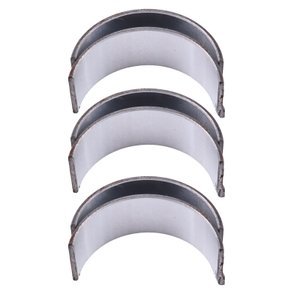
View Details<p>Stop engine knock and extend your Kubota D722 or EA300’s service life with precision-matched STD connecting rod bearings that deliver OEM-equivalent fit, load capacity, and oil clearance — right out of the box. No more guessing at tolerances or risking downtime from premature bearing failure.</p> <ul> <li><strong>Direct replacement for 15531-22310</strong> — includes 3 full pairs (6 shells) with correct eccentricity and crush fit for proper journal seating</li> <li>Fits not just D722 & EA300, but 10+ Kubota engine families including V1100, Z482, and E75-NB3-HG-2 — one part number covers your entire fleet’s small diesel line</li> <li>Each set is pre-gapped to <strong>0.02–0.04 mm radial clearance</strong> — verified with optical bore gauges, not just stamped specs</li> <li>Ships same-day from Guangzhou warehouse: no 3-week waits or price markups just to get back in operation</li> </ul>
View Details<p><strong>1G962-23012 Crankshaft for Kubota D902 and WG972 Engines</strong> — replacement for Kubota excavator, tractor, and utility vehicle platforms including KX018-4, BX2350D, and RTV900 series.</p> <ul> <li>Paired with matched main bearings, con rod bearings, and thrust washers to maintain specified oil clearances across the rotating assembly</li> <li>Oversize grade (STD / 0.25 / 0.50) confirmed against prior machining history to avoid mismatched clearances at reassembly</li> <li>Cross-reference: 1G820-23030, 1G962-23010 (interchange reference only)</li> </ul> <p>Overhaul gasket kit and seal kit contents verified item by item before dispatch.</p>
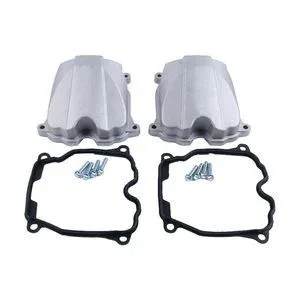
View Details<p><strong>Valve Cover Kit 420610393 — Die-Cast Aluminum with NBR Gasket & Grade 8.8 Bolts</strong> compatible with Can-Am Outlander, Renegade, Commander, Maverick, and Defender engines (cross-reference 420610393, 420610395, 420610394, 420610390).</p> <ul> <li>Belongs to the top-end sealing system — cover, gasket, and bolts supplied as a matched set to prevent oil seepage that contaminates camshaft timing and valve train components</li> <li>±0.05 mm flatness tolerance with NBR gasket retains compression force under sustained high-temperature operation</li> <li><strong>Overhaul kit contents and mating dimensions verified before dispatch</strong></li> </ul>
View DetailsSend us your inquiry and our technical team will verify the part and provide a competitive quote within 24 hours. MOQ starts from 1 piece.
Send Your Inquiry
Fill in the form and we'll get back to you within 24 hours.