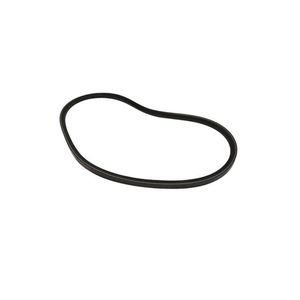
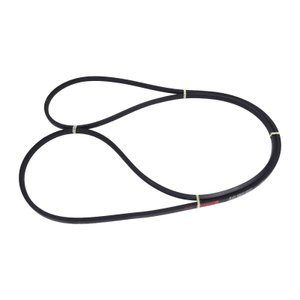
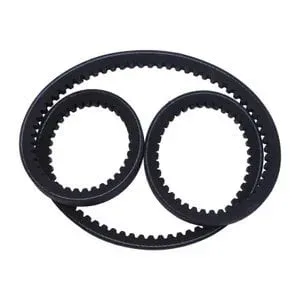
Engine Sequence Variants Confirmed — Mitsubishi L3E production runs differ in belt routing paths; serial number validation prevents length mismatch and tensioner bottom-out before the V-belt MD145156 engine rebuild replacement leaves the warehouse.
Technical Specifications
| Parameter |
Value |
| Part Number |
MD145156/16692 |
| Cross-Reference |
MD145156 (reference only), 16692 (reference only) |
| Product Type |
V-belt |
| Machine Fitment |
Mitsubishi T120SS, Generac MLT3060MV light tower |
| Brand Compatibility |
Mitsubishi, Generac |
| Material |
High-tensile chloroprene rubber with polyester cord reinforcement |
| Profile |
Trapezoidal |
| Dimensional Tolerance |
±0.15 mm |
| Temperature Resistance |
Up to 100°C |
| Condition |
New Aftermarket |
| Standards |
ISO 9001, SAE J1459 |
| Warranty |
3–12 months against manufacturing defects |
| MOQ |
1 piece |
Application Suitability
| Engine System |
Related Components |
| Alternator drive — Mitsubishi L3E |
Alternator pulley, belt tensioner assembly, mounting bracket bolts |
| Cooling fan drive — Mitsubishi L3E |
Fan clutch, fan pulley, water pump pulley, thermostat housing gasket |
| Continuous-duty light tower drive — Generac MLT3060MV |
Idler pulley, fan assembly, alternator bearing, drive belt guard hardware |
| Scheduled maintenance replacement |
Full belt drive inspection kit, tensioner spring, pulley alignment shim set |
Why the Same V-belt MD145156 Engine Rebuild Replacement Fails on Serial-Adjacent Engines
Cross-reference numbers match, but internal build variants dictate different belt lengths and routing paths.
Early in my sourcing career, I ordered a batch of belts for Mitsubishi L3E units based on machine model alone. The first unit accepted the belt without issue; the second, three serial numbers later, left the tensioner fully extended with no remaining adjustment travel. The difference was an internal production revision that altered pulley spacing by a few millimeters — enough to render the correct part number wrong for that specific build. That mismatch cost a full day of downtime on a light tower that was already behind schedule [NEED_CITE: engine serial variant documentation practices for small diesel platforms]. When a V-belt MD145156 engine rebuild replacement arrives and cannot seat properly in the pulley groove, the root cause is almost never the belt itself — it is an unverified serial range.

Belt Drive System Position and Adjacent Component Dependencies
This V-belt sits at the front of the Mitsubishi L3E accessory drive, transmitting crankshaft rotation to both the alternator and the cooling fan. It is the single belt linking combustion output to electrical generation and thermal management. A replacement that ignores the condition of the tensioner spring, pulley groove wear, or fan clutch engagement will solve the immediate symptom while leaving the failure cause intact. Every V-belt MD145156 engine rebuild replacement should be evaluated alongside the full drive loop — not as an isolated consumable.
Serial Variant Identification and Dimensional Grade Matching
Mitsubishi L3E engines have undergone internal revisions across production years that change pulley center distances and belt routing geometry. Two engines sharing the same model designation may require belts that differ in effective length by a margin that falls within the adjustment range on one unit but exceeds it on another. Confirming the engine serial number and cross-checking against build variant records eliminates this risk before the V-belt MD145156 engine rebuild replacement ships [NEED_CITE: Mitsubishi L3E production variant belt routing differences]. For engines that have been previously rebuilt, the pulley groove profile must also be verified — a worn trapezoidal groove will prevent full flank contact regardless of belt dimensional accuracy.
Material and Profile Engineering for Continuous-Duty Light Tower Service
The chloroprene rubber compound resists ozone cracking and oil mist exposure typical in engine bay environments, maintaining flexibility across the temperature range encountered during extended light tower operation. Polyester cord reinforcement provides dimensional stability under sustained tensile load, preventing the elongation that causes slippage and heat buildup over thousands of operating hours. The trapezoidal profile, held to ±0.15 mm tolerance, ensures full flank contact with the pulley groove walls — this distributes load evenly and prevents the edge-wear pattern that signals misalignment or incorrect sizing. SAE J1459 compliance governs the dimensional and material testing protocol applied to each production batch.
The Hidden Cost of Skipping System-Level Root Cause Analysis
Replacing a failed belt without diagnosing why it failed creates a cycle of repeat purchases and repeated teardowns. A seized tensioner bearing, a pulley running out of true, or contaminated drive surfaces will destroy a new belt within a fraction of its expected service life. On Generac MLT3060MV units operating twelve or more hours daily on construction sites, the cost of a second unplanned shutdown far exceeds the labor of a thorough drive system inspection during the first replacement [NEED_CITE: belt drive failure root cause analysis for continuous-duty diesel applications]. The part itself is rarely the most expensive element of the repair — the wasted labor and extended machine downtime are.
Why Source This V-belt MD145156 Engine Rebuild Replacement Through XUNPO
Own-production lines and qualified sourced supply operate under a single warranty and a single quality standard, so buyers receive consistent documentation regardless of which facility produced the batch. Eight product categories — including engine parts, seal kits, and electrical components — allow a complete belt drive overhaul list to ship as one consignment from the Guangzhou warehouse. Minimum order is one piece, which matters when a single light tower is down and waiting. Part identification is available from a part number, machine model, photograph, or nameplate image, removing the bottleneck when serial plates are worn or painted over. Cross-reference verification covers superseded numbers and alternate references, catching errors that propagate through copied tables. Technical support confirms compatibility and dimensional grade before the order is finalized.
Documentation & Verification
- Commercial invoice listing V-belt MD145156/16692 with engine serial variant notation
- Cross-reference sheet mapping MD145156 and 16692 (reference only) to verified applications
- Quality inspection record with dynamic tension test results at rated load
- Warranty certificate covering manufacturing defects for 3–12 months
- Pre-shipment packing photographs showing belt condition and labeling
- HS code and customs documentation for international belt drive component shipments
Installation & Rebuild Sequence
- Inspect pulley groove profile for trapezoidal wear before seating the V-belt MD145156 engine rebuild replacement
- Verify tensioner spring travel and bearing smoothness; replace if binding is detected
- Route belt per engine serial variant diagram — routing differs across L3E production runs
- Apply specified tension and rotate crankshaft two full revolutions, then recheck alignment
- Run engine at idle for initial warm-up cycle, then re-tension after thermal expansion stabilizes
- Log installation date and operating hours for next scheduled belt drive system inspection
Request a Compatibility-Confirmed Quote
Provide the engine model, serial number, and any previous rebuild history so the correct dimensional variant is confirmed before dispatch. If the nameplate is unreadable, a clear photograph of the existing belt, pulley arrangement, or engine block casting marks is sufficient for identification. Include the full list of drive system components needed for the job — tensioners, pulleys, seals — so everything ships together.
Frequently Asked Questions
Q: What other belt drive components should I inspect when changing this V-belt?
A: Check the tensioner spring for fatigue and the tensioner bearing for smooth rotation. Inspect all pulley grooves for trapezoidal wear or glazing. On Generac MLT3060MV units, examine the fan clutch engagement and alternator bearing play. Addressing these during belt replacement prevents premature repeat failure of the new belt.
Q: How do I confirm the correct belt for my specific Mitsubishi L3E engine serial number?
A: Provide the full engine serial number — not just the model designation. Mitsubishi L3E production runs include internal revisions that alter pulley spacing and belt routing. Cross-reference verification against build variant records confirms whether the MD145156 (reference only) length matches your specific engine configuration before shipment.
Q: What system-level faults cause premature V-belt failure on Generac MLT3060MV units?
A: Common root causes include misaligned pulleys from bracket wear, seized tensioner bearings, oil contamination from adjacent seal leaks, and pulley groove wear that reduces flank contact. Light towers running extended daily cycles accelerate these faults. Correcting the underlying issue during belt replacement prevents rapid repeat failure.
Q: Does the engine overhaul kit include this belt, or is it sold separately?
A: Overhaul kit contents vary by engine build variant and supplier specification. This V-belt MD145156 engine rebuild replacement is available individually with a one-piece minimum order, or can be added to a custom belt drive system kit that includes matched tensioners, pulleys, and associated seals for the specific L3E serial range.
Q: How do I verify pulley compatibility before ordering replacement belts in bulk?
A: Confirm the pulley groove profile matches the trapezoidal specification and that groove dimensions fall within tolerance after accounting for wear. Request a sample belt for physical fitment verification on your engine variant before committing to a bulk order. This eliminates the risk of receiving a full batch that does not seat correctly in worn or variant-specific pulleys.