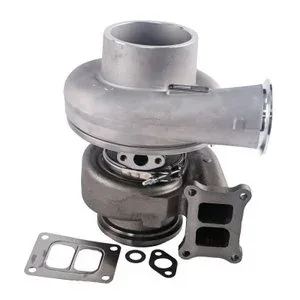
Engine Series Variant Verified — Turbocharger oil port orientation and flange pattern matched to your specific Cummins N14 serial range before dispatch.
Technical Specifications
| Parameter |
Value |
| Part Number |
3804566 |
| Product Type |
Turbocharger |
| Cross-Reference |
380456600, 3804566NX, 3804566RX, CU3804566, 3536804, 4033556, 4033556H, 3536012 (reference only) |
| Machine Fitment |
Komatsu PC600-6, PC600LC-6, PC650-6, PC650LC-6, PC600LC-6KJ, PC600-6KJ |
| Turbo Model |
HT60-N0881A/H32K1, HT60 |
| Engine Fitment |
Cummins N14 |
| Condition |
New Aftermarket |
| Turbine Housing Material |
Ni-resist D5S alloy |
| Compressor Wheel Material |
Forged 2618 aluminum |
| Compressor Wheel Balance Grade |
ISO 1940 Grade G2.5 |
| Bearing Type |
Dual ceramic ball bearings |
| Sealing Surface Flatness |
±0.02 mm |
| Journal Surface Hardness |
HRC 58–62 |
| Warranty |
3–12 months against manufacturing defects |
| Standards |
ISO 9001, ISO 1940, ISO 8573-1 Class 2, SAE J1927 |
Application Suitability
| Engine System |
Related Components |
| Cummins N14 intake and exhaust recovery during full engine overhaul |
Intake and exhaust manifold gaskets, oil supply and return lines, turbo mounting studs |
| Single-system turbo failure repair with root cause correction |
Oil filter assembly, crankcase breather, air filter element, exhaust clamps |
| Preventive intake system replacement during scheduled major service |
Charge air cooler seals, boost pressure sensor, wastegate actuator if equipped |
| Rebuild shop stock for N14 engine families across multiple machine platforms |
Complete turbo installation gasket set, pre-lube oil, break-in procedure card |
Why the Same Turbo Number Arrives in Several Configurations Across N14 Builds
Confirming the engine serial variant before ordering prevents oil line misalignment and exhaust flange mismatch.
In my years working around mining equipment in West Africa, I watched a Komatsu PC600-6 sit idle for days because an HT60 turbocharger ordered by machine model alone had oil port orientations that did not match the specific Cummins N14 variant installed in that unit. The part number 3804566 appears across several N14 production runs, but port positions, flange bolt patterns, and wastegate calibration differ between serial ranges. [NEED_CITE: Cummins N14 engine serial break points and turbo variant mapping] Rebuild shops that skip this verification step end up with a turbo on the bench that physically bolts on but leaks oil or fails to build target boost. An HT60 turbocharger for Cummins N14 engine rebuild work must be matched to the exact build configuration, not just the engine family name.
How the HT60 Sits Inside the N14 Intake and Exhaust Loop
The HT60 turbocharger operates as the pressure differential engine within the N14 intake system, drawing filtered air through the compressor side and forcing it into the charge air cooler and intake manifold. On the turbine side, exhaust gas energy spins the wheel assembly at speeds where balance grade directly affects bearing life. This component does not work in isolation — boost pressure, exhaust backpressure, and crankcase ventilation all converge at the turbo mounting point.
Matching the Turbo to Engine Rebuild History and Serial Variance
When an N14 engine has been rebuilt previously, oversize bearings or modified oil galleries may shift the requirements for the replacement turbo oil feed connection. Engines from earlier serial ranges often use a different oil supply fitting thread than later builds, and the exhaust outlet flange may carry a different bolt circle. [NEED_CITE: Cummins N14 turbo oil feed fitting variation across serial ranges] Ordering an HT60 turbocharger for Cummins N14 engine rebuild use without checking the engine serial number against the turbo variant list means risking a mismatch that only becomes visible once the old unit is off and the new one is on the bench.
Decoding the Material and Balance Specifications
The Ni-resist D5S turbine housing resists thermal cracking under the sustained high exhaust gas temperatures typical of quarry loading and heavy excavation cycles. Forged 2618 aluminum on the compressor wheel retains strength at elevated operating temperatures where cast alternatives may fatigue. ISO 1940 Grade G2.5 balance means the rotating assembl*e dual ceramic ball bearings and extending the interval before play develops in the shaft. The ±0.02 mm sealing surface flatness keeps oil and exhaust gases separated at the mating flanges, which matters when the turbo sees continuous load rather than intermittent duty.

The Cost of Skipping Root Cause Analysis Before Turbo Replacement
Installing a new HT60 turbocharger on an N14 that still has contaminated oil passages or a restricted air intake means the replacement inherits the same conditions that destroyed the previous unit. Bearing scoring from oil starvation, compressor wheel erosion from unfiltered air, and turbine housing heat cracks from excessive exhaust temperatures are all system failures, not turbo failures in isolation. [NEED_CITE: turbocharger failure root cause categories in heavy-duty diesel engines] Rebuild shops that replace the turbo without addressing the upstream cause often see the new unit fail within a fraction of the expected service life, damaging credibility with the equipment owner.
Why Sourcing Through This Channel
Selected turbo part lines are produced in our own facility, while remaining configurations come from qualified ISO-certified manufacturing partners, and both paths carry identical QC and warranty terms. Eight product categories under one account mean the turbo, gasket set, oil lines, and air filter elements for a complete N14 intake overhaul ship as a single consignment. Orders start from one piece, so an emergency single turbo for a downed PC600-6 does not require padding to meet a minimum. The Guangzhou warehouse carries stock on fast-moving configurations for prompt dispatch. Identification works from the old part number, machine model, a photograph of the nameplate, or a combination of these — useful when paint and abrasion have made the turbo data plate unreadable. Cross-reference verification covers superseded numbers and alternate references so the correct variant ships.
Documentation & Verification
- Commercial invoice and packing list referencing turbo part number and engine serial match
- Compatibility sheet listing verified cross-reference numbers marked as reference only
- Dimensional and balance inspection record for the specific turbo unit shipped
- Warranty terms covering manufacturing defects for the stated period
- Packing photographs showing turbo protective caps and flange covers before crating
- HS code and customs documentation for international engine parts import
Installation & Rebuild Sequence
- Verify oil supply and return line fittings against the N14 serial-specific configuration before mounting
- Pre-lube the turbo bearing housing with clean engine oil before the first cranking cycle
- Torque turbo mounting nuts to the N14 manifold specification in the correct sequence
- Confirm wastegate actuator linkage travel matches the target boost setting for your application
- Run the engine at idle for the initial break-in period before applying load
Requesting the Right Configuration
Provide the Cummins N14 engine serial number and any previous rebuild documentation so we can confirm the correct turbo variant, oil port orientation, and associated gasket set. If the old turbo is still available, photographs of the data plate and oil fitting connections speed up cross-reference verification and ensure the replacement matches your specific engine build.
Frequently Asked Questions
Q: What other seals and line components should be replaced alongside the turbo?
A: The turbo mounting gasket, oil supply line fittings and seals, oil return gasket, and intake side hose clamps should all be replaced during turbo installation. Reusing aged seals on an N14 rebuild risks oil leaks at the new turbo connection points, undoing the benefit of the fresh unit.
Q: Do all N14 engines accept the same turbo oil fitting orientation?
A: No. Oil supply and return port positions vary across N14 serial ranges and production periods. Providing the engine serial number allows us to confirm whether your build requires the early or late port configuration before the turbo ships.
Q: Will a new turbo fail quickly if the root cause is not corrected?
A: Yes. Oil contamination, restricted air filtration, and excessive exhaust backpressure all transfer directly to the replacement unit. A proper N14 intake system diagnosis should precede turbo installation to protect the new component from repeating the prior failure mode.
Q: Multiple cross-reference numbers exist — which one matches my engine?
A: References such as 3536804, 4033556, and 380456600 can map to different N14 configurations. Share your engine serial number or a photo of the old turbo nameplate, and we verify which cross-reference corresponds to your specific build variant.
Q: What break-in procedure does the new turbo require after installation?
A: Pre-lubricate the bearing housing with clean oil before first start. Run the N14 at idle for the initial period to establish full oil film across the ceramic bearings, then gradually increase load. Avoid maximum boost demand during the first operating hours.