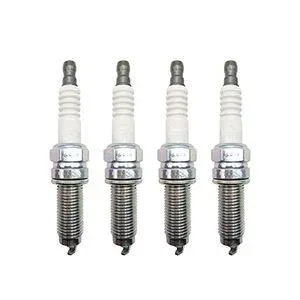
Matched Ignition Sets — heat range and resistance verified against Honda K-series engine serial variants before dispatch.
Technical Specifications
| Parameter |
Value |
| Part Number |
SILZKR7C11S |
| Product Type |
Spark Plug |
| Cross-Reference |
SILZKR7C-11S, 92932 (reference only) |
| Machine Fitment |
2012–2016 Honda CR-V, 2008–2012 Honda Accord |
| Center Electrode Material |
Iridium with laser-welded tip |
| Ground Electrode Material |
Nickel alloy |
| Center Electrode Diameter |
0.4 mm |
| Electrode Gap |
1.1 mm |
| Thread Size |
14 mm |
| Hex Size |
16 mm |
| Reach |
12.7 mm |
| Plating |
Triple-layer nickel |
| Condition |
New Aftermarket |
| Warranty |
3–12 months against manufacturing defects |
| Standards |
ISO 9001, ISO 15500, SAE J1349 |
Application Suitability
| Engine System |
Related Components |
| Ignition system overhaul |
Ignition coils, plug well seals, valve cover gasket |
| Scheduled fleet maintenance |
Full matched plug sets, coil boots, wiring harness inspection |
| Post-rebuild ignition tune |
Compression-tested plug sets, coil resistance verification |
| High-load stop-and-go operation |
Heat-range-verified plugs, dielectric grease, coil connectors |
Why Misfires Keep Coming Back After a Plug Swap
A replacement plug alone does not fix the fault that destroyed the original.
Most ignition system replacement orders focus on the failed spark plug without tracing the upstream cause — a cracked coil boot, carbon tracking in the plug well, or a lean-burn condition from a failing oxygen sensor. I have opened cylinder heads where three of four plugs showed identical electrode wear but one was melted at the tip, pointing to a single leaking injector rather than a plug defect. An iridium spark plug engine rebuild must address the entire ignition circuit, not just the visible casualty [NEED_CITE: root cause analysis for recurring ignition misfire in four-cylinder engines].
When a Honda K-series engine comes in with repeated P0301 through P0304 codes, the repair center often swaps plugs twice before inspecting coil output voltage or checking whether a prior head resurface changed the compression ratio enough to shift the required heat range. The iridium spark plug engine rebuild approach starts with confirming whether the engine's current state still matches the factory specification the plug was designed for.

The Ignition Circuit as a Matched System
Each cylinder's spark plug operates within a circuit that includes the coil pack, boot, plug well seal, and ECU mapping. A failing boot allows voltage to arc against the cylinder wall instead of jumping the electrode gap, and the resulting coil overload can destroy a new iridium spark plug engine rebuild set within weeks. Correct heat range and electrode material must align with engine serial variants and prior rebuild history to prevent misfire, detonation, or coil damage across the entire ignition circuit.
Engine Serial Variants and Rebuild History Matter
Honda K-series engines — K24Z1, K24Z7, and related codes — share a base architecture but differ in compression ratio, VTEC timing, and combustion chamber geometry. A K24Z7 pulled from a CR-V and a K24Z from an Accord may require different heat ranges even though the thread dimensions are identical. If a previous rebuild introduced oversized pistons or a resurfaced head, the effective compression ratio has changed and the original plug specification may no longer be correct [NEED_CITE: Honda K-series engine serial variant differences in compression and ignition requirements]. Requesting the engine code and serial number before ordering ensures the iridium spark plug engine rebuild components match the engine as it actually exists today, not as it left the factory.
Reading the Specifications That Determine Ignition Performance
The 0.4 mm iridium center electrode concentrates spark energy into a smaller point, requiring less voltage from the coil to initiate combustion. This reduces coil thermal stress during sustained stop-and-go operation where cylinder temperatures fluctuate rapidly. The laser-welded tip resists erosion at the electrode edge, maintaining the factory-specified 1.1 mm gap across a longer service interval than conventional nickel plugs. Triple-layer nickel plating on the shell resists corrosion in high-humidity environments where plug seizure in the aluminum head is a known removal hazard. The 14 mm thread, 16 mm hex, and 12.7 mm reach match Honda K-series cylinder head dimensions directly, requiring no adapter or modification during ignition system replacement.
The Cost of Skipping the System-Level Check
When a single plug fails and only that cylinder gets a replacement, the remaining three continue aging at their own rate. The mismatch in spark energy across cylinders creates uneven combustion pressure, which the ECU attempts to compensate for through fuel trim adjustments that mask the underlying imbalance. Shops that perform iridium spark plug engine rebuild work report that matched-set replacement combined with coil resistance testing eliminates the repeat-visit pattern where a second plug fails within a few thousand kilometers of the first [NEED_CITE: matched ignition set replacement versus single-plug service outcomes].
Why Procurement Through XUNPO Works for Engine Shops
Own production lines and qualified sourced supply carry the same QC and warranty terms under one account, so an ignition system replacement order arrives with consistent documentation. Eight product categories allow a complete ignition job — plugs, coil boots, plug well seals, valve cover gasket — to ship as one consignment rather than split across multiple vendors. Minimum order from one piece supports emergency single-cylinder repairs, while bulk matched sets serve fleet-level scheduled maintenance. Guangzhou warehouse stock enables fast dispatch on common Honda K-series references. The technical team verifies heat range and resistance compatibility against engine serial variants, and cross-reference verification covers superseded numbers so discontinued references still resolve to current production. Sample supply is available for fitment confirmation before a fleet buyer commits to a full ignition system replacement order.
Documentation & Verification
- Commercial invoice listing each plug set by engine code and heat range
- Cross-reference sheet mapping SILZKR7C-11S and 92932 (reference only) to current production
- Quality inspection record with gap measurement and resistance test per unit
- Warranty terms covering manufacturing defects across the full matched set
- Packing photographs showing retail box condition before carton closure
- HS code and customs documentation for international ignition component shipments
Installation & Rebuild Sequence
- Verify cylinder head thread condition before installing the 14 mm spark plug to prevent cross-threading
- Apply anti-seize compound to nickel-plated threads only if specified by service manual
- Confirm 1.1 mm electrode gap with a wire gauge before installation, even on new units
- Torque to Honda K-series specification using the 16 mm hex, avoiding over-tightening into aluminum
- Inspect plug well seals and coil boots for oil ingress that degrades dielectric insulation
- Perform coil resistance test on all cylinders after installation to establish baseline ignition system replacement data
Requesting the Right Specification
Provide the engine code (e.g., K24Z7), serial number, and any known rebuild history such as head resurfacing or piston oversize work. If the nameplate is illegible, a photograph of the existing plug alongside a ruler allows dimensional confirmation of thread, reach, and hex size. For fleet orders, include the vehicle list with model year and engine variant so matched ignition sets can be prepared per unit.
Frequently Asked Questions
Q: What else in the ignition system should be inspected when replacing spark plugs?
A: Inspect coil packs for resistance drift, coil boots for cracks or carbon tracking, plug well seals for oil leakage, and the wiring harness connector for corrosion. Oil in the plug well degrades insulation and causes voltage to arc against the cylinder wall rather than jumping the electrode gap, destroying the new plug prematurely.
Q: How do engine serial variants affect spark plug heat range and resistance requirements?
A: Honda K-series variants differ in compression ratio, combustion chamber shape, and VTEC timing, all of which alter cylinder temperature profiles. A plug with the correct thread dimensions may still run too hot or too cold for a specific engine code, leading to pre-ignition or fouling depending on the mismatch direction.
Q: Can prior rebuild history change the correct plug specification?
A: Yes. Head resurfacing reduces combustion chamber volume, increasing effective compression ratio and cylinder temperature. Oversized pistons produce a similar effect. Both conditions may require a plug with a different heat range than the factory original to prevent detonation under load.
Q: What system-level faults cause premature spark plug failure beyond the plug itself?
A: Leaking fuel injectors create rich conditions that carbon-foul the electrode. Failing coil boots allow voltage leakage that overworks adjacent plugs. Incorrect fuel trim from a degraded oxygen sensor alters combustion temperature across all cylinders, accelerating electrode erosion uniformly.
Q: How do I confirm the correct spark plug specification from engine code alone?
A: Provide the full engine code and serial number. We cross-reference against Honda K-series production records to verify heat range, thread, reach, and resistance values, including any superseded part numbers, before confirming compatibility for your specific engine build.