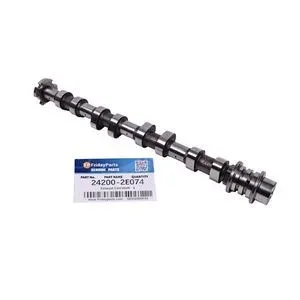
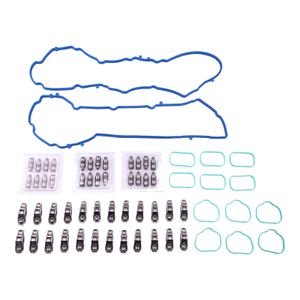
Matched Set Dispatch — Exhaust camshaft supplied with verified timing chain and lifter compatibility records for 2.0L L4 overhaul.
Technical Specifications
| Parameter |
Value |
| Part Number |
24200-2E074/24200-2E084 |
| Product Type |
Camshaft |
| Cross-Reference |
24200-2E074, 242002E074, 24200-2E084, 242002E084 (reference only) |
| Engine Type |
2.0L L4 DOHC MPI, Naturally Aspirated |
| Condition |
New Aftermarket |
| Standard |
ISO 9001 |
| Warranty |
12-month warranty against manufacturing defects |
| Packaging |
Original sealed box with anti-rust oil and protective foam |
Application Suitability
| Engine System |
Related Components |
| Valve Train Actuation |
Hydraulic Lifters / Lash Adjusters, Valve Seals |
| Timing Drive System |
Timing Chain, Chain Tensioner, Sprockets, Guides |
| Cylinder Head Assembly |
Head Gasket, Head Bolt Set, Valve Cover Gasket |
| Lubrication Circuit |
Camshaft Journals, Oil Control Valve (OCV), Oil Filter |
| Engine Block Internals |
Main Bearings, Rod Bearings, Piston Rings (if addressing oil pressure root cause) |
Overhaul Gaps: Why the Camshaft Fails Again After Replacement
A new camshaft installed without addressing oil starvation or timing chain elongation will repeat the failure.
In the engine rebuild shops across the Yangtze River Delta industrial belt, I have witnessed countless teardowns where a freshly replaced Exhaust Camshaft 24200-2E074 engine rebuild component was already scored within a few thousand kilometers. The root cause is rarely the camshaft itself. Lobe wear and journal scoring trace back to systemic issues: contaminated oil galleries, stretched timing chains altering valve events, or hydraulic lifters that failed to pump up, leaving the lobe to hammer against a solid surface [NEED_CITE: valve train tribology and boundary lubrication failure modes in DOHC engines]. When procurement focuses on the single damaged part and ignores the surrounding system, the replacement merely resets the clock on the same underlying fault. Addressing the valve train as a complete system during an overhaul prevents the costly cycle of repeat disassembly and machine downtime.

Valve Train Context for the Hyundai/Kia 2.0L L4 MPI
The Exhaust Camshaft 24200-2E074 engine rebuild serves the exhaust side of a dual overhead cam system, operating in constant coordination with the intake camshaft, timing chain, and hydraulic lifters. During an overhaul, the lobe profile and base circle must align with the engine ECU timing maps. If the hydraulic lifters are worn or the timing chain tensioner is weak, the camshaft experiences abnormal loading that accelerates wear regardless of its manufacturing quality.
Systemic Root Causes and Rebuild Sequencing
Replacing this Exhaust Camshaft 24200-2E074 engine rebuild component requires verifying the condition of the oil pump and oil control valve. Camshaft wear often traces to oil starvation at the journal bearings, particularly during low-RPM and idle operation where oil film integrity is most vulnerable [NEED_CITE: engine lubrication system oil pressure requirements for overhead camshaft journals]. If the previous rebuild used oversize bearings or if oil galleries are blocked with sludge, the new camshaft will suffer the same fate. A complete system inspection ensures the replacement operates within design tolerances.
Tolerance Matching and Surface Finish Specifications
The journal surface finish directly influences hydrodynamic oil film formation. A camshaft with improper surface roughness will experience boundary lubrication during cold starts, leading to rapid material loss. For this 2.0L L4 DOHC MPI engine, the lobe profile tolerances must match factory specifications to preserve ignition accuracy and fuel injection timing. The anti-rust oil and protective foam packaging maintains this critical surface finish during storage and transit, ensuring the component arrives ready for installation without requiring secondary polishing that could alter base circle dimensions.
The Cost of Mismatched Valve Train Components
Procuring the camshaft separately from its associated timing components creates tolerance stack-up risks. A timing chain that has elongated beyond service limits will retard valve events, causing the exhaust camshaft lobes to contact lifters at incorrect angles. This misalignment generates localized stress concentrations that spall the lobe surface. Similarly, installing new camshafts with reused hydraulic lifters that have uneven wear patterns produces uneven loading across the journal bearings [NEED_CITE: timing chain elongation effects on valve timing and camshaft loading]. The result is premature failure that appears to be a part defect but is actually a system mismatch, forcing another complete teardown and additional parts expenditure.
Why Source This Camshaft Through XUNPO
XUNPO supplies this Exhaust Camshaft 24200-2E074 engine rebuild alongside matched timing chains, tensioners, and hydraulic lifters under a single account with unified warranty terms. Our technical team confirms compatibility across model year variants, as the 2.0L L4 MPI engine has undergone profile revisions between 2016 and 2024 production runs. We provide quality inspection records covering lobe profile verification and surface hardness testing before dispatch. Sample supply is available for fitment confirmation before shops commit to bulk inventory, reducing the risk of stocking incorrect variants for different Hyundai Elantra, Kona, or Kia Forte applications.
Documentation & Verification
- Commercial invoice listing camshaft part numbers with cross-reference identification (reference only)
- Compatibility sheet confirming fitment for specific Hyundai/Kia 2.0L L4 engine codes
- Quality inspection record documenting lobe profile and journal hardness measurements
- Warranty terms covering manufacturing defects across the complete valve train system
- Packing photographs showing anti-rust oil application and protective foam placement
- HS code and customs documentation support for international shipment
Installation & Rebuild Sequence
- Verify timing marks align on both camshaft sprockets before removing old chain and camshaft
- Inspect oil galleries feeding camshaft journals; flush if sludge or debris is present
- Install new hydraulic lifters and timing chain tensioner as a matched set with camshaft
- Confirm oil pressure reaches minimum specification at camshaft gallery before first startup
- Perform initial break-in at varied RPM to establish proper oil film on camshaft lobes
Request a Quote for Your Rebuild Project
Provide your engine code, serial number, and any previous rebuild history to receive a complete valve train component list. Our team will verify whether oversize bearings were used in prior work and confirm the correct camshaft variant for your specific application, ensuring all matched components arrive together for a single teardown and rebuild cycle.
Frequently Asked Questions
Q: What other valve train components should be replaced together with the camshaft during an engine rebuild?
A: During a complete overhaul, replace the timing chain, tensioner, guides, and sprockets as a matched set. Hydraulic lifters should be inspected for uneven wear and replaced if scoring is present. Valve seals and the head gasket are mandatory replacements. This ensures the new camshaft operates with components that maintain proper valve timing and lubrication, preventing premature wear from mismatched tolerances.
Q: Does this camshaft fit all 2.0L L4 MPI variants across different model years?
A: The 2.0L L4 MPI engine has undergone cam profile revisions between 2016 and 2024 production years. Provide your specific engine code and vehicle model year so we can verify the correct camshaft variant. Cross-reference numbers 24200-2E074 and 24200-2E084 (reference only) serve different production periods, and installing the wrong profile can affect engine performance and emissions compliance.
Q: How do I confirm the correct camshaft if the engine has been previously rebuilt?
A: Check whether oversize bearings were installed during previous work, as this affects camshaft selection. Inspect existing components for modifications or non-standard parts. Provide photos of the old camshaft, timing marks, and any identification stamps. Our technical team will cross-reference these details against production specifications to identify the correct replacement that matches your engine's current configuration.
Q: How do I identify the root cause of the previous camshaft failure before installing the replacement?
A: Examine oil galleries for blockage or sludge accumulation that starved journal bearings. Check timing chain elongation with a wear gauge; excessive stretch alters valve timing and causes abnormal lobe loading. Inspect hydraulic lifters for collapse or uneven wear patterns. Verify oil pump pressure meets specifications. Addressing these system issues prevents the new camshaft from experiencing the same failure mode that destroyed the original component.
Q: What is included in the overhaul kit, and does it cover timing chain and lifter components?
A: Standard overhaul kits typically contain gaskets, seals, and bearings but may exclude timing components and lifters. Request a complete valve train supply package that includes the timing chain, tensioner, guides, sprockets, and hydraulic lifters matched to your camshaft. This ensures all wear components are replaced simultaneously, maintaining proper valve events and preventing early failure from reused components that have exceeded service limits.