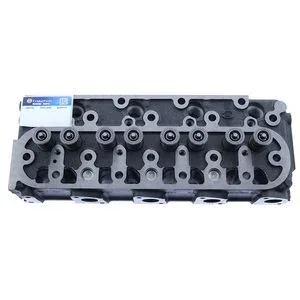
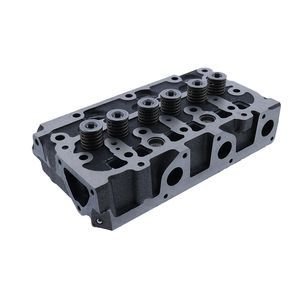
Engine Serial Variants Confirmed — Cross-reference sheets verify V1505-T-E3B, V1505-E4B, and application-specific builds before dispatch to prevent valve geometry mismatch during your Kubota B3200 rebuild.
Technical Specifications
| Parameter |
Value |
| Part Number |
16060-03044, 16062-03045, 16065-03044, 1G091-03042, 1G091-03044, 1G092-03044, 1G677-03040, 1G679-03040, 1G871-03040, 1J050-03040, KEACK-1G092, KEACK-1G093, KEACK-1G679, KEACK-1G871, KU-KEACK-1G092, KU-KEACK-1G093, KU-KEACK-1G679, KU-KEACK-1G871 |
| Product Type |
Cylinder Head |
| Cross-Reference |
16060-03044, 16062-03045, 1G091-03042, 1G091-03044, 1G092-03044, 1G677-03040, 1G679-03040, 1G871-03040, 1J050-03040 (reference only) |
| Machine Fitment |
B3000HSDC, B3000HSDCC, B3030HSD, B3030HSDC, B3030HSDCC, B3200HSD, B3200HSDWO, B3300SUHSD, B7800HSD, B2910HSD, B7820HSD, B3300SU, F3680, F3690-AU, KX71-3, KX71H, KX91-2, KX91-2S |
| Assembly State |
Complete cylinder head assembly with valves and springs |
| Material |
High-silicon aluminum alloy (A380 equivalent) |
| Valve Seat Hardness |
Induction-hardened to 45–50 HRC |
| Machining Tolerance |
ISO 2768-mK |
| Valve Guide Bore Tolerance |
±0.005 mm |
| Coolant Passage Flow Test |
1.2 bar |
| Condition |
New Aftermarket |
| Warranty |
3–12 months against manufacturing defects |
| Standards |
ISO 9001, ISO 2768-mK, ISO 8528 |
Application Suitability
| Engine System |
Related Components |
| Valvetrain & Combustion Sealing |
Head gasket, head bolts, valve stem seals |
| Coolant Circulation |
Thermostat, coolant hoses, water pump |
| Timing & Actuation |
Timing gear, camshaft, rocker arms, pushrods |
| Bottom-End Overhaul |
Piston sets, connecting rod bearings, crankshaft bearings |
| Emission & Exhaust |
Exhaust manifold gasket, EGR components (variant-dependent) |
Why Rebuilds Fail Weeks After a V1505 Cylinder Head Engine Rebuild
A swapped head without root-cause analysis sends the engine back to the teardown bay.
I have seen too many V1505 engines come back to the workshop within weeks of a head replacement. The old head failed for a reason — warped deck surface, burnt valve seat, cracked valve guide, or coolant passage restriction — and if that underlying cause is not diagnosed and addressed, the new V1505 cylinder head engine rebuild will suffer the same fate. Rebuild shops that treat the cylinder head as an isolated swap rather than part of a system-level correction end up absorbing the cost of a second teardown, a second gasket set, and a second round of machine downtime [NEED_CITE: engine cylinder head failure root cause analysis in diesel rebuild practice].
The System This Head Belongs To
This cylinder head sits at the top of the V1505 combustion sealing and valvetrain system. It interfaces directly with the head gasket below, the intake and exhaust manifolds on either side, and the rocker arm assembly above. Every V1505 cylinder head engine rebuild depends on this head maintaining precise valve seat concentricity, correct valve-to-guide clearance, and unobstructed coolant passage flow. When any one of these parameters drifts, the consequences cascade — a leaking valve seat raises combustion gas temperatures, which accelerates gasket degradation, which eventually allows coolant intrusion into the cylinder bore.
Serial Variants and the Mismatch Trap
The V1505 family includes several serial variants — V1505-E3B, V1505-T, V1505-T-E3B, V1505-E4B, and application-specific builds designated by suffixes such as KEA-1 or VMR-1. These variants may carry differences in valve specification, port configuration, or injector geometry. Ordering a head based solely on the base engine designation without confirming the full serial string risks receiving a component with incorrect valve geometry or port alignment. This is why verification against the engine serial number is non-negotiable before any V1505 cylinder head engine rebuild parts are dispatched [NEED_CITE: Kubota V1505 engine serial variant identification procedures].
Specification Breakdown: What the Numbers Mean on the Bench
The high-silicon aluminum alloy (A380 equivalent) construction provides thermal conductivity and dimensional stability under the cyclic heating loads typical of compact diesel combustion chambers. Valve seats induction-hardened to 45–50 HRC resist recession under sustained high-temperature exhaust gas exposure — a softer seat would wear prematurely in continuous-duty agricultural or excavation applications. The valve guide bore tolerance of ±0.005 mm ensures that valve stem-to-guide clearance stays within the range needed for proper oil control and heat transfer; excessive clearance leads to oil consumption and guide wear, while insufficient clearance risks valve sticking under thermal expansion. The ISO 2768-mK machining tolerance governs the deck surface flatness and port alignment, both critical for gasket sealing and manifold fitment. Coolant passage flow tested at 1.2 bar confirms that internal casting passages are free of obstructions that could create localized hot spots and accelerate head gasket failure.

The Cost of Skipping System-Level Verification
When a rebuild shop installs a replacement head without inspecting the block deck for flatness, reusing stretched head bolts, or confirming that timing components are within service limits, the new head inherits the stresses that destroyed the previous one. A warped block deck concentrates clamping force unevenly across the head gasket, leading to localized blow-by. Stretched bolts cannot maintain the specified clamp load through thermal cycling. Worn timing gears shift valve events, reducing compression and raising exhaust temperatures against the new valve seats. Each of these conditions shortens the interval before the engine returns to the bay [NEED_CITE: diesel engine rebuild quality control and fastener reuse standards].
Why Source This Head Through XUNPO
This V1505 cylinder head is supplied as a complete assembly with valves, springs, and guides pre-installed, eliminating the risk of mismatched clearances that arise when individual valvetrain components are sourced separately. Part identification is supported through engine serial number, machine model, photograph, or nameplate image — so even when the original head is too damaged to read a casting number, the correct replacement can be confirmed. Cross-reference verification covers superseded and alternate numbers across the full identifier list. Technical support is available for compatibility and grade confirmation before commitment, and sample supply is offered for fitment verification ahead of bulk orders. All production and sourced lines carry the same quality control and warranty terms.
Documentation & Verification
- Commercial invoice listing each identifier and cross-reference (reference only) for customs clearance
- Part compatibility sheet confirming engine serial variant match for your specific V1505 build
- Quality inspection record covering coolant passage pressure test, valve seat concentricity, and deck surface finish
- Warranty terms document specifying 3–12 month coverage against manufacturing defects
- Packing photographs showing molded EPS foam cushioning and industrial-grade carton condition before dispatch
- HS code classification and customs documentation support for international shipment
Installation & Rebuild Sequence
- Verify block deck flatness with a straight edge and feeler gauge before placing the new cylinder head
- Replace head bolts — do not reuse — and follow the manufacturer's multi-stage torque sequence
- Confirm valve timing by checking gear alignment marks after installing the camshaft and timing gear
- Inspect rocker arms, pushrods, and valve stem seals for wear; replace any component outside service limits
- Perform a cold compression test after assembly, then run a controlled break-in cycle before returning to full load
- Monitor coolant temperature and oil pressure during the first operating hours to confirm passage integrity
Request a Compatibility Confirmation
Send your engine serial number, including the full variant suffix, along with any previous rebuild records or bore size history. If the nameplate is unreadable, provide a clear photograph of the engine block casting and the existing head from multiple angles. This allows the technical team to confirm the correct V1505 cylinder head engine rebuild assembly, verify associated component compatibility, and quote the matched set needed for a complete overhaul.
Frequently Asked Questions
Q: What engine serial variants does this cylinder head cover, and how do I confirm mine?
A: This head covers V1505-E3B, V1505-T, V1505-T-E3B, V1505-E4B, and application-specific builds. Confirm your variant by checking the engine serial plate for the full designation string including suffixes such as KEA-1 or VMR-1. If the plate is missing or illegible, provide photographs of the block casting and existing head for cross-reference verification before ordering.
Q: Should I replace head bolts when installing a new cylinder head?
A: Yes. Head bolts stretch during service and lose their ability to maintain specified clamp load through thermal cycling. Reusing stretched bolts leads to uneven gasket compression and localized blow-by. Always install new bolts and follow the multi-stage torque sequence to ensure even clamping across the deck surface.
Q: Is this head supplied with valves and springs installed, or do I need to transfer from the old head?
A: This cylinder head ships as a complete assembly with valves, springs, and guides pre-installed. There is no need to transfer components from the old head. This eliminates the risk of mismatched valve-to-guide clearances that occur when individual parts are sourced from separate suppliers and assembled in the workshop.
Q: What other components should I inspect or replace during a head swap?
A: Inspect the head gasket mating surface on the block, valve stem seals, rocker arms, pushrods, timing gear, and camshaft for wear. Replace the head gasket and head bolts as a minimum. Addressing only the head without checking these adjacent components invites repeat failure from root causes that remain unresolved.
Q: How do I verify the root cause of my previous head failure before installing the replacement?
A: Examine the old head for warping on the deck surface, burnt or recessed valve seats, cracked guides, and restricted coolant passages. Check the block deck for flatness and review operating history for overheating events. Identifying the failure mode ensures corrective steps are taken so the replacement head does not suffer the same damage.