Matched Sets Shipped — Engine auxiliary components verified by serial variant before dispatch, preventing mismatched recoil assemblies on Stihl MS194T rebuilds.
Technical Specifications
| Parameter |
Value |
| Part Number |
1137-080-2115 1137-084-1002 |
| Product Type |
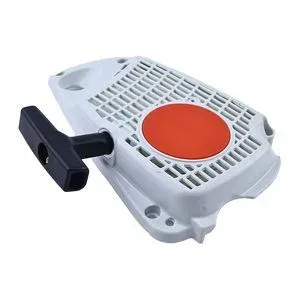
Recoil Starter |
| Cross-Reference |
1137-080-2115, 1137-084-1002 (reference only) |
| Machine Fitment |
Stihl MS194T |
| Condition |
New Aftermarket |
| Housing Material |
High-impact polymer |
| Spring Mechanism |
Heat-treated steel |
| Assembly State |
Complete unit with all necessary components |
| Warranty |
3-12 months against manufacturing defects |
| MOQ |
1 piece |
| Standards |
ISO-certified manufacturing |
Application Suitability
| Engine System |
Related Components |
| Auxiliary Starting System |
Flywheel, starter pawl, return spring, starter rope |
| Engine Cooling & Ventilation |
Flywheel fan, cooling shroud, air filter cover |
| Ignition & Timing |
Ignition module, spark plug, flywheel key |
| Fuel Delivery |
Carburetor, fuel line, impulse line, fuel filter |
Why a New Recoil Starter Fails Within Weeks of Installation
A replacement recoil pull starter that fails prematurely usually signals unresolved faults in the adjacent engine auxiliary system.
When a Recoil Starter engine replacement part is installed without inspecting the flywheel engagement surface or verifying the return spring channel, the new unit absorbs damage from the same root cause that destroyed the original. On forestry and arboriculture sites where Stihl MS194T chainsaws see continuous daily cycling, a misdiagnosed auxiliary system turns a straightforward swap into a repeat teardown [NEED_CITE: engine auxiliary system diagnostic sequence for handheld power equipment]. Rebuild shops that treat the starter as an isolated component rather than a system member consistently see comeback jobs, consuming labour hours and eroding customer confidence.

The Recoil Starter's Position Within the Engine Auxiliary System
The recoil pull starter is not a standalone accessory; it interfaces directly with the flywheel, starter pawl, and engine crankshaft through a precise engagement sequence. When the operator pulls the rope, the pawl extends to engage the flywheel hub, transferring rotational force to crank the engine. A Recoil Starter engine replacement part must therefore match the specific flywheel geometry and pawl clearance dictated by the engine serial variant. Supplying this component as part of a broader engine auxiliary service ensures that the flywheel surface, pawl condition, and return spring tension are all verified simultaneously, eliminating the staggered failures that plague partial repairs.
Superseded Numbers and Serial Variant Differences
The references 1137-080-2115 and 1137-084-1002 represent production revisions rather than interchangeable equivalents. Early MS194T production runs used one housing profile and spring anchor configuration, while later serial ranges adopted a modified geometry to address rope routing wear [NEED_CITE: Stihl MS194T production revision history for auxiliary components]. Installing the earlier variant on a later engine serial can result in housing interference with the cooling shroud or improper spring preload. Rebuild shops must confirm the engine serial number before committing to a specific reference, and ordering both variants for stock without this verification creates fitment risk on the bench.
Decoding the Assembly Specifications
The high-impact polymer housing resists cracking under the sudden shock loads generated when a cold engine resists initial cranking, particularly in low-temperature forestry operations where fuel volatility drops. The heat-treated steel spring mechanism stores and releases energy across thousands of cycles; inadequate heat treatment would manifest as spring fatigue within a typical work season, causing the rope to retract sluggishly or fail to retract at all. The complete assembly state means the internal spring, rope, handle, and housing arrive pre-tensioned, eliminating the variable of workshop spring winding that frequently introduces incorrect preload and premature housing stress fractures.
The Cost of Ignoring Root-Cause Diagnostics
A workshop that replaces only the recoil pull starter without investigating why the previous unit failed will typically see the new assembly degrade along the same failure path. If the flywheel key is sheared, the timing shifts and the engine kicks back during starting, placing abnormal shock loads on the starter pawl and housing. If the rope was previously routed incorrectly through the shroud, friction wears the new rope prematurely. Each undiagnosed root cause converts a system-level repair into a cycle of repeat visits [NEED_CITE: common root causes of recoil starter failure in two-stroke engines]. The labour cost of two teardowns exceeds the diagnostic time required to prevent the second failure entirely.
Why Source This Component Through XUNPO
Own production lines and qualified sourced supply operate under identical quality control and warranty terms, so whether this Recoil Starter engine replacement part ships from the Guangzhou facility or a certified partner, the inspection standard remains consistent. Eight product categories consolidate under a single account, meaning flywheel components, ignition modules, and fuel system parts for the same MS194T overhaul ship in one consignment rather than arriving on staggered timelines. Minimum order starts at one piece, accommodating emergency single-unit replacements alongside bulk stock orders for distributor shelves. Technical support verifies serial variant applicability against the engine number provided, reducing the fitment uncertainty that plagues catalog-only ordering. Cross-reference verification covers both superseded numbers, confirming which reference matches the specific engine serial range before the order is processed.
Documentation & Verification
- Commercial invoice lists both cross-reference numbers with applicable serial ranges noted
- Dimensional inspection record confirming housing profile and spring anchor geometry
- Compatibility sheet distinguishing 1137-080-2115 and 1137-084-1002 applicability (reference only)
- Warranty certificate covering manufacturing defects for 3-12 months from dispatch
- Packing photographs showing complete assembly condition before carton sealing
- HS code classification and export documentation support for customs clearance
Installation & Rebuild Sequence
- Inspect flywheel engagement surface and pawl channel before mating the new recoil starter housing
- Verify return spring tension by manually cycling the rope through full extension and retraction
- Confirm housing mounting bolts are torqued to specification to prevent stress cracking under vibration
- Check rope routing path through the cooling shroud for abrasion points before final assembly
- Perform several cold-start pulls to confirm pawl engagement and smooth retraction before returning the saw to service
- Record engine serial number and installed reference variant in the service log for future parts matching
Preparing Your Enquiry
Provide the Stihl MS194T engine serial number from the crankcase stamping or identification plate so the correct reference variant is confirmed before dispatch. If the existing unit is still partially intact, a photograph of the housing profile and spring anchor point accelerates verification. For overhaul shops quoting multiple auxiliary components, submit the complete job list to receive a consolidated consignment plan with matched dispatch timing.
Frequently Asked Questions
Q: What other engine auxiliary components should be replaced together with the recoil starter?
A: The flywheel starter pawl, return spring, and any worn rope guides should be inspected and replaced if showing fatigue. A damaged flywheel key will cause kickback that destroys the new starter, so confirming timing integrity is essential. Ordering these as a matched set prevents staggered failures that require repeat disassembly of the same auxiliary system section.
Q: How do I determine whether 1137-080-2115 or 1137-084-1002 applies to my engine?
A: The engine serial number on the MS194T crankcase determines which reference is applicable, as the two numbers correspond to different production revisions with distinct housing profiles. Providing this serial number allows technical verification before dispatch. Guessing based on visual similarity risks receiving a housing that interferes with the cooling shroud or has incorrect spring anchor geometry.
Q: Does the recoil starter arrive as a complete assembly?
A: Yes, the unit ships fully assembled with housing, internal spring, rope, and handle pre-tensioned and ready to mount. This eliminates the workshop variable of manual spring winding, which frequently introduces incorrect preload and causes early housing failure. No internal components need to be sourced separately for a standard replacement procedure.
Q: What engine system faults could cause premature recoil starter failure?
A: A sheared flywheel key alters ignition timing and creates kickback shock loads on the starter pawl. Incorrect rope routing through the shroud causes friction wear. Worn flywheel engagement surfaces allow the pawl to slip, generating heat and deformation. Each of these faults must be diagnosed during the same service visit to prevent the new unit from inheriting the same damage path.
Q: How do I confirm the correct part for chainsaws with unreadable identification plates?
A: A photograph of the existing recoil starter housing profile, spring anchor configuration, and mounting pattern allows technical identification even when the nameplate is damaged or painted over. The engine block casting number may also provide sufficient information for serial range determination. This visual verification process replaces the need for a legible plate and prevents incorrect variant shipment.



![记录ID 9624 数字之和:9+6+2+4 = 21 21 mod 6 = 3 → 句式:[品牌/机型]-Compatible [品类词] – [站点修饰词] 目标站 xunpomachineryparts.com 修饰词池:Engine Grade / Rebuild Kit / Matched Set / Overhaul Component / Powertrain / System-Matched 21 mod 6 = 3 → Overhaul Component Cummins 4BT 6BT-Compatible Stop Solenoid – Overhaul Component](https://xunpomachineryparts.com/wp-content/uploads/2026/08/e8aeb0e5bd95id-9624-e695b0e5ad97e4b98be5928cefbc9a9624-21-21-mod-6-3-e28692-e58fa5e5bc8fefbc9ae59381e7898c-e69cbae59e8b-compatible-e59381-5dbbce.webp)