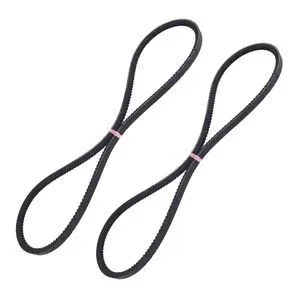
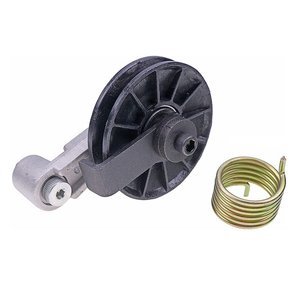
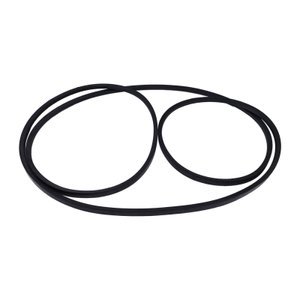
Matched Set Dispatch — every belt ships with verified cross-section geometry matched to your Hustler Raptor or BigDog engine serial variant.
Technical Specifications
| Parameter |
Value |
| Part Number |
607400 603907 |
| Product Type |
Drive Belt |
| Cross-Reference |
607400 (reference only), 603907 (reference only) |
| Machine Fitment |
Hustler Raptor, Raptor Limited, Raptor SD, Raptor SDX, Raptor Flip-UP; BigDog Alpha, Alpha MP, Alpha MPX |
| Material |
High-tensile synthetic rubber compound with aramid tensile cords |
| Condition |
New Aftermarket |
| Warranty |
6-month warranty against manufacturing defects |
| Standards |
ISO 9001, ISO 4184, SAE J149 |
| MOQ |
1 piece |
Application Suitability
| Engine System |
Related Components |
| Engine belt drive — crankshaft to cutting deck |
Tensioner assemblies, idler pulleys, driver and driven sheaves |
| Accessory drive — alternator and cooling fan |
V-belt pulleys, mounting brackets, fastener sets |
| Deck engagement clutch drive |
Clutch bearings, engagement springs, belt guides |
Why a Belt Replacement Alone Rarely Solves the Root Cause
A new Drive Belt engine rebuild replacement installed on worn pulleys fails prematurely because the fault that destroyed the original belt was never corrected. Address the system, not just the failed component.
In my years supplying parts for commercial mowing fleets across South America, I have watched mechanics swap belt after belt on Hustler Raptor SD units without ever measuring pulley runout or checking idler bearing play. The new belt rides on a damaged sheave groove, generates heat at the contact face, and snaps within a single mowing season [NEED_CITE: belt drive system failure root cause analysis for commercial turf equipment]. The same pattern repeats on BigDog Alpha machines where tensioner springs lose rate over thousands of engagement cycles. A complete belt drive overhaul means inspecting every rotating component in the path before the new belt goes on.

Where the Belt Sits Inside the Engine Accessory Drive System
This Drive Belt engine rebuild replacement transmits crankshaft torque through the accessory drive path to the cutting deck clutch on Hustler Raptor and BigDog mower platforms. The belt interfaces with the driver sheave mounted on the crankshaft, one or more idler pulleys that route the belt around obstructions, and the driven sheave on the deck engagement clutch. Tensioner assemblies maintain correct belt tension across the span. When any of these components wears beyond tolerance, the belt either slips under load or runs with excessive side pressure against the sheave walls.
Engine Serial Variants That Change Belt Fitment
The Hustler Raptor line evolved through several generations — Raptor, Raptor Limited, Raptor SD, Raptor SDX, and Raptor Flip-UP — and engine options shifted across those platforms. A belt spec'd for the standard Raptor engine may not match the crankshaft pulley diameter on a Raptor Limited high-output variant. I learned this the hard way in Peru when a few millimeters of pitch length difference between a standard and limited-edition build left a machine sitting idle for two days while the correct belt was sourced. Confirming the engine model and serial number before ordering prevents that kind of avoidable downtime [NEED_CITE: engine serial variant cross-reference procedures for turf equipment belts].
Material and Construction Details That Matter in the Engine Compartment
The aramid tensile cords embedded in this belt resist elongation under cyclic high-torque loading, which is the primary failure mode for belts driving heavy cutting decks through repeated clutch engagements. The synthetic rubber compound is formulated to resist degradation from engine oil mist, hydraulic fluid vapor, and fuel splash that accumulates inside the mower engine shroud. Cross-section geometry and pitch length are matched to the OEM reference dimensions so the belt seats correctly in the sheave groove without bottoming out or riding too high. Correct seating distributes load evenly across both flanks of the V-profile and prevents localized heat buildup.
The Hidden Cost of Skipping Pulley and Tensioner Inspection
Replacing only the belt without verifying pulley condition and tensioner function leads to repeat failures that compound fleet downtime across a mowing season. A worn sheave groove changes the belt contact angle, forcing the sidewalls to carry load on a reduced surface area. An idler bearing with axial play allows the belt to flutter at operating speed, generating harmonic stress that fatigues the tensile cords from the inside out [NEED_CITE: harmonic vibration effects on aramid-reinforced drive belts]. The result is a belt that looks like it failed prematurely when in fact the surrounding hardware was never corrected.
Why Source Belt Drive Components Through This Channel
Both self-produced and qualified sourced supply lines carry the same QC and warranty terms, so a belt ordered alongside tensioners and pulleys from one account receives consistent quality documentation. Eight core categories under one supplier means the full overhaul list — belts, bearings, seals, fasteners — ships as a single consignment rather than arriving in staggered batches. Minimum order starts at one piece, so a workshop replacing a single Raptor SDX belt does not face a bulk quantity barrier. Cross-reference verification covers superseded and alternate part numbers across machine generations, catching variant mismatches before the order is placed. Technical support confirms engine serial compatibility and advises on grade selection when previous rebuilds have altered pulley dimensions.
Documentation & Verification
- Commercial invoice listing each belt variant with corresponding engine serial range
- Cross-reference sheet mapping 607400 and 603907 to compatible Hustler and BigDog models (reference only)
- Dimensional inspection record covering pitch length and cross-section profile tolerances
- Six-month warranty terms covering manufacturing defects in rubber compound and tensile cords
- Packing photographs showing individual polybag sealing and export carton condition before dispatch
- HS code and customs documentation prepared for international turf equipment parts shipments
Installation & Rebuild Sequence
- Remove belt guard and release tensioner before extracting the old belt from all sheave grooves
- Inspect driver and driven pulley grooves for wear ridges that alter belt contact geometry
- Check every idler bearing for radial and axial play; replace any that show detectable movement
- Route the new Drive Belt engine rebuild replacement following the OEM routing diagram for your specific machine variant
- Apply correct tension per service manual specification and verify alignment with a straightedge across pulley faces
- Run the engine at idle for a break-in period and recheck tension after the first operating cycle
Request a Fitment Confirmation Before Ordering
Provide the engine model, machine serial number, and any previous rebuild history so the correct belt variant is confirmed against your specific Hustler Raptor or BigDog Alpha platform. If the nameplate is worn or painted over, a photograph of the existing belt alongside a ruler allows pitch length verification. Share the full overhaul list if you are rebuilding the entire belt drive system so matched components ship together.
Frequently Asked Questions
Q: What other belt drive system components should be replaced alongside the belt?
A: Inspect tensioner assemblies, idler pulleys, and sheave bearings during every belt replacement. Worn tensioner springs lose rate over service hours and allow belt slip under deck load. Idler bearings with play cause harmonic flutter that fatigues aramid cords internally. Replacing these adjacent components during the same overhaul prevents a second teardown within the same mowing season.
Q: How do I confirm which belt variant fits my specific engine serial number?
A: Provide the machine model, engine model, and serial number so the correct variant is identified against cross-reference records. Engine options changed across Raptor generations, and a belt that fits the standard engine may not match the pulley diameter on a high-output variant. A photograph of the old belt with a measurement reference helps verify pitch length when documentation is unavailable.
Q: What causes premature belt failure beyond normal wear?
A: Misaligned pulleys force the belt to track against one sheave flank, generating localized heat. Contaminated engine compartments expose the rubber compound to oil and hydraulic fluid that accelerate degradation. Worn sheave grooves reduce the contact surface area and concentrate load on the belt sidewalls. Addressing these root causes during installation extends service life meaningfully beyond a simple belt swap.
Q: Does the overhaul kit include tensioners and pulleys as matched items?
A: Belt drive components are typically listed as separate line items rather than bundled kits, allowing you to order only the parts your inspection identifies as worn. This approach avoids paying for components that still have remaining service life while ensuring every replaced item matches the engine serial variant. Consolidated ordering from one supplier keeps all items on a single shipping document.
Q: How do I verify the engine model when the nameplate is worn or missing?
A: A photograph of the existing belt laid flat with a tape measure alongside it allows pitch length confirmation against reference records. Engine casting numbers, often found on the block near the oil filter mounting pad, provide secondary identification. Cross-referencing these details against the machine model narrows the correct belt variant without requiring the original nameplate.