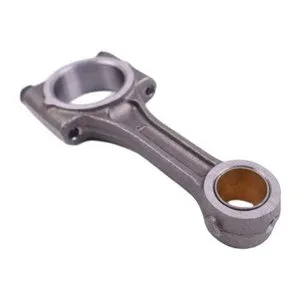
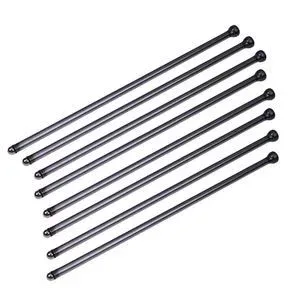
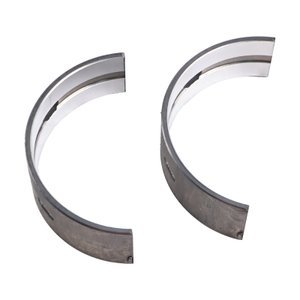
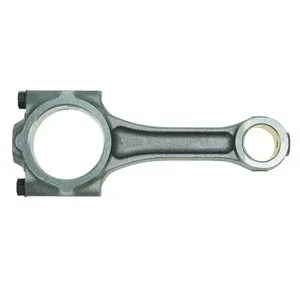
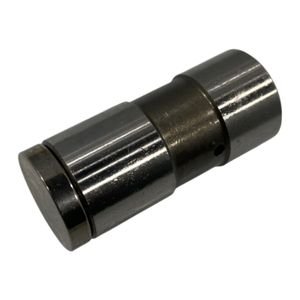
Matched Bottom-End Set — Con rod, bearings, piston, and gasket shipped together after crankshaft journal and serial-variant verification.
Technical Specifications
| Parameter |
Value |
| Part Number |
15261-22010, 15531-22010, 15381-22010, 15694-22010, 1526122010, 1553122010, 1538122010, 1569422010 |
| Product Type |
Connecting Rod |
| Cross-Reference (reference only) |
15261-22010, 15531-22010, 15381-22010, 15694-22010 |
| Machine Fitment |
Kubota B7100HST-E, B7100D-P, F2000, F2100, F2100E, KH-36, KH-41, KH-51, KH-51H, KH-61, KH-61H, B7200D, B6200HSTE, B7200E, B7200HSTD, B8200DP, B8200EP, B9200DC-DP, B9200HST-DP, GL-4500(S), GL-5500(S), B1550D, B1750D, B20, B2150D, B4200D, B5100D-P, B5200D, B6100D-P, B6200D |
| Engine Compatibility |
Kubota D650, D750, D850, D950, V1100, V1200, ZB600 |
| Material |
High-strength forged steel |
| Condition |
New aftermarket |
| Hardness |
HRC 32–36 |
| Dimensional Tolerance |
±0.01 mm |
| Big-End Bore Roundness |
±0.005 mm |
| Small-End Bushing Material |
Sintered bronze with PTFE impregnation |
| Surface Treatment |
Shot-peened |
| Inspection |
Magnetic particle inspection (MPI) |
| Warranty |
12-month warranty against manufacturing defects |
| Standards |
ISO 9001, SAE J431 G10500 |
| MOQ |
1 piece |
Application Suitability
| Engine System |
Related Components |
| Bottom-End Rebuild (D650–D950) |
Con rod bearing (STD/0.25/0.50), main bearing, crankshaft thrust washer |
| Piston & Ring Assembly |
Piston, piston ring set, wrist pin, circlip |
| Top-End Overhaul |
Cylinder head gasket, valve stem seal, injector seal, head bolt set |
| Lubrication & Crankcase |
Oil pan gasket, oil pump, oil filter, sump plug washer |
| Cooling System (during teardown) |
Water pump, thermostat, block heater gasket |
Why the Wrong Bearing Grade Forces a Second Teardown
Measure the crankshaft journal before you order any Kubota Connecting Rod engine overhaul rebuild components.
A connecting rod ordered without confirming the prior oversize history of the crankshaft almost guarantees a mismatch at assembly. I have opened engines where the crankshaft was ground to 0.25 undersize during the first rebuild, but the next technician installed standard bearings — the clearance was wrong from the first minute of operation. Within hours of break-in, bearing shells were already scoring. The shop had to tear the engine down again, source the correct grade, and eat the labor cost twice. [NEED_CITE: engine bearing clearance specification standards for diesel overhaul] This pattern repeats because procurement often treats the rod as a standalone item instead of a matched set with its bearings and piston.

The Bottom-End System Is a Matched Group
Every Kubota Connecting Rod engine overhaul rebuild must be specified as a group. The connecting rod, con rod bearing, main bearing, piston, and piston ring set must be selected together based on actual crankshaft journal measurements and the engine's rebuild history. A rod that meets factory bore tolerance means nothing if the bearing shell installed into it is the wrong thickness for a reground journal. The D650 through D950 series share common architecture but differ in displacement and bearing width across production runs.
Oversize Grade and Serial Variant Differences
When a crankshaft has been ground, the connecting rod bearing clearance shifts to an oversize grade — typically STD, 0.25, or 0.50. Ordering without this confirmation leads to either excessive oil clearance and rapid bearing failure, or insufficient clearance and seizure during warm-up. [NEED_CITE: crankshaft undersize bearing selection procedure for small diesel engines] Additionally, Kubota engines within the same model family can carry different internal configurations across serial ranges. A rod from an early D850 may differ in bolt pattern or bushing bore from a later variant. Confirming the full engine serial number prevents this misidentification before the parts ship.
What the Forged Steel Construction Means in Practice
The high-strength forged steel body provides the fatigue resistance required for the cyclic loading in D-series and V-series Kubota engines. Shot-peening introduces compressive residual stress on the surface, which delays crack initiation at the bolt boss and beam fillet — the two locations where fatigue cracks typically start. The dimensional tolerance of ±0.01 mm and big-end bore roundness of ±0.005 mm ensure that the bearing shell seats uniformly, distributing load across the full journal width rather than concentrating it at one edge. MPI on every unit catches subsurface cracks that visual inspection would miss.
The Cost of Skipping Root-Cause Analysis
Replacing a failed rod without diagnosing why it failed sets the engine up for a repeat event. Rod failure in these platforms typically traces to oil starvation from a clogged suction screen, chronic overloading beyond rated continuous output, or lubrication contamination with coolant or fuel. [NEED_CITE: diesel engine connecting rod failure mode analysis and root cause] If the oil pump or suction passage is not addressed during the rebuild, the new rod enters the same hostile environment and fails within a comparable timeframe. The repair cost multiplies with each unnecessary teardown cycle.
Why Procurement from One System-Level Source Matters
Our warehouse holds selected connecting rod part numbers alongside their matched bearing grades, overhaul gasket sets, and piston assemblies under a single account with one warranty. The technical team confirms engine serial compatibility and bearing grade selection before dispatch, eliminating the guesswork that causes second teardowns. Parts identification works from a part number, a machine model, or a photograph of a worn nameplate. Cross-reference verification covers superseded numbers across Kubota production changes. Sample supply is available so you can verify fitment before committing to bulk overhaul quantities. Quality inspection records including dimensional audits and MPI results ship with every order.
Documentation & Verification
- Commercial invoice listing each rod part number, bearing grade, and matched component
- Cross-reference sheet (reference only) mapping superseded Kubota numbers to current stock
- Dimensional inspection record with bore roundness and MPI clearance for each unit
- Warranty terms covering manufacturing defects for twelve months from delivery
- Packing photographs showing individual anti-rust coating and vacuum-sealed bags
- HS code and customs classification support for international engine parts shipments
Installation & Rebuild Sequence
- Measure crankshaft journal diameter and confirm oversize grade before unboxing the rod
- Verify bearing shell thickness matches the reground journal — not the original factory size
- Torque rod bolts in stages per Kubota specification using new fasteners each cycle
- Check side clearance and end float with plastigauge before installing the oil pan
- Run a thirty-minute break-in at varied load to seat bearings and verify oil pressure
Request a System-Matched Quote
Provide your engine model, full serial number, and any known crankshaft regrind history. If you have a photograph of the old rod or engine nameplate, include it for faster identification. We will return a consolidated quotation covering the rod, bearings, piston, and gasket set matched to your specific engine build.
Frequently Asked Questions
Q: What else does my overhaul kit need beyond the connecting rod?
A: A complete bottom-end rebuild requires matched con rod bearings, main bearings, crankshaft thrust washers, piston, piston ring set, wrist pin, and a full gasket set including oil pan and cylinder head gasket. Fastener sets should be replaced every cycle. We consolidate these into one shipment matched to your engine serial variant.
Q: My crankshaft was ground at the last rebuild — how do I pick the right bearing grade?
A: Measure the reground journal diameter with a micrometer and match it to the bearing grade — STD, 0.25, or 0.50 undersize. Installing standard bearings on a ground journal creates excessive clearance and immediate bearing failure. Provide your measurement and we confirm the correct shell thickness before dispatch.
Q: Do different engine serial numbers within the same Kubota model use different rods?
A: Yes. Kubota has updated internal components across D650–D950 and V1100–V1200 production runs, sometimes changing bolt patterns or bushing bore diameters within the same model designation. The full engine serial number allows us to cross-reference against current and superseded part numbers to ensure the rod you receive matches your specific build.
Q: What caused my last rod to fail, and how do I prevent it happening again?
A: Common causes include oil starvation from a blocked suction screen, chronic overloading, or coolant contamination of the lubrication system. Replacing the rod without addressing the root cause guarantees a repeat failure. During rebuild, inspect the oil pump, suction passage, and oil cooler for the fault that destroyed the previous component.
Q: How do I confirm my exact engine model and serial for parts ordering?
A: Locate the engine nameplate — typically on the valve cover or block — and photograph it. If the plate is worn or painted over, provide the machine model and any visible casting numbers. Our technical team cross-references these against Kubota production records to identify the correct internal component variant for your engine.