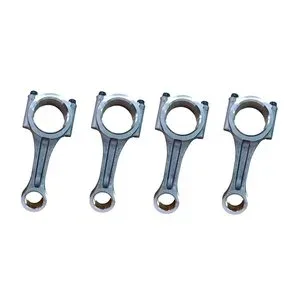
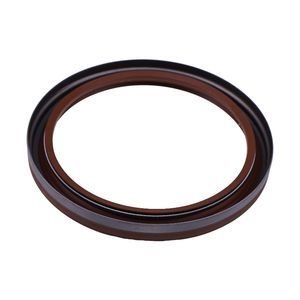
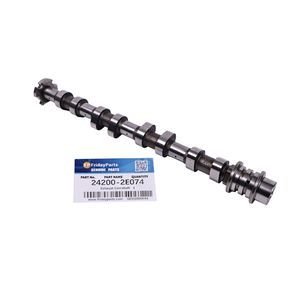
Matched Sets Shipped Together — every D24 connecting rod order verified against piston, bearing shell grade, and overhaul gasket contents before dispatch.
Technical Specifications
| Parameter |
Value |
| Part Number |
7031360 |
| Cross-Reference |
7031362, 7031361, 7031358, 7031359 (reference only) |
| Machine Fitment |
Bobcat Excavator E32, E35, E42, E45, E50, E55, E57W, E85, E63; Skid Steer Loader S450, S510, S550, S570, S590, S595, S630, S650; Compact Track Loader T450, T550, T590, T595, T630, T650; ToolCat 5600, 5610; Portable Power P185 |
| Product Type |
Connecting Rod |
| Material |
High-strength alloy steel |
| Big-End Bore |
Honed to mirror finish |
| Bolt Holes |
Thread-rolled |
| Condition |
New Aftermarket |
| Inspection |
Magnaflux testing for hidden cracks |
| Warranty |
3–12 months against manufacturing defects |
| MOQ |
1 piece |
| Standards |
ISO 9001 |
Application Suitability
| Engine System |
Related Components |
| Crank-rod mechanism (D24) |
Pistons, piston pins, circlips |
| Main bearing and big-end journal |
Connecting rod bearing shells (STD / oversize), main bearing shells |
| Cylinder bore surface |
Cylinder liners, liner seals |
| Full overhaul package |
Overhaul gasket kit, rod bolts, valve stem seals |
Why D24 Overhauls Fail After a Connecting Rod Replacement
Swapping the rod without confirming crankshaft journal condition and bearing shell grade almost guarantees a comeback.
I have seen D24 engines land back on the stand within a short running period because the connecting rod 7031360 was installed with standard-grade shells on a crankshaft that had already been ground to oversize. The oil clearance closed up, the journal overheated, and the bearing spun again [NEED_CITE: crankshaft undersize journal measurement and bearing shell selection practices for diesel engines]. A single rod replacement is never just a single rod replacement — the failure that bent or cracked the first rod usually lives somewhere else in the lubrication or cooling circuit.

The Crank-Rod System Around This Connecting Rod
This connecting rod sits inside a closed loop of interacting parts on the D24. The piston transfers combustion load through the pin into the small-end bush, the rod transmits that force to the big-end journal, and the bearing shells maintain the oil wedge that keeps metal off metal. When one element in this chain wears beyond tolerance, every other element absorbs the consequence. Rebuilding the D24 means reading the full history of the engine — which cylinders showed blow-by, which journals measured under minimum diameter, and whether a previous rebuild already changed the dimensional baseline.
Bearing Shell Grade and the Rebuild History Trap
The crankshaft journals on D24 engines in the field are rarely at factory nominal anymore. A previous overhaul may have sent the crank to a machine shop for grinding, meaning the journals now sit at an oversize dimension that demands matching undersize shells. Fitting a new Connecting Rod for D24 engine overhaul rebuild with standard shells into an oversize journal produces inadequate oil clearance, rapid temperature rise, and bearing failure [NEED_CITE: diesel engine bearing clearance measurement and plastigauge procedures]. Always micrometer the journal before ordering shells, and always match the rod, piston, and shell grade as a verified set.
Reading the Specs That Actually Matter on the Bench
The high-strength alloy steel body resists the tensile and compressive reversal loads that occur every revolution, but material strength alone does not prevent failure. The big-end bore is honed to a mirror finish so the bearing shell seats uniformly — any chatter or taper in that bore creates a localized pressure peak that collapses the oil film. Thread-rolled bolt holes produce a cold-worked grain flow around the fastener engagement, which is meaningfully more fatigue-resistant than cut threads under cyclic loading. Magnaflux inspection before dispatch catches subsurface cracks that visual examination cannot reveal, eliminating the risk of installing a rod with a hidden defect [NEED_CITE: magnetic particle inspection standards for forged steel engine components].
The Cost That Hides Behind a Mismatched Grade
When bearing shells and rod journals do not agree on grade, the engine may start and run acceptably on the first day. The damage accumulates invisibly: localized overheating at the journal, accelerated shell wear, and progressive loss of oil pressure at operating temperature. By the time symptoms appear, the crankshaft journal is scored beyond a simple polish, and the repair escalates from a shell swap to a crank regrind or replacement [NEED_CITE: progressive bearing failure modes and crankshaft journal damage in compact diesel engines]. The downtime and second teardown dwarf the cost of getting the grade right the first time.
What We Verify Before This Rod Leaves Guangzhou
Every connecting rod 7031360 order triggers a cross-check against the D24 engine serial number you provide, confirming whether the internal components on your build match the early or late production variant. The big-end bore diameter and out-of-round tolerance are checked against specification before packing. Overhaul kit contents are reviewed line-by-line so the gasket set, rod bolts, and bearing shells arrive in a single consignment rather than as a second shipment weeks later. Our technical team confirms bearing shell grade against your measured crankshaft journal dimensions, not against a catalog assumption.
Documentation & Verification
- Commercial invoice listing rod part number, cross-reference numbers, and matched shell grades
- Compatibility sheet confirming D24 serial variant and internal component revision
- Dimensional inspection record covering big-end bore, small-end bush diameter, and center distance
- Magnaflux test report for crack detection on each rod body
- Packing photographs showing individual rod protection and kit contents before crate closure
- HS code and customs classification support for international engine parts shipments
Installation & Rebuild Sequence
- Clean all oil galleries in the rod and block before assembly — blocked piston cooling jets cause repeat failures
- Verify bearing shell grade against measured crankshaft journal diameter, not catalog default
- Assemble big-end caps to their original rod only — caps are not interchangeable between rods
- Torque rod bolts in the specified sequence and confirm big-end bore roundness after tightening
- Check piston cooling nozzle flow on the D24 before installing the sump
- Run the engine on a priming cycle without load to build oil pressure before applying load
Get the Grade Right Before You Order
Send us the D24 engine serial number, any available crankshaft journal measurements, and whether the engine has been rebuilt before. We will confirm the correct connecting rod variant, match the bearing shell grade to your actual crankshaft condition, and include the complete overhaul gasket and fastener set in one shipment. If you only have a machine model or a worn nameplate photograph, that is enough to start the identification.
Frequently Asked Questions
Q: What does a typical D24 overhaul kit include beyond the connecting rod?
A: A complete D24 overhaul kit normally covers piston assemblies, cylinder liners with seals, main and connecting rod bearing shells, full gasket set, piston rings, rod bolts, and valve stem seals. Contents vary between early and late engine serial ranges, so the kit must be matched to your specific engine build. We verify every line item against your serial number before dispatch.
Q: If the crankshaft has been ground, which bearing shell grade do I need?
A: Measure each crankshaft journal with a micrometer and compare the reading to the D24 service manual specifications. Ground journals require undersize shells — typically available in STD, 0.25, and 0.50 oversize. Never assume the grade from a previous rebuild record; always measure the actual surface. We match shell grade to your measured dimensions.
Q: Are connecting rods interchangeable across all D24 serial numbers?
A: Not always. Bobcat and Doosan Daewoo built the D24 across several production revisions with internal differences in rod length, bolt specification, and big-end bore diameter. Supplying your engine serial number allows us to confirm the correct variant rather than shipping a rod that physically fits but operates outside clearance specification.
Q: What system-level causes lead to connecting rod failure on the D24?
A: Common root causes include blocked piston cooling jets causing localized overheating, oil pump wear reducing gallery pressure, incorrect bearing shell grade closing the oil wedge, and contaminated lubricant scoring journal surfaces. Replacing the rod without diagnosing the cause usually results in repeat failure within a short running period.
Q: How can I confirm my engine model when the nameplate is unreadable?
A: Send a clear photograph of any remaining stamping on the block, the cylinder head casting number, or the machine serial plate. Our team cross-references these markings against production records to confirm the exact D24 variant and the correct internal component specifications for your build.