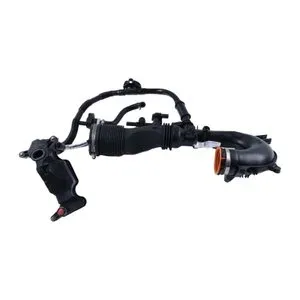
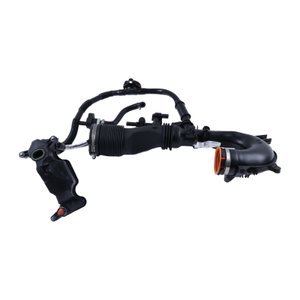
System-Level Match — Breather line sized to M270 crankcase ventilation flow rates with adjacent PCV components verified before dispatch.
Technical Specifications
| Parameter |
Value |
| Part Number |
270-090-07-00 |
| Product Type |
Fuel Line |
| Cross-Reference |
2700900700, A2700900700, 270 090 07 00, A270 090 07 00 (reference only) |
| Machine Fitment |
GLA250 X156 M270 2.0L (2015–2020), CLA250 C117 M270 2.0L (2014–2019), A-Class W176 (2013–2018), B-Class W246 (2012–2019), CLA C117 (2014–2018), GLA X156 (2014–2018) |
| Brand Fitment |
Mercedes-Benz |
| Part Name |
Crankcase Breather Intake Line Assembly |
| Material |
Fluorocarbon-resistant EPDM rubber inner liner with reinforced multi-layer construction |
| Vacuum Rating |
Maintains roundness under vacuum down to -75 kPa |
| Operating Temperature |
-30°C to +120°C |
| Wall Thickness Tolerance |
±0.15 mm |
| Condition |
New Aftermarket |
| Warranty |
3–12 months against manufacturing defects |
| MOQ |
1 piece |
| Standards |
ISO 9001, ISO/TS 16949-aligned production |
Application Suitability
| Engine System |
Related Components |
| Crankcase ventilation / PCV system |
PCV valve, valve cover gasket, intake manifold seals |
| Direct-injection emission compliance |
Air filter housing gasket, cylinder head breather port seal |
| High-mileage M270 2.0L overhaul |
Piston ring sets, cylinder hone, valve stem seals |
| Urban stop-start thermal cycling |
Turbocharger oil return line, oil filler cap seal |
Why the Same Crankcase Breather Intake Line Engine Replacement Fails Twice
Replacing the breather line without diagnosing the PCV valve and valve cover gasket leaves the root cause active, so carbon buildup on M270 direct-injection valves resumes within weeks.
Workshops routinely see this crankcase breather intake line engine replacement crack again shortly after installation because the upstream pressure differential remains unresolved. The M270 engine runs a closed-loop crankcase ventilation path where a stuck PCV valve forces oil vapor back through the breather, degrading even new EPDM liners. I have watched overhaul jobs in high-temperature mining environments fail not from the replacement part but from the adjacent gasket that was never swapped [NEED_CITE: crankcase ventilation system diagnostic procedure for direct-injection gasoline engines]. Addressing the system prevents a second teardown and keeps the engine in service.

Where This Line Sits Inside the M270 Ventilation Circuit
The crankcase breather intake line engine replacement connects the cylinder head breather port to the air filter housing, routing blow-by gases back into the intake tract. On the M270 2.0L, this path is part of a sealed circuit that includes the PCV valve, valve cover gasket, and intake manifold seals. Any restriction or leak elsewhere in the circuit changes the pressure profile across this line, accelerating EPDM liner fatigue. Treating the breather line as a standalone swap ignores the system dependencies that determine its service life.
Matching Dimensions to Engine Serial Variants
Mercedes-Benz M270 engines were produced across several model years with running changes to breather port geometry and hose routing length. A crankcase breather intake line engine replacement intended for a 2015 GLA250 X156 may not seat correctly on a 2018 CLA250 C117 without verifying the exact engine serial range. The connection port moldings must match the sealing flange depth at both the cylinder head and air filter housing interfaces. Confirming the variant before ordering avoids receiving a dimensionally close but functionally incompatible assembly.
Material Selection Against Crankcase Vapor Degradation
The EPDM inner liner resists fluorocarbon-laden oil vapor and continuous thermal cycling between -30°C and +120°C, which are typical under-hood conditions for the M270 in both urban stop-start and sustained highway operation. The multi-layer reinforcement maintains hose roundness under full engine vacuum down to -75 kPa, preventing collapse that would restrict airflow at high RPM. Wall thickness tolerance of ±0.15 mm keeps the hose OD within the clamping range of factory spring clips. If the liner material were standard NBR instead of EPDM, oil vapor would cause swelling and delamination [NEED_CITE: elastomer compatibility chart for crankcase hydrocarbon vapor]. Precision molding at the connection ports ensures the sealing bead seats fully against the cylinder head flange without relying on excessive clamp force.
The Hidden Cost of Skipping the System Diagnosis
Sending a vehicle back into the bay for a second breather line failure carries compounding costs: labor for repeated intake disassembly, new gaskets that were not budgeted, and customer confidence lost. When the underlying PCV valve remains stuck, oil ingestion into the combustion chambers continues, fouling injectors and accelerating valve seat wear on the M270. A repair that addresses only the visible crack treats the symptom, not the cause. Fleet operators running multiple M270-equipped vehicles see this pattern repeat across units if the diagnostic step is skipped [NEED_CITE: repeated PCV system failure patterns in direct-injection turbocharged engines]. Qualitative field reports consistently link incomplete ventilation system service to premature engine rebuilds.
Why Engine Rebuild Shops Source This Assembly Here
Our own production lines and qualified sourced supply carry the same QC and warranty terms, so a crankcase breather intake line engine replacement arrives with consistent dimensional checks regardless of origin. Eight product categories mean the valve cover gasket, intake seals, and PCV valve ship in one consignment with the breather line. Orders start at one piece, supporting a single-vehicle repair or a fleet overhaul without minimum quantity barriers. The Guangzhou warehouse holds common M270 ventilation components for fast dispatch. Part identification works from the OEM reference number, vehicle VIN, engine serial number, or a photograph of the worn hose and nameplate. A sample unit is available for fitment confirmation before a bulk commitment is placed, and the technical team verifies cross-reference numbers including superseded variants.
Documentation & Verification
- Commercial invoice lists breather line part number and cross-reference for customs entry.
- Compatibility sheet confirms M270 serial range and variant fitment before dispatch.
- Dimensional check on connection port OD and wall thickness recorded per batch.
- Warranty terms document manufacturing defect coverage period for this assembly.
- Packing photographs show hose routing and port protection before crate closure.
- HS code classification support provided for international ventilation parts shipments.
Installation & Rebuild Sequence
- Route the new breather line along the factory path, avoiding contact with exhaust manifold heat shields.
- Inspect cylinder head breather port for carbon deposits; clean before installing the new hose sealing bead.
- Confirm PCV valve operation and replace if stuck; install new valve cover gasket in the same service event.
- Seat spring clips fully over the reinforced hose ends; verify ±0.15 mm wall tolerance allows proper clamp engagement.
- Run the engine through a cold-to-operating-temperature cycle and recheck all breather connections for vacuum leaks.
- Record engine serial number and installation date for fleet maintenance tracking.
Requesting Fitment Confirmation
Provide the engine code (M270), vehicle model designation such as GLA250 X156 or CLA250 C117, and the exact model year. If the engine has been rebuilt previously, note the rebuild date and whether any block machining or oversize components were installed. A photograph of the existing breather line connection ports or the engine nameplate helps the technical team verify the correct variant. The team responds with a compatibility confirmation and cross-reference validation within two working hours.
Frequently Asked Questions
Q: What other engine components should I inspect when replacing this crankcase breather intake line?
A: Check the PCV valve for free movement, the valve cover gasket for oil seepage, and the intake manifold seals for vacuum leaks. On M270 engines, inspect the turbocharger oil return line and air filter housing gasket. Replacing the breather line alone without addressing a faulty PCV valve means oil vapor will degrade the new hose quickly.
Q: Does this breather line fit all M270 engine serial ranges?
A: The M270 was fitted across several model years with running changes to breather port geometry. This assembly covers GLA250, CLA250, A-Class W176, and B-Class W246 applications, but exact fitment depends on the engine serial range. Provide your VIN or engine serial number so the technical team can confirm the correct variant before ordering.
Q: What symptoms indicate the crankcase breather line has failed?
A: Common signs include rough idle, elevated oil consumption, and oil residue around the air filter housing. On M270 direct-injection engines, a cracked breather line allows unmetered air into the intake and oil vapor into the combustion chambers. These symptoms overlap with PCV valve failure, so a full ventilation system check is necessary before replacement.
Q: Can I request a sample to verify fitment before ordering for my fleet?
A: Yes, a sample assembly is available for fitment testing on one vehicle before committing to a fleet quantity. The sample carries the same dimensional specifications as production units. Submit your engine model and serial range to arrange sample dispatch and confirm compatibility with your specific M270 variant.