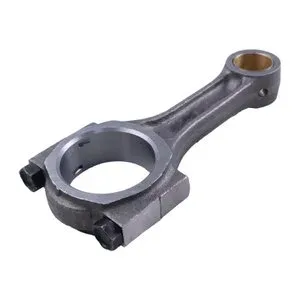
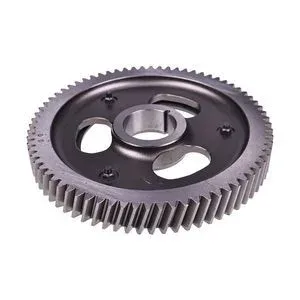
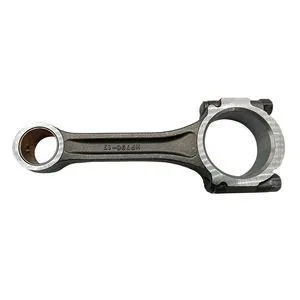
Matched Set Dispatch — Every connecting rod for Yanmar 3TNA72 ships with verified dimensional records confirming big-end bore tolerance before the rebuild begins.
Technical Specifications
| Parameter |
Value |
| Product Type |
Connecting Rod |
| Cross-Reference |
3TNA72, 3TNA72UJ, 3TNA72L, 3TNA72E, 3TNA72E-G2, 3TNA72E-GB2, 3TNA72E-HP, 3TNA72E-NC, 3TNA72E-S, 3TNA72E-UAS, 3TNA72E-UNS, 3TNA72E-YL, 3TNA72L-UDW, 3TNA72L-UDW2, 3TNA72L-UKS, 3TNA72L-UMCD, 3TNA72L-UMS, 3TNA72L-UTBZ, 3TNA72L-UWD (reference only) |
| Machine Fitment |
YB121, YB151, FF165, FF155, F145, 430, 455, 755, 670, F925 |
| Brand Compatibility |
Fits Yanmar, John Deere compact diesel platforms |
| Material |
Forged steel, heat-treated |
| Surface Treatment |
Anti-corrosion phosphate coating; shot-peened surfaces |
| Condition |
New aftermarket |
| Big-end Bore Tolerance |
±0.005 mm |
| Hardness |
Rockwell C42–C46 |
| Warranty |
3–12 months against manufacturing defects |
| MOQ |
1 piece |
| Standards |
ISO 9001, ISO 6892-1 |
Application Suitability
| Engine System |
Related Components |
| Reciprocating assembly overhaul |
Con rod bearings, piston pin, crankshaft journal inspection |
| Single-cylinder repair after rod failure |
Gasket set, rod bolt set, bearing shells matched to journal grade |
| Distributor stocking for 3TNA72 rebuilds |
Matched rod-and-bearing sets, overhaul gasket kits |
| Preventive replacement at high-hour service |
Piston rings, main bearings, oil pump inspection |
Why Connecting Rod Yanmar 3TNA72 Engine Rebuild Failures Repeat Within Months
Replacing the rod without confirming the root cause of the original failure guarantees the new part will face the same destructive forces.
I have stood at the teardown bench in Shandong workshops and watched a freshly rebuilt 3TNA72 come apart after a few hundred hours — the rod bearing spun, the journal scored, and the new connecting rod was bent beyond salvage. The problem was never the replacement part itself. The crankshaft had been reground during a prior overhaul, but standard-thickness bearing shells were installed instead of the correct undersize grade. The clearance was wrong from the moment the engine fired. [NEED_CITE: diesel engine crankshaft journal reground and bearing shell undersize matching procedures]
This pattern repeats across compact diesel platforms in excavators and utility tractors. Oil starvation from a clogged pickup screen, overloading from incorrect governor settings, or a collapsed bearing shell from contaminated oil can destroy a connecting rod for Yanmar 3TNA72 engine rebuild scenarios just as quickly as dimensional mismatch. The repair shop sees a bent rod and orders a replacement. What they should be doing is tracing the failure upstream.
The System Behind Every Connecting Rod Failure
A connecting rod does not work alone — it transfers combustion force from the piston through the con rod bearing to the crankshaft journal. Clearance across all three interfaces determines whether the oil film holds under load. When a Connecting Rod Yanmar 3TNA72 engine rebuild is planned, the crankshaft journal condition must be measured first. If the journal has been reground to an undersize, the bearing shells must match. If the rod bore itself has stretched or distorted from a previous spin event, the rod is scrap regardless of how new the bearing shells are.
Serial Suffix Variants That Change Internal Dimensions
The 3TNA72 family carries suffixes like E-NC, E-HP, L-UDW, and L-UMCD. These are not cosmetic. Different suffixes indicate different application configurations — emissions tiers, governed speeds, accessory drive arrangements — and in some cases, internal component specifications diverge. [NEED_CITE: Yanmar 3TNA72 engine serial suffix variant internal component differences] Ordering a connecting rod by base model alone risks receiving a part that physically fits the bore but carries a different big-end diameter or rod bolt specification. Engine serial confirmation is mandatory before any internal part leaves the shelf.
Dimensional Accuracy and Material Integrity
The big-end bore tolerance of ±0.005 mm is not an arbitrary figure — it defines the oil film thickness between the bearing shell and the crankshaft journal at operating temperature. Too tight, and the oil cannot flow; too loose, and impact loading destroys the bearing surface within hours. The forged steel construction with heat treatment to Rockwell C42–C46 provides the fatigue strength needed for the cyclic tensile and compressive loads in a compact three-cylinder diesel. Shot-peened surfaces introduce compressive residual stress that delays crack initiation at the rod bolt hole and the I-beam section transition — the two most common fatigue failure origins.

The Cost of Skipping the Root Cause Check
Every workshop has seen it: a machine returns with the same complaint weeks after a rebuild. The rod that failed was replaced, but the oil pump pickup screen was still clogged with debris from the original failure. Or the rod bolts were reused past their yield point because no one ordered a new bolt set. [NEED_CITE: connecting rod bolt reuse and torque-to-yield fastener fatigue in diesel engines] The cost is not just the second teardown — it is the machine downtime, the customer confidence lost, and the diagnostic time spent chasing a problem that was already in the system before the first wrench turned.
Why Rebuild Shops Source This Connecting Rod Here
Own production on selected lines and qualified sourced supply operate under one account and one warranty, so a Connecting Rod Yanmar 3TNA72 engine rebuild order carries the same QC terms regardless of which production line it came from. Eight product categories mean the rod, the bearing shells, the overhaul gasket kit, and the piston rings ship in one consignment — no split freight, no second order waiting at a different warehouse. Minimum order from one piece supports the emergency single-cylinder repair without forcing a shop to stock what they do not need. Guangzhou warehouse stock enables fast dispatch on common configurations. Part identification works from engine serial number, machine model, or a photograph of the nameplate when the stamping is worn or painted over. Cross-reference verification covers superseded and alternate numbers across the full 3TNA72 suffix range.
Documentation & Verification
- Commercial invoice and packing list with engine serial suffix noted for each connecting rod line item
- Part compatibility sheet confirming 3TNA72 suffix cross-reference (reference only) and matched bearing grade
- Dimensional inspection record showing big-end bore measurement and hardness verification per rod
- Warranty terms covering manufacturing defects for 3–12 months from dispatch
- Packing photographs documenting rod protection and bearing shell separation before crating
- HS code and customs documentation prepared for international engine parts shipment
Installation & Rebuild Sequence
- Inspect crankshaft journal with a micrometer before fitting the new connecting rod to confirm reground status
- Verify rod bore roundness with a bore gauge — discard the rod if out-of-round exceeds tolerance
- Use new rod bolts every time; torque-to-yield fasteners lose clamp load after one cycle
- Fit bearing shells matched to the measured journal grade, not the assumed standard size
- Plastigauge each rod bearing after assembly to confirm oil clearance before installing the oil pan
- Prime the lubrication system and verify oil pressure at idle before applying load during initial run-in
Inquiry Guidance for Rebuild Planning
Provide the full engine serial number including the suffix, any known history of crankshaft reground, and the bearing sizes found during teardown. If the nameplate is unreadable, send a photograph of the block casting number or the old rod stamping. This information allows confirmation of the correct connecting rod variant and the matched bearing grade before the order ships.
Frequently Asked Questions
Q: What else should be replaced when changing a connecting rod on the 3TNA72?
A: Replace the con rod bearing shells, rod bolts, and the piston pin bushing at minimum. The overhaul gasket set should include all single-use seals disturbed during teardown. If the crankshaft journal shows scoring or measurable wear beyond tolerance, plan for a reground and matched undersize bearings across all cylinders.
Q: How do I know if my crankshaft has been reground and what bearing grade I need?
A: Measure each crankshaft journal with a micrometer and compare to the factory standard diameter. Any measurement below standard indicates a prior reground. The undersize stamp on the existing bearing shells also reveals the grade, assuming they were correctly matched during the last rebuild.
Q: Are internal parts the same across all 3TNA72 engine suffix variants?
A: Not always. Suffixes like E-HP and L-UDW can indicate different governed speeds, emissions configurations, or accessory drives that change internal specifications. Confirm the full serial number including suffix before ordering any reciprocating component to avoid dimensional mismatch during assembly.
Q: What caused the original rod to fail and how do I prevent it from happening again?
A: Common causes include oil starvation from a blocked pickup screen, bearing shell collapse from contaminated oil, or overloading from incorrect governor settings. Inspect the oil pump, replace the filter, flush the galleries, and verify oil pressure before returning the engine to service.
Q: Can I order a matched rod-and-bearing set together?
A: Yes. Specify the engine serial suffix and the measured crankshaft journal size. Matched connecting rod and bearing shell sets ship together with dimensional records, eliminating the risk of receiving incompatible grades from separate orders.