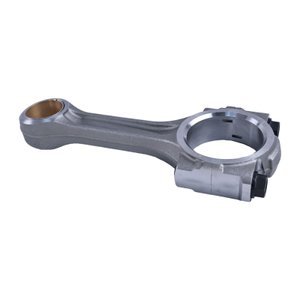
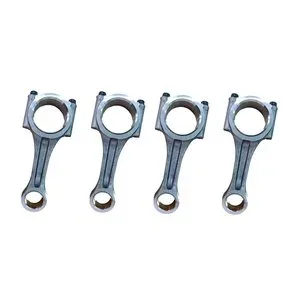
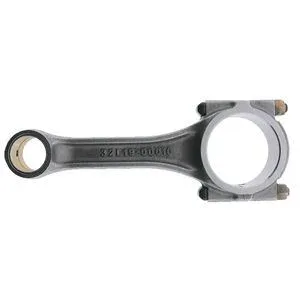
System-Level Matched — Each connecting rod for Hino J08E engine rebuild ships with verified bearing grade matched to the crankshaft journal condition, preventing oil film breakdown on Kobelco excavator bottom ends.
Technical Specifications
| Parameter |
Value |
| Product Type |
Connecting Rod |
| Engine Compatibility |
Hino J08E, J08ET, J08E-VC |
| Machine Fitment |
SK260-8, SK330-8, SK350-8, SK350LC-8 |
| Brand Compatibility |
Kobelco |
| Material |
Forged 42CrMo alloy steel |
| Surface Treatment |
Shot peening, phosphate coating |
| Hardness |
HRC 32–36 |
| Mechanical Standard |
SAE J429 Grade 8.8 |
| Big-end Bore Tolerance |
±0.005 mm |
| Condition |
New Aftermarket |
| Warranty |
6 months against manufacturing defects |
| MOQ |
1 piece |
Application Suitability
| Engine System |
Related Components |
| Bottom-end rotating assembly |
Con rod bearings, main bearings, crankshaft |
| Piston and cylinder group |
Pistons, piston rings, cylinder liners |
| Complete engine overhaul |
Overhaul gasket kit, seal kits, engine oil |
| Bearing failure diagnosis |
Oil pump, oil filter, lubrication circuit check |
When the Rod Wasn't the Root Cause
A rebuilt engine returns with knocking because the bearing grade didn't match a reground crankshaft — the connecting rod itself was fine.
I have seen this pattern repeat across Hino J08E overhauls in Middle East workshops. The machine comes back after a few hundred hours with audible knock, and the teardown reveals spun bearings on the big end. The rod gets replaced, the same standard-size shells go back*rication film collapsing on an undersized journal, not in the forging or the bolt torque [NEED_CITE: engine bearing failure modes related to crankshaft journal oversize grades]. A connecting rod for Hino J08E engine rebuild only succeeds when paired with the correct bearing shell grade and a verified oil circuit.

Matching the Rotating Assembly as One System
The connecting rod sits between the piston and the crankshaft, transferring combustion load into rotational force. In a Hino J08E bottom-end rebuild, this component must be evaluated alongside the piston assembly it carries and the bearing shells it clamps. Sending a rod without confirming the piston weight class or the big-end bearing grade introduces imbalance and clearance errors that no amount of torque adjustment can correct. Our supply approach treats the connecting rod for Hino J08E engine rebuild as part of a matched rotating group — rod, bearings, piston, rings — verified against the specific engine serial number before dispatch.
Crankshaft History Dictates What You Order Next
Every J08E that has been opened before may carry a reground crankshaft. Standard journals become 0.25 mm undersize, then 0.50 mm on a second regrind. If the crankshaft was machined during a previous overhaul and standard-size bearing shells are fitted this time, the oil clearance opens beyond specification and the bearing spins under load. We confirm the crankshaft journal condition and oversize grade before releasing any connecting rod and bearing set. Internal differences across J08E, J08ET, and J08E-VC variants also affect rod weight class and big-end bore dimensions, making engine serial verification essential [NEED_CITE: Hino J08E sub-model internal component differences].
Reading the Metallurgy Behind the Forging
The 42CrMo alloy steel forging provides the fatigue strength needed for continuous high-load cycles in excavator service. Shot peening introduces compressive residual stress on the surface, resisting crack initiation at the bolt hole and the I-beam section transition. Phosphate coating retains initial break-in oil on the bore surface during the first critical minutes of operation. The big-end bore tolerance of ±0.005 mm ensures consistent bearing crush when the cap is torqued, maintaining the oil wedge geometry that separates journal from shell under dynamic load. These specifications matter because an excavator in quarry loading or demolition work sees shock loads that test the rod at its weakest cross-section.
The Cost of Skipping the Root-Cause Check
Replacing a damaged connecting rod for Hino J08E engine rebuild without diagnosing why it failed leads to repeat teardowns. If bearing starvation caused the original failure — a blocked oil gallery, a failing oil pump, or degraded oil — the new rod will suffer the same fate within weeks. Workshops that swap rods without checking lubrication circuit health accumulate return visits and reputation damage [NEED_CITE: lubrication system diagnostics during diesel engine overhaul]. The hidden cost is not the second rod; it is the second teardown, the second gasket kit, the second round of machine downtime while the excavator sits in the bay.
Why Rebuild Shops Source This Component Here
Our selected production lines and qualified sourced supply carry identical QC standards and the same six-month warranty, so you order from one account regardless of which facility forged your batch. Eight product categories mean the connecting rod, piston assemblies, overhaul gasket kit, and seal kits all ship as one consignment from our Guangzhou warehouse. Minimum order is one piece — no forced bulk when you need a single emergency replacement. We identify the exact variant from your engine serial number, a photograph of the nameplate, or even a worn casting number image. Cross-reference verification covers superseded part numbers, and we supply samples for fitment confirmation before you commit to a fleet quantity. Our technical team confirms bearing grade and oversize match before the order ships.
Documentation & Verification
- Commercial invoice listing each connecting rod variant by engine serial number
- Bearing grade and oversize cross-reference sheet marked for identification purposes
- Dimensional inspection record covering big-end bore and bolt torque verification
- Six-month warranty terms covering manufacturing defects
- Packing photographs showing rod and matched components before crate closure
- HS code and customs documentation for international engine parts shipment
Installation & Rebuild Sequence
- Clean all oil galleries in the rod and verify passage flow before assembly
- Confirm bearing shell grade matches measured crankshaft journal diameter
- Torque big-end bolts to specification in the prescribed sequence
- Check side clearance and end float after each rod is installed on the crankshaft
- Perform initial low-load run-in to seat bearing shells before full-load operation
Start Your Inquiry
Provide your Hino J08E engine serial number, the crankshaft journal condition from your last teardown, and any oversize grade markings found on the old bearing shells. We will confirm the correct connecting rod variant and matched bearing set for your specific engine build.
Frequently Asked Questions
Q: What else should I replace when changing connecting rods during an overhaul?
A: Plan to replace the con rod bearings, piston rings, and the big-end bolts if they have been torqued beyond specification in previous rebuilds. The overhaul gasket kit and engine oil filter are mandatory. We supply these as a consolidated kit so nothing is missing when the engine is on the stand.
Q: My crankshaft was reground last time — how do I get the right bearing grade?
A: Measure the crankshaft journal diameter with a micrometer and compare it against the Hino J08E standard specification. The difference tells you the oversize grade needed. Share that measurement with us and we match the bearing shells to your connecting rod order.
Q: Are the rods identical across J08E, J08ET, and J08E-VC variants?
A: No. These sub-models carry differences in rod weight class and big-end bore dimensions. We verify your exact engine serial number to supply the correct variant, avoiding balance issues and bearing clearance errors during reassembly.
Q: What caused the original rod to fail, and how do I prevent it happening again?
A: Common root causes include bearing starvation from blocked oil galleries, over-torque during a previous rebuild, and fatigue crack propagation at stress concentrations. We help diagnose the failure pattern from your photographs so the replacement addresses the cause, not just the symptom.