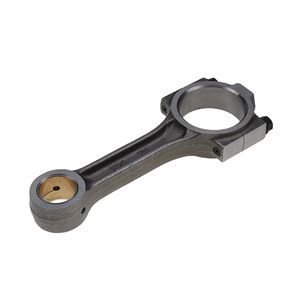
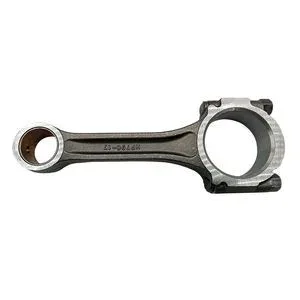
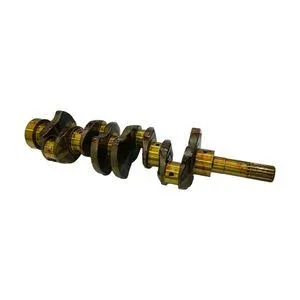
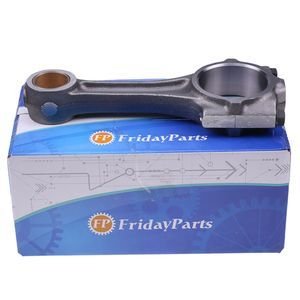
Matched Sets Dispatch — connecting rod weight balance and bearing grade verified against engine serial before shipment, preventing mismatched rebuild kits.
Technical Specifications
| Parameter |
Value |
| Part Number |
8980139624 |
| Product Type |
Connecting Rod |
| Cross-Reference (reference only) |
8-98013-962-4, IZ-8980139624, 8972892630, 8972892631, 8980139620, 8980139621, 8980139623, 8-97289263-0, 8-97289263-1, 8-98013962-0, 8-98013962-1, 8-98013962-3 |
| Machine Fitment |
John Deere 75C, John Deere 80C |
| Brand Compatibility |
Fits Isuzu, John Deere engines |
| Material |
Forged SAE 1045 steel |
| Surface Treatment |
Shot-peened |
| Small-End Bushing Material |
Sintered bronze with oil-retention porosity |
| Condition |
New Aftermarket |
| Warranty |
6 months against manufacturing defects |
| Minimum Order |
1 piece |
Application Suitability
| Engine System |
Related Components |
| Isuzu 4JG1 / 4JG2 Block Assembly |
Crankshaft, main bearings, con rod bearings, piston assembly, cylinder liner kit |
| John Deere 75C / 80C Powertrain |
Engine overhaul gasket set, oil pump, water pump, engine mount dampers |
| Compact Excavator High-Torque Digging |
Turbocharger (if equipped), fuel injection pump, valve train components |
| Engine Rebuild Shop Inventory |
Oversize bearing shells, piston rings, thrust washers, crankshaft seal kit |
Why Does a New Connecting Rod Fail Before the Next Oil Change?
Replacing the rod without confirming crankshaft journal condition and bearing clearance grade invites repeat seizure.
In the Shandong manufacturing belt, I processed warranty claims where a single cylinder was rebuilt with a new connecting rod for Isuzu 4JG1 4JG2 engine rebuild projects, only to fail again within weeks. The root cause was rarely the rod itself. It was the unmeasured crankshaft journal, the wrong-grade bearing shell carried over from a previous regrind, or an unbalanced piston-to-rod weight across cylinders [NEED_CITE: diesel engine overhaul failure root cause analysis standards]. These are system-level oversights, not part-level defects.
Position Within the 4JG1 / 4JG2 Overhaul Sequence
The connecting rod sits at the mechanical heart of the block assembly. When you are planning a complete engine overhaul for Isuzu 4JG1 4JG2 engine rebuild applications, this component must be evaluated as part of a matched rotating assembly. The big-end bore, small-end bushing ID, and overall weight must align with the crankshaft journal diameter, piston pin size, and the balance of other rods in the bank.
Bearing Grade, Regrind History, and Serial Variants
A crankshaft that has been reground during a prior overhaul requires undersized bearing shells. If the Connecting Rod for Isuzu 4JG1 4JG2 engine rebuild is fitted with standard-grade bearings on a reground journal, the excessive clearance leads to oil pressure loss and hammer loading. Furthermore, internal dimensions can shift across 4JG1 and 4JG2 production runs. Confirming the engine serial number is essential to rule out variant-specific differences in rod length or bolt specification [NEED_CITE: Isuzu 4JG series engine serial number variant identification].
Decoding the Metallurgy and Machining Tolerances
Forged SAE 1045 steel provides the necessary tensile strength to withstand the cyclic compressive and tensile loads of a four-cylinder diesel operating under high-torque digging cycles. The shot-peened surface introduces compressive residual stress, which inhibits fatigue crack initiation at the rod's I-beam section and fillet radii. The sintered bronze small-end bushing is critical for boundary lubrication during the low-RPM, high-load operation typical of excavator work cycles. Its oil-retention porosity ensures the piston pin receives a protective film even before full hydrodynamic wedge pressure builds up.

The Cost of Overlooking Systemic Failure Causes
If you replace a failed rod but do not investigate why the original failed—be it oil starvation, overloading, or a spun bearing—the new component inherits the same hostile environment. A missed crankshaft journal taper or an out-of-round bore will destroy the new bearing shells rapidly. The cost is not just the second set of parts; it is the machine downtime, the labor for a second teardown, and the reputational damage of a failed repair [NEED_CITE: mobile equipment engine rebuild quality assurance protocols].
Sourcing System-Level Components from a Single Supplier
Our technical team verifies dimensional compatibility against your specific engine serial number before dispatch. We supply the complete matched set: the connecting rod, the correct grade of bearing shells based on your crankshaft measurement, and the piston assembly. Both our in-house production lines and our qualified sourced partners operate under the same QC regime and warranty terms. You receive one consolidated shipment, one commercial invoice, and one point of contact for the entire engine rebuild kit, eliminating the finger-pointing between multiple vendors when a fitment issue arises.
Documentation & Verification
- Commercial invoice listing all matched overhaul components by part number and grade.
- Cross-reference sheet mapping superseded Isuzu and John Deere numbers (reference only).
- Dimensional inspection record covering big-end bore, small-end bushing ID, and center distance.
- Hardness test verification for the forged steel body and bushing material.
- Photographs of the packed connecting rod and associated bearing shells before crate closure.
- HS code declaration for customs clearance of engine internal parts.
Installation & Rebuild Sequence
- Clean the rod and cap separately; never interchange caps between rods as they are line-bored as a matched pair.
- Plastigauge the big-end bearing clearance with the crankshaft installed to verify the selected shell grade matches the journal diameter.
- Confirm piston-to-rod weight balance across all four cylinders to minimize secondary vibration before installing the Connecting Rod 8980139624 replacement for Isuzu 4JG1 4JG2.
- Torque the rod bolts in the specified sequence and angle increment, then check for free rotation by hand.
- Prime the lubrication system before initial startup to ensure immediate oil flow to the small-end bushing and big-end bearings.
Request a Rebuild Kit Quotation
Provide your complete engine model, serial number, and any known crankshaft regrind history. This allows us to confirm the correct dimensional variant and assemble a matched overhaul kit with the appropriate bearing grades and gasket set for your specific machine.
Frequently Asked Questions
Q: What other components must be evaluated when replacing this connecting rod?
A: The crankshaft journal condition, main and con rod bearing clearance grades, piston-to-cylinder clearance, and the overall weight balance of the rotating assembly must all be verified. A connecting rod installed without addressing these adjacent system factors is likely to experience premature failure, regardless of its own manufacturing quality.
Q: How is the correct bearing shell grade determined for a previously rebuilt engine?
A: You must measure the crankshaft journal diameter directly. If it was reground during a prior overhaul, an undersized bearing shell is required. Providing the engine serial number and any available rebuild history allows us to cross-reference the correct grade for your specific Connecting Rod application.
Q: Are internal dimensions identical across all 4JG1 and 4JG2 production runs?
A: No. Dimensional specifications and component variants can differ across engine serial number ranges. Verification of your exact engine serial is mandatory to ensure the replacement rod, piston, and bearing set will fit and function correctly within your specific block assembly.
Q: What systemic issues typically cause the original connecting rod to fail?
A: Common root causes include oil starvation from pump or gallery blockage, excessive loading beyond the engine's torque rating, a spun bearing from incorrect clearance, or fatigue from an out-of-balance rotating assembly. Diagnosing the original failure mode is critical to preventing a repeat incident.