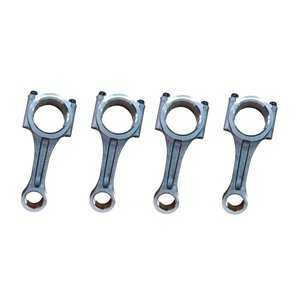
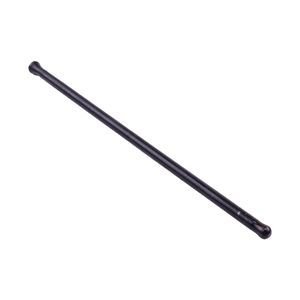
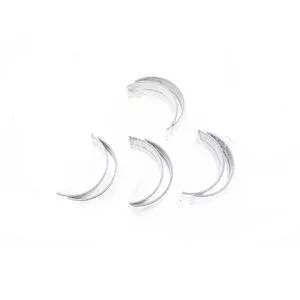
Matched Set Dispatch — Every connecting rod ships with verified bore dimensions aligned to Doosan D24 overhaul kit requirements, ensuring the rotating assembly stays dimensionally consistent across all cylinders.
Technical Specifications
| Parameter |
Value |
| Part Number |
7031360 |
| Product Type |
Connecting Rod |
| Cross-Reference |
7031362, 7031361, 7031358, 7031359 (reference only) |
| Machine Fitment |
Bobcat E32, E35, E42, E45, E50, E55, E57W, E63, E85, S450, S510, S550, S570, S590, S595, S630, S650, T450, T550, T590, T595, T630, T650, ToolCat 5600, 5610, Portable Power P185, Doosan D24 engine |
| Material |
Forged 4340 alloy steel |
| Surface Treatment |
Shot peened, stress-relieving heat treatment, anti-rust oil coating |
| Pin Bore Diameter Tolerance |
±0.005 mm |
| Big-end Cap Surface Finish |
Ra ≤ 0.8 μm |
| Tensile Strength |
≥1,200 MPa |
| Peak Torque Rating |
320 N·m |
| Max RPM Rating |
2,400 rpm |
| Assembly State |
New Aftermarket |
| Warranty |
6-month standard warranty against manufacturing defects |
| MOQ |
1 piece |
| Certification |
ISO 9001 |
Application Suitability
| Engine System |
Related Components |
| Bottom-end rotating assembly |
Main bearings, rod bearing shells, crankshaft |
| Piston and cylinder group |
Piston pin, piston rings, cylinder liner |
| Lubrication circuit |
Oil pump, oil filter, gallery jets feeding rod bearings |
| Gasket and sealing system |
Overhaul gasket kit, rear main seal, front crank seal |
When the Overhaul Kit Arrives but the Rod Grade Is Wrong
The machine stays down until the correct connecting rod and matched bearing grade reach the bench.
An engine rebuild on a Bobcat E50 or E85 compact excavator often reveals that a previous shop already ground the crankshaft to an undersize journal. The standard overhaul kit sitting on the workbench now contains STD bearings that will never achieve the required crush fit with that reground crankshaft. The entire job stalls while the correct undersize rod bearings and a dimensionally verified connecting rod are sourced. In mining and quarry applications across Chile and Peru, I have watched crews lose productive days waiting for a single component mismatch to surface [NEED_CITE: engine overhaul dimensional verification procedures for compact diesel engines].
The connecting rod replacement for Bobcat and Doosan D24 engines must be evaluated against the crankshaft journal condition, the piston pin bore specification after any prior rebuild, and the bearing shell grade the engine actually requires — not the grade the parts catalog assumes.
The Bottom-End Assembly Depends on Every Adjacent Part Matching
A Connecting Rod engine rebuild replacement for Bobcat and Doosan D24 does not operate in isolation. It sits between the piston pin above and the crankshaft journal below, transferring combustion load through a bearing shell whose oil film thickness depends on bore roundness and surface finish. When one rod in a four-cylinder D24 is replaced due to a spun bearing, the remaining three rods must be checked for big-end bore diameter, cap alignment, and bolt stretch. Reusing a fatigued rod alongside a new forging introduces an imbalance in clamping force that shows up as bearing wear within the first few hundred operating hours.
Rebuild History Determines Which Grade You Actually Need
Not every Doosan D24 that arrives at a rebuild shop is internally standard. Engines in their second or third overhaul cycle frequently carry undersize crankshaft journals, oversized piston pin bores, or aftermarket rods from a previous repair that altered the weight balance across the rotating assembly. Before ordering a Connecting Rod engine rebuild replacement for Bobcat and Doosan D24, the rebuild log and crankshaft measurement sheet must be reviewed [NEED_CITE: crankshaft journal regrind standards and undersize bearing selection]. An engine that was serviced in a remote site with limited measurement tools may have been reassembled with a mismatched bearing shell, masking the true journal condition until teardown.

Material and Surface Treatment Under Cyclic Load
The forged 4340 alloy steel used in this connecting rod provides tensile strength rated at 1,200 MPa, which matters directly in compact excavator duty where high torque at low RPM creates peak firing loads concentrated on the big-end bore. Shot peening introduces compressive residual stress on the rod surface, delaying fatigue crack initiation at the transition radius between the shank and the big-end — a location where micro-cracks commonly propagate in high-cycle skid steer and excavator service. The stress-relieving heat treatment following forging reduces internal residual stress from the forming operation, while the anti-rust oil coating protects machined surfaces during storage and transit. The big-end cap surface finish held to Ra ≤ 0.8 μm ensures that the bearing shell seats uniformly, maintaining oil film integrity across the full bearing arc under the 320 N·m peak torque loads the D24 produces.
The Hidden Cost of a Grade Mismatch During Reassembly
When a connecting rod is installed with the wrong bearing grade, the oil clearance at the big-end falls outside specification. Too tight and the bearing starves for oil during cold start, leading to metal-to-metal contact and a spun bearing. Too loose and oil pressure bleeds off at the rod journal, starving the main bearings downstream. On a Bobcat E63 or E85 working in demolition or quarry service, this failure often appears within the first week of operation — well before the machine returns to the customer. The teardown cost, replacement bearings, and lost machine availability compound quickly [NEED_CITE: bearing clearance specifications and oil film failure modes in medium-speed diesel engines]. A single grade error during one rod replacement can force a complete second teardown of the entire bottom end.
Why Source This Rod Through a System-Level Supplier
Our production and sourcing lines operate under unified QC and warranty terms, so whether the connecting rod comes from our own facility or a qualified partner, the dimensional verification standard is identical. Eight product categories — including engine parts, seal kits, and gasket sets — allow a complete D24 overhaul kit to ship as one consignment under a single account. The one-piece minimum order means a workshop replacing one damaged rod does not have to buy a full set. Part identification is supported through part number, machine model, or nameplate photograph, and cross-reference verification covers superseded and alternate numbers such as 7031362 and 7031358. A technical team confirms bearing grade and dimensional compatibility against the specific engine serial number before dispatch.
Documentation & Verification
- Commercial invoice and packing list listing each rod by part number and matched bearing grade
- Cross-reference sheet mapping 7031360 to alternate numbers 7031362, 7031361, 7031358, 7031359 (reference only)
- Dimensional inspection record covering pin bore, big-end bore, and cap surface finish
- Six-month warranty terms covering material and manufacturing dimensional deviations
- Packing photographs documenting anti-rust coating condition before crate closure
- HS code and customs documentation for international engine parts shipment
Installation & Rebuild Sequence
- Clean all oil galleries in the rod and verify jet passage is clear before bearing shell installation
- Measure big-end bore with cap torqued to specification to confirm roundness within tolerance
- Check piston pin bore diameter against the existing piston pin to confirm grade match
- Verify rod bolt stretch using elongation measurement rather than torque-only tightening
- Confirm bearing shell crush fit by checking bearing protrusion above the parting line
- Run initial break-in at reduced load to allow bearing surfaces to seat properly
Provide Engine Details for Accurate Matching
To confirm the correct connecting rod and bearing grade for your D24 or Bobcat E-series engine, share the engine serial number, any available rebuild history, and crankshaft journal measurements if the engine has been previously overhauled. This information allows verification of whether STD or undersize components are required before the order ships.
Frequently Asked Questions
Q: What else should I replace when installing a new connecting rod during an overhaul?
A: Replace the rod bearing shells, rod bolts, and piston pin bushing as a minimum. If the engine is undergoing a full overhaul, the main bearings, overhaul gasket kit, piston rings, and crankshaft seals should also be renewed to ensure dimensional consistency and prevent early failure from reused fatigued components.
Q: How do I know if my crankshaft has been ground and needs undersize bearings with this rod?
A: The crankshaft journal diameter must be measured with a micrometer at multiple points. If any journal reads below the standard specification, the crankshaft was reground and undersize bearing shells are required. Previous rebuild records or machine service history often document whether grinding was performed.
Q: Are all Doosan D24 engines internally identical, or do serial number variants use different rod specifications?
A: D24 engines produced across different model years and machine platforms may carry internal variations in piston pin diameter, rod weight classification, or bearing grade. Confirming the engine serial number against the build record ensures the connecting rod and matched components align with the specific variant in your machine.
Q: Can I replace just one rod, or should I replace the full set?
A: A single rod can be replaced if the remaining rods pass big-end bore, cap alignment, and bolt stretch checks. However, the replacement rod must be weight-matched to the existing set to avoid vibration. If multiple rods show fatigue or the engine is in a full overhaul, replacing the complete set is recommended.
Q: How do I confirm my engine serial number to get the right rod and bearing grade?
A: The engine serial number is typically stamped on the block near the oil filter housing or on the identification plate attached to the valve cover. A clear photograph of the nameplate or stamping allows our technical team to cross-reference the build record and confirm the correct connecting rod specification.