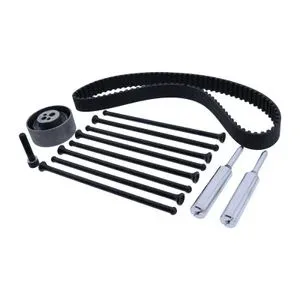
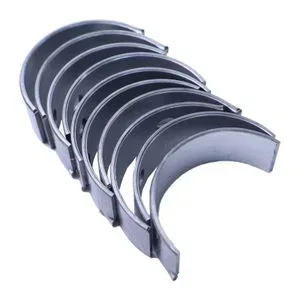
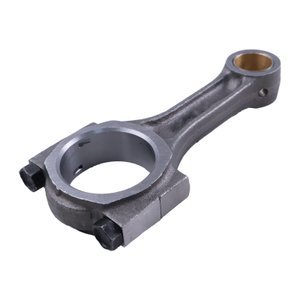
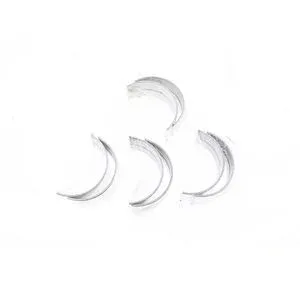
Matched Tolerances Across the Rebuild — Every connecting rod is verified against crankshaft journal condition and piston pin diameter before dispatch.
Technical Specifications
| Parameter |
Value |
| Part Number |
31A19-10024 |
| Cross-Reference |
31A19-10024 (reference only), 31A1910024 (reference only) |
| Product Type |
Connecting Rod |
| Machine Fitment |
S3L, S4L, S3L2, S4L2, T233, T273 |
| Brand Fitment |
Mitsubishi |
| Material |
Forged steel |
| Condition |
New Aftermarket |
| Warranty |
3-12 months against manufacturing defects |
| MOQ |
1 piece |
| Standards |
ISO 9001 |
Application Suitability
| Engine System |
Related Components |
| Reciprocating assembly |
Piston, piston pin, piston rings, con rod bearing shells |
| Lubrication circuit |
Oil pump, oil filter, crankshaft oil passages |
| Crankshaft interface |
Main bearings, thrust washers, crankshaft journal surface |
| Overhaul gasket set |
Head gasket, sump gasket, front and rear crank seals |
What Separates a Successful S3L/S4L Connecting Rod Engine Rebuild from a Comeback
Dimensional verification before the engine goes back together — not after it fails again.
Overhaul kits arrive at the bench missing the correct rod bearing grade for the crankshaft journal condition, or the piston pin bore on a replacement connecting rod does not match the piston pin diameter from the rebuild set. I have seen Mitsubishi S3L2 engines come back within weeks because the standard-grade bearing shells were installed on a crankshaft that had already been ground to 0.25 undersize [NEED_CITE: engine rebuild dimensional verification practices for agricultural diesel engines]. The connecting rod engine rebuild fails not because the rod itself was defective, but because the tolerance chain across piston, pin, bearing shell, and journal was never confirmed as a matched system.
Reciprocating Assembly Context and System Dependencies
The connecting rod sits at the center of a tolerance chain that runs from the crankshaft journal through the bearing shell, the big-end bore, the rod body, the small-end bushing, and into the piston pin and piston. Every dimension in this chain must be verified against the engine's actual condition — not the factory-new specification. When a Mitsubishi S3L or S4L engine arrives at the rebuild bench, the crankshaft may already carry evidence of prior grinding, and the replacement connecting rod must accept bearing shells that match whatever undersize grade the journal now requires.
Oversize Grades, Serial Variants, and Root-Cause Awareness
S3L and S3L2 designations share external dimensions but carry internal differences in piston crown profile, ring groove width, and occasionally connecting rod center-to-center length. Ordering a rod by engine family alone invites a mismatch that only reveals itself during piston-to-rod assembly [NEED_CITE: Mitsubishi S3L and S3L2 internal variant identification procedures]. Beyond dimensional fit, connecting rod failure frequently traces back to lubrication breakdown — a blocked oil passage in the crankshaft, a worn oil pump, or a collapsed filter element. Replacing the rod without diagnosing the systemic cause sets the stage for repeat failure, sometimes within the first hundred hours of operation.
Forged Steel Construction and Dimensional Conformance

The forged steel body provides the fatigue strength required for the cyclic loading in agricultural tractor and industrial applications. The big-end bore must hold a roundness tolerance that allows the selected bearing shell to crush-fit correctly and maintain oil film thickness under load. The small-end bore must accept the piston pin with the clearance specified for the engine variant, and the center-to-center length must match across all cylinders to maintain uniform compression ratio. Quality inspection records should confirm these dimensions before the rod enters the assembly sequence.
The Hidden Cost of Grade Mismatch and Unchecked Root Causes
A connecting rod installed with the wrong bearing undersize grade produces excessive clearance that manifests as low oil pressure and audible knock within the first hours of operation, or interference fit that starves the journal of oil and causes rapid bearing wipe. I once checked a set of S3L2 rods in a Yangtze Delta warehouse where the standard shells had already been fitted — the crankshaft had been ground previously, and the mismatch was only caught because the technician measured oil film clearance before torquing the caps [NEED_CITE: consequences of incorrect bearing grade selection during diesel engine overhaul]. When lubrication failure caused the original rod to seize, replacing the rod without flushing the oil gallery and verifying pump output means the new assembly faces the same starvation risk.
Why Source This Connecting Rod Through XUNPO
Own production lines and qualified sourced supply operate under one account and one warranty structure, so a mixed-order of rods, pistons, and overhaul gaskets carries consistent quality terms. Eight product categories mean the full rebuild list — rods, bearings, seals, gaskets, filters — ships as one consignment rather than arriving from several suppliers on mismatched timelines. Minimum order from one piece supports the shop replacing a single failed rod without committing to a full engine set. The Guangzhou warehouse holds stock on high-turnover items for fast dispatch. Part identification works from the OEM reference number, the machine model plate, or a photograph of the worn component. Cross-reference verification covers superseded and alternate numbers so the correct variant ships the first time.
Documentation & Verification
- Commercial invoice listing each connecting rod by part number and engine variant
- Compatibility sheet cross-referencing S3L, S4L, S3L2, and S4L2 fitment (reference only)
- Dimensional inspection record covering big-end bore, small-end bore, and center length
- Warranty terms document covering manufacturing defects for 3-12 months
- Packing photographs showing rod protection and cap-matching before crating
- HS code and customs paperwork prepared for international agricultural parts shipments
Installation & Rebuild Sequence
- Clean big-end bore and cap mating surfaces before fitting bearing shells to prevent debris-induced scoring
- Verify bearing undersize grade matches the measured crankshaft journal diameter before assembly
- Match-mark each connecting rod and cap to the original cylinder position to preserve bore alignment
- Torque rod bolts in the specified sequence and confirm big-end bore roundness after tightening
- Check piston pin clearance in the small-end bushing before pressing or floating the pin into position
- Rotate the assembled crankshaft by hand to confirm free movement before installing the cylinder head
Preparing Your Rebuild Inquiry
Provide the engine model designation, serial number, and any known crankshaft regrind history so the correct bearing grade and rod variant can be confirmed before the order is placed. Photographs of the existing rod stamping, the nameplate, or the crankshaft journal measurement card help narrow the variant quickly. If you are quoting a full overhaul, share the engine build sheet or the kit contents list so matching components can be verified against the specific serial range.
Frequently Asked Questions
Q: What does a complete overhaul kit for the S3L/S4L engine include, and does it cover the connecting rod assembly?
A: A typical overhaul kit contains gaskets, seals, piston rings, and bearing shells, but connecting rods are usually sold separately. Confirm the kit contents against your engine's specific build before ordering. If rods need replacement due to damage or bore wear, they must be sourced as individual components with bearing shells matched to the crankshaft journal condition.
Q: The crankshaft on my engine has been ground before — how do I confirm which bearing undersize grade this rod accepts?
A: Measure the crankshaft journal diameter with a micrometer and compare it against the OEM specification chart to determine the current undersize grade — STD, 0.25, or 0.50. The connecting rod big-end bore must accommodate the corresponding shell thickness. Always verify the grade stamped on the existing bearing shell if the crankshaft history is undocumented.
Q: Do S3L and S3L2 engines share the same connecting rod dimensions, or are there internal variant differences?
A: While external dimensions may appear identical, S3L and S3L2 engines can differ in piston pin diameter, rod center-to-center length, or bearing shell specification depending on production date and application. Confirm the engine serial number to identify the exact internal variant before ordering replacement components. Cross-reference verification eliminates trial fitment on the bench.
Q: The previous rod failure was caused by an oil starvation issue — what other components should be inspected before reassembly?
A: Inspect the oil pump for wear, check all crankshaft oil passages for blockage, and verify the oil filter housing and bypass valve are functioning correctly. Flush the lubrication circuit before installing new components. Replacing the connecting rod without addressing the starvation root cause invites repeat failure within the first operating hours.
Q: How do I confirm the exact engine serial and variant to ensure the replacement rod matches the piston pin and bearing specifications?
A: Locate the engine serial number on the nameplate or stamped into the block, then cross-reference it against the variant chart to confirm piston pin diameter, ring groove dimensions, and bearing grade. If the nameplate is worn, a photograph of the existing rod stamping and the piston crown marking can help identify the correct build specification.