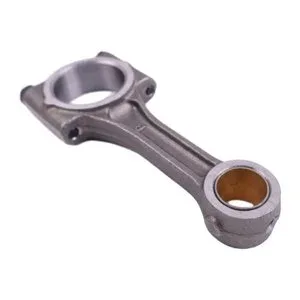
Oversize Grades Matched — Crankshaft journal history verified before this Kubota Connecting Rod 17311-22014 ships, ensuring bearing shells arrive in the correct grade.
Technical Specifications
| Parameter |
Value |
| Part Number |
17311-22014 |
| Product Type |
Connecting Rod |
| Cross-Reference |
17311-22014, 1731122014, 17311-22012, 17311-22013, 17331-22010, 1731122012, 1731122013, 1733122010 (reference only) |
| Machine Fitment |
KX121-2, KX121-3, KX121-3S, KX121-3ST, KX161-2, KX161-3, KX161-3S, KX161-3ST, KX91-3, KX91-3S, KX91-3S2, U35, U35S, U35-S2, U45S, U45ST, R420, R420S, R510 OLD TYPE, R510 NEW TYPE, R510B OLD TYPE, R510B NEW TYPE, R520, R520S, L2250DT–L4850DT series, M4030–M5700 series, MX5000 series, GV & KJ & SQ generator models |
| Material |
Forged 40Cr steel |
| Surface Hardness |
HRC 38–42 |
| Bore Concentricity Tolerance |
±0.01 mm |
| Cap-to-Rod Alignment Tolerance |
≤0.02 mm |
| Surface Treatment |
Anti-corrosion phosphate coating |
| Assembly State |
Complete unit with rod and cap |
| Condition |
New Aftermarket |
| Warranty |
3–12 months against manufacturing defects |
| Standards |
ISO 9001, ISO 6892-1 |
Application Suitability
| Engine System |
Related Components |
| Bottom-end rotating assembly (D1703 / D1803 / V1903 / V2003 / V2203) |
Rod bearings (STD, 0.25, 0.50 oversize), crankshaft thrust washers |
| Cylinder and piston group |
Piston sets, piston pins, cylinder liners, snap rings |
| Lubrication and cooling |
Oil pump, oil cooler gasket, main bearing shells |
| Gasket and seal system |
Overhaul gasket kit, crankshaft front and rear seals |
| Valve train and top end |
Valve stem seals, valve guides, cylinder head gasket |
Why the Same Kubota Connecting Rod 17311-22014 Ships in Different Configurations
Serial range dictates the exact variant — not the engine model badge alone.
An overhaul kit labeled "complete" arrives at the shop missing the specific rod bearing grade the crankshaft demands after a previous regrind. Shops across Shandong's equipment repair belt have burned hours re-ordering the right oversize shells while the excavator sits idle on the rack [NEED_CITE: engine overhaul kit completeness standards for compact diesel engines]. The Kubota Connecting Rod 17311-22014 replacement for Kubota D1703 powertrain must arrive alongside correctly matched bearings, piston sets, and gaskets so the bottom-end rebuild closes in one pass.

Matching the Rod to the Rest of the Rotating Assembly
Every connecting rod in the D/V-series family interfaces with a piston pin, a pair of bearing shells, and a crankshaft journal that may no longer be at standard dimension. Sourcing the Kubota Connecting Rod 17311-22014 engine rebuild parts without confirming what happened during the last rebuild is a gamble. A crankshaft ground to 0.25 oversize demands shells in that exact grade; standard shells on a reground journal produce excessive oil clearance and rapid bearing failure.
Serial Variants Across the D1703 / V2203 Family
Engines sharing the same model designation can carry different internal dimensions depending on production year and application. A D1703 in a KX121-3 excavator may differ in rod bolt specification or bearing crush height from a D1703 fitted to an agricultural tractor. Cross-reference verification covering superseded and alternate numbers ensures the rod dispatched matches the specific engine serial, not just the family name [NEED_CITE: Kubota D and V series engine serial variant identification].
Reading the Specs That Matter in the Bay
The forged 40Cr steel body provides the tensile strength needed for continuous digging cycles and generator load swings. Bore concentricity held to ±0.01 mm means the big-end bearing shell seats evenly around the journal, preventing localized hot spots that accelerate wear. Cap-to-rod alignment within ≤0.02 mm keeps the piston traveling true in the liner, reducing skirt scuffing. The phosphate coating guards against corrosion during storage and initial break-in before full oil film establishes.
The Cost of Skipping System-Level Verification
When a connecting rod fails, the root cause often lives elsewhere — a blocked oil gallery starved the bearing, or a worn oil pump never maintained adequate film pressure. Replacing the rod without diagnosing the lubrication fault means the new rod fails the same way within weeks [NEED_CITE: root cause analysis methodology for connecting rod bearing failure]. Mismatched oversize grades force the machinist to either re-grind the crankshaft again or source yet another set of shells, adding days to a job that should have finished in one teardown cycle.
What Sets This Supply Chain Apart
Selected part lines run through our own production facility while remaining categories source from qualified ISO-certified manufacturing partners — both carry identical QC and warranty terms. Eight product categories ship under one account, so the rod, bearings, pistons, and gasket kit consolidate into a single consignment. Minimum order starts at one piece for emergency rebuilds. Part identification works from a number, a machine model, a photograph, or a nameplate image. Cross-reference verification covers superseded and alternate numbers across model generations. A technical team confirms compatibility and oversize grade before dispatch.
Documentation & Verification
- Commercial invoice listing each component by part number and oversize grade
- Compatibility sheet mapping rod to engine serial range (reference only)
- Dimensional inspection record covering bore concentricity and alignment
- Warranty terms covering manufacturing defects for 3–12 months
- Packing photographs showing rod and matched components before crating
- HS code and customs documentation for international clearance
Installation & Rebuild Sequence
- Clean crankshaft journals and verify oil gallery flow before fitting the rod
- Plastigauge each bearing shell to confirm clearance within specification
- Torque rod cap bolts in the manufacturer's specified sequence and stages
- Check piston-to-liner clearance after assembling each rod and piston pair
- Prime the lubrication system before initial cranking to prevent dry start
- Run a graduated break-in cycle under monitored load for the first hours
Request a System-Matched Quote
Provide the engine model, serial number, and any known regrind history for the crankshaft. If the nameplate is worn or painted over, send a photograph of the block casting number or the old rod stamping. We will confirm the correct variant, match the bearing grade to your journal condition, and quote the complete overhaul kit contents in one response.
Frequently Asked Questions
Q: What does a complete overhaul kit for the V2203 engine include besides the connecting rod?
A: A matched kit typically contains piston sets with rings and pins, main and rod bearing shells in the required oversize grade, a full gasket set including crankshaft seals, cylinder liners if the block requires re-sleeving, and thrust washers. Exact contents vary by engine serial, so confirming the build sheet prevents missing items.
Q: If the crankshaft has been reground, which oversize grade of rod bearing do I need?
A: Measure each journal with a micrometer or review the machinist's report from the last regrind. Common grades are STD, 0.25 mm, and 0.50 mm undersize on the bearing shell. Ordering without this measurement risks receiving shells that produce either excessive clearance or a crush fit that starves the journal of oil.
Q: Do different serial ranges within the same Kubota engine model use different connecting rod variants?
A: Yes. Production changes across the D1703, D1803, V1903, V2003, and V2203 families can affect rod bolt thread pitch, bearing crush height, or big-end bore diameter. Supplying the engine serial number allows cross-reference verification to confirm the exact variant required.
Q: What system-level fault should I check before replacing just the failed connecting rod?
A: Inspect the oil pump output, oil gallery condition, and bearing clearance on adjacent rods. A single rod failure often traces to lubrication breakdown — a blocked passage or a worn pump that starved one journal before the others. Replacing the rod without addressing the oil system invites a repeat failure.
Q: How do I confirm the exact engine model when only the machine model is available?
A: Send the machine model plate photograph and any visible casting numbers on the block. Cross-reference tables map equipment models to the engine variants they received from the factory, narrowing the correct rod, bearing, and gasket combination even when the engine nameplate is gone.