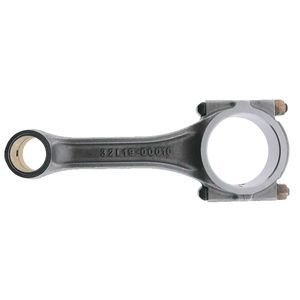
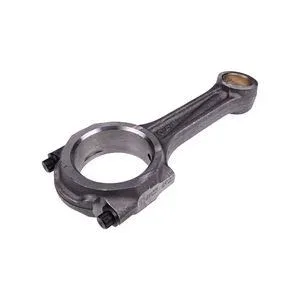
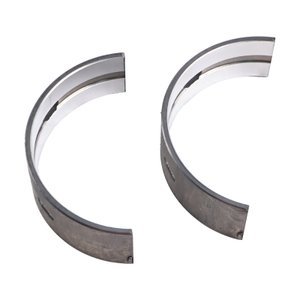
System-Matched Overhaul Kit — Every connecting rod ships verified against engine serial range and bearing grade for CAT C3.4, 3044C and 3046 rebuilds.
Technical Specifications
| Parameter |
Value |
| Part Number |
103-9680 |
| Product Type |
Connecting Rod |
| Cross-Reference |
103-9680 (reference only), 1039680 (reference only), CA1039680 (reference only) |
| Material |
High-strength forged steel |
| Surface Treatment |
Anti-rust oil coating |
| Condition |
New aftermarket |
| Engine Compatibility |
CAT C3.4 Industrial Engine, CAT 3044C Engine, CAT 3046 Engine |
| Machine Fitment |
315, 315B, 315C, 317B LN, 318B, 257B3, 267B, 277C, 277C2, 279C, 279C2, 287C, 287C2, 289C, 289C2, 297C, 299C, 236B, 236B3, 242B3, 246C, 252B, 252B3, 256C, 262C, 262C2, 268B, 272C, 259B3, 906, 906H, 907H, 908H, 933, 933C, 939, 939C, D3C III, D3G, D4C III, D4G, D5C III, D5G |
| Standards |
ISO 9001 |
| Warranty |
6-month warranty against manufacturing defects |
| MOQ |
1 piece |
Application Suitability
| Engine System |
Related Components |
| Crankcase & Rotating Assembly |
Piston, piston pin, connecting rod bearings, main bearings |
| Cylinder & Liner Group |
Cylinder liner, piston rings, liner seals |
| Lubrication & Cooling |
Oil pump, piston cooling jets, oil filter |
| Gasket & Seal System |
Overhaul gasket kit, front and rear crankshaft seals |
| Fastener Group |
Connecting rod bolts, main bearing cap bolts |
Why Connecting Rods Fail Again Within Months of a Rebuild
Mismatched bearing grades and unchecked crankshaft wear are the primary causes, not the rod itself.
I once worked on a C3.4 that came back with spun bearings after a few hundred hours. The crankshaft had been reground to an oversize dimension, but standard-grade bearings were installed. The connecting rod 103-9680 was dimensionally correct, yet the oil clearance was too wide to maintain a stable film under load. The failure was systemic—lubrication breakdown at the journal, not a defect in the forging [NEED_CITE: engine bearing clearance specifications for reground crankshafts]. Rebuild shops that verify crankshaft condition and match bearing oversize grade before ordering rods avoid this cycle entirely.

System-Level Supply for the Crankcase Assembly
A connecting rod is never a standalone replacement. In any CAT C3.4 or 3044C overhaul, this component functions within a matched set: piston, piston pin, connecting rod engine rebuild parts bearings, and the cylinder liner above it. If one element in that chain carries wear from a previous service cycle, the new rod absorbs uneven loading. Supplying the rod alongside its adjacent components ensures that bore diameter, pin fit and bearing crush height are all verified against the same engine serial number before anything leaves the warehouse.
Crankshaft History Dictates What You Order
Engines that have been through a prior rebuild may carry a reground crankshaft, shifting every downstream component to an oversize grade. Ordering a connecting rod without confirming whether the journals sit at STD, 0.25 mm or 0.50 mm oversize means the bearings will not match. The rod big-end bore must align with the bearing shell grade installed. We cross-check the engine serial variant and any documented machining history so that the rod, bearings and piston assembly arrive as a coherent set [NEED_CITE: crankshaft journal oversize grading standards for diesel engines].
Forging, Heat Treatment and Load Paths
The high-strength forged steel construction provides directional grain flow along the rod beam, which is the axis that experiences alternating tensile and compressive stress during each combustion cycle. Forging aligns the grain structure rather than cutting through it, as a machined billet would. The anti-rust oil coating protects machined surfaces—particularly the big-end bore and the small-end bushing seat—during storage and transit before installation. These surfaces must remain free of corrosion pitting, because even minor surface degradation at the bearing interface disrupts the oil wedge that separates metal from metal under load.
The Cost of Skipping Root-Cause Diagnosis
Replacing a failed connecting rod without tracing why it failed leads to repeat damage. If the piston cooling jet was blocked, the piston crown overheats and transfers excess thermal load to the rod small end. If oil pressure at the main gallery was low, every rod bearing in the engine operates with a thinner film than designed. These systemic faults must be resolved during the same overhaul. Installing a new connecting rod engine rebuild parts set into an engine with unresolved lubrication or cooling faults simply resets the clock on the next failure [NEED_CITE: diesel engine lubrication system diagnostics for bearing failure analysis].
What This Supply Channel Delivers
Our own production lines and qualified sourced supply carry the same QC standards and warranty terms, consolidated under one account. Eight product categories mean a complete overhaul list—rods, pistons, bearings, gaskets, seals—ships as one consignment rather than fragmented deliveries from multiple vendors. Minimum order starts at one piece for emergency single-cylinder repairs, while bulk overhaul kits are available for rebuild shops stocking common engine platforms. Part identification works from an engine serial number, a nameplate photograph or a worn part number, and our cross-reference verification covers superseded and alternate numbers. Technical support confirms oversize grade and engine variant compatibility before the order is released.
Documentation & Verification
- Commercial invoice and packing list itemizing each rod by engine serial match
- Part compatibility and cross-reference sheet marked reference only for OEM numbers
- Dimensional inspection record covering big-end bore, small-end bushing seat and center distance
- Six-month warranty terms against manufacturing defects in material and workmanship
- Packing photographs showing anti-rust coating integrity and protective wrapping per rod
- HS code and customs documentation support for international overhaul kit shipments
Installation & Rebuild Sequence
- Verify crankshaft journal grade against bearing shell oversize before fitting the connecting rod
- Clean all oil passages in the rod beam and big-end cap to remove protective coating residue
- Torque connecting rod bolts to specification in the staged sequence to ensure even cap clamp
- Measure bearing clearance with plastigauge after assembly to confirm oil film thickness
- Run initial break-in at reduced load to seat bearings and verify oil pressure stability
Before You Request a Quote
Provide the engine model (C3.4, 3044C or 3046), engine serial number and any known crankshaft machining history. If the engine has been rebuilt before, note which oversize grade was used on the main and rod journals. This lets us confirm the correct bearing match and assemble a complete overhaul kit—rods, pistons, bearings, gaskets and seals—that arrives ready to install without missing items.
Frequently Asked Questions
Q: What does a complete overhaul kit include alongside the connecting rod?
A: A typical kit covers pistons, piston rings, piston pins, connecting rod bearings, main bearings, cylinder liners, a full gasket set, and rod bolts. The exact contents vary by engine serial number because internal specifications differ across production runs. We confirm your engine variant and build the kit to match, so nothing critical is missing when teardown reveals the full scope of work.
Q: How do I determine the correct bearing grade after a crankshaft regrind?
A: Measure the reground journal diameter or check the machining record from the previous rebuild. Journals ground to oversize require matching oversize bearing shells, and the connecting rod big-end bore must suit that same grade. We verify the crankshaft condition against your engine serial number so the rod and bearing set arrives correctly matched.
Q: Are connecting rods interchangeable between the C3.4 and 3044C engines?
A: These engines share a design lineage but have internal variations across production batches and serial ranges. Bore dimensions, pin diameter and rod weight can differ between variants. Always supply the full engine serial number so we confirm the exact rod specification rather than assuming cross-compatibility based on engine family alone.
Q: Which other components should be inspected when a connecting rod has failed?
A: Check the piston cooling jets for blockage, measure oil pressure at the main gallery, inspect the crankshaft journal for scoring or heat discoloration, and examine adjacent rods for secondary damage. The piston, liner and bearings on the failed cylinder should all be replaced. Addressing the root cause prevents the new rod from suffering the same failure mode.
Q: How can I confirm my exact engine model when the nameplate is unreadable?
A: Provide a photograph of any remaining identification markings, the machine model and serial number, and any visible casting numbers on the block or cylinder head. We cross-reference these details against engine production records to identify the correct variant and ensure the connecting rod and all associated overhaul components match your specific engine build.