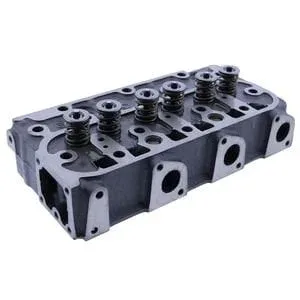
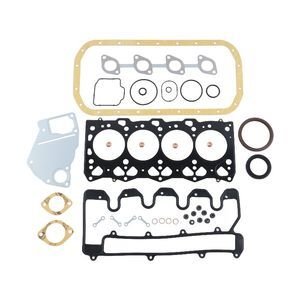
Matched Assembly Supply — D1005 Cylinder Head arrives with valves and springs installed to eliminate valvetrain mismatch during Kubota engine rebuilds.
Technical Specifications
| Parameter |
Value |
| Product Type |
Cylinder Head |
| Compatible Engine |
Kubota D1005, D1005T, D1005-E3, D1005-E3-BG, D1005-E4B, D1005-E4BG, D1005-E3BG1-MGM-1, D1005-NN, D1005-E4B-KEA-1, D1005-BG, D1005-E4 |
| Assembly State |
Complete with valves and springs installed |
| Condition |
New |
| Manufacturing Standard |
ISO-certified manufacturing |
| Warranty |
3-12 months against manufacturing defects |
Application Suitability
| Engine System |
Related Components |
| Valvetrain and combustion sealing |
Head gasket, valve stem seals, head bolts |
| Top-end overhaul |
Piston rings, cylinder liner, connecting rod bearings |
| Cooling and emission interface |
Thermostat housing gasket, exhaust manifold gasket |
| Fuel delivery mating surface |
Injector sleeve seals, fuel return line fittings |
Why a D1005 Cylinder Head Rebuild Fails a Second Time
The failed head rarely failed alone — the system around it caused the damage.
When a workshop tears down a D1005 engine and replaces only the cylinder head without tracing the root cause, the new casting often suffers the same fate within a short operating window. Overheating from a degraded cooling circuit, coolant intrusion past a compromised liner seal, or valvetrain wear from delayed oil service all transfer damage directly into the replacement head. A D1005 Cylinder Head engine rebuild that ignores these upstream faults simply resets the clock on the same failure mode. Rebuild shops that handle Kubota compact diesel engines see this pattern repeat when the repair scope stops at the visible damage. [NEED_CITE: diesel engine cylinder head failure root cause analysis]

Valvetrain System Position and Adjacent Component Matching
This cylinder head sits at the top of the D1005 valvetrain and combustion sealing system. It interfaces directly with the head gasket below and the rocker arm assembly above. Supplying the D1005 Cylinder Head with valves and springs pre-installed means the valvetrain geometry is set as one matched assembly, removing the risk of mixing valve stem diameters or spring rates from separate sources. For a coordinated D1005 Cylinder Head engine rebuild, the head gasket thickness and valve stem seal compound must align with the block deck condition and the operating temperature profile of the specific engine variant.
Sub-Model Variants and Dimensional Verification
The D1005 engine family spans E3, E4B, BG, E4, and NN variants, each carrying differences in valve seat angle, guide bore diameter, and port configuration. Ordering a head without confirming the exact sub-model from the engine serial plate risks receiving a casting with incorrect valve geometry or coolant passage alignment. Previous machining on the block deck or head surface during an earlier rebuild may also shift the required head gasket thickness from standard to an oversize specification. [NEED_CITE: Kubota D1005 engine variant identification by serial plate] Verifying these dimensional details before the head ships prevents the teardown-and-return cycle that stalls a rebuild bay.
Casting Integrity and Valve Seat Concentricity
The cylinder head casting must maintain flatness within the tolerance required for head gasket sealing under combustion pressure. Valve seat concentricity directly affects compression consistency across cylinders — a seat cut off-center allows blow-by and accelerates valve face wear. The installed valves and springs are matched to the D1005 bore and stroke characteristics, supporting correct volumetric efficiency and oil control. Manufacturing under ISO-certified processes ensures pressure testing and dimensional inspection are completed before dispatch, giving rebuild shops a verified baseline rather than an unknown casting that requires additional machining on arrival. [NEED_CITE: cylinder head pressure testing standards for compact diesel engines]
The Hidden Cost of Mismatched Tolerances Across the Top End
When cylinder head, piston, and liner are sourced from different suppliers without tolerance coordination, the stack-up error lands on the head gasket and valve train. A piston sitting slightly higher than expected reduces deck clearance, raising combustion pressure on the head gasket beyond its design limit. Valves from a separate batch may carry a different stem-to-guide clearance, leading to oil consumption complaints that get blamed on the head itself. These mismatches force a second teardown — the most expensive outcome in any engine rebuild, measured in labor hours and lost machine availability rather than part cost alone. [NEED_CITE: engine rebuild tolerance stack-up effects on cylinder head sealing]
Why Rebuild Shops Source the Complete Head Assembly Here
Own-production cylinder head lines and qualified sourced components carry the same QC protocol and warranty terms under a single account. Eight product categories allow a full D1005 top-end kit — head, gasket, valve seals, head bolts, piston rings — to ship as one consignment, eliminating split deliveries that stall the rebuild. Minimum order from one piece supports a single emergency engine repair or a distributor restocking a specific D1005 variant. The technical team confirms engine sub-model compatibility and gasket thickness selection from the engine serial number and block machining history. Cross-reference verification covers superseded casting numbers so older D1005 builds remain serviceable.
Documentation & Verification
- Commercial invoice listing D1005 sub-model and valve assembly state for customs clearance
- Part compatibility sheet mapping D1005 variant to casting number (cross-reference only)
- Quality inspection record covering pressure test and valve seat concentricity check
- Warranty terms defining coverage scope for casting integrity and valve workmanship
- Packing photographs showing valve protection and head surface condition before crating
- HS code assignment for cylinder head assemblies with customs documentation support
Installation & Rebuild Sequence
- Verify block deck flatness before placing the D1005 Cylinder Head to ensure gasket sealing
- Confirm head bolt torque sequence and angle specification match the D1005 variant service manual
- Inspect rocker arm contact pattern on valve stems after initial assembly to detect misalignment
- Install new valve stem seals and head gasket as part of the same top-end service event
- Run a controlled break-in cycle monitoring coolant temperature and compression across all cylinders
Rebuild Inquiry Guidance
Provide the D1005 engine sub-model and serial number from the engine plate, along with any previous machining history on the block or head surface. If the engine has been rebuilt before, note any oversize pistons or deck resurfacing so the correct head gasket thickness can be confirmed. Photos of the existing head casting number and valve arrangement help verify compatibility before quoting the matched assembly.
Frequently Asked Questions
Q: What does a complete D1005 cylinder head assembly include for overhaul?
A: The assembly ships with valves and springs pre-installed, providing a matched valvetrain unit ready for top-end installation. Head gasket, valve stem seals, and head bolts are separate line items that should be ordered together based on the specific D1005 sub-model and block deck condition. This approach removes parts mismatch risk during the rebuild sequence.
Q: How do D1005 engine sub-variants affect cylinder head fitment?
A: The D1005 family includes E3, E4B, BG, E4, and NN variants with differences in valve seat geometry, coolant passage layout, and port configuration. Confirming the exact sub-model from the engine serial plate ensures the casting aligns with the block and manifold interfaces. Incorrect variant selection leads to fitment issues that only surface during assembly.
Q: Should the head gasket and valve seals be replaced at the same time?
A: Yes. Reusing an old head gasket or valve stem seals with a new cylinder head assembly compromises the entire top-end repair. Gasket thickness selection depends on block deck condition and any prior machining, which must be verified before ordering. Coordinated replacement prevents early leakage and repeat teardown labor.
Q: What caused the original cylinder head to fail and how to prevent recurrence?
A: Common root causes include overheating from cooling circuit degradation, coolant intrusion past liner seals, or valvetrain wear from delayed oil service. Replacing the head without addressing these upstream faults leads to repeat failure. A system-level inspection of the cooling, lubrication, and fuel circuits should accompany every D1005 Cylinder Head engine rebuild to protect the new assembly.