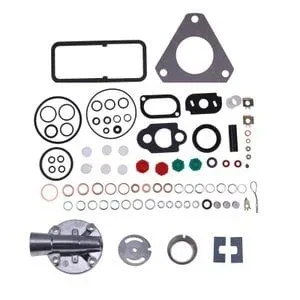
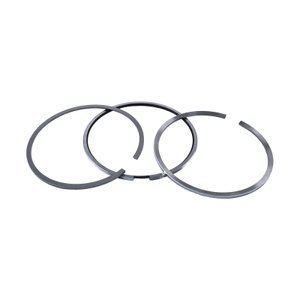
Matched Overhaul Supply — Every cylinder head ships with verified compatibility for the specific Deutz engine serial variant, ensuring dimensional alignment with internal motion components.
Technical Specifications
| Parameter |
Value |
| Part Number |
04231661 |
| Product Type |
Cylinder Head |
| Cross-Reference (reference only) |
04231661, 0423 1661, 04152627, 0415 2627, 04232037, 0423 2037, 05713102, 04231662, 0571 3102, 0423 1662, 0571-3102, 0423-1662 |
| Machine Fitment |
BF4L913, BF6L912, F3L913, F4L913, F6L912, F3L912, F4L912 |
| Part Name |
Complete Cylinder Head with Valves |
| Assembly State |
Complete with valves |
| Casting Material |
High-silicon aluminum alloy (A-Si12Cu1Mg) |
| Machining Tolerance |
ISO 2768-mK |
| Pressure Test |
15 bar for 10 minutes |
| Condition |
New Aftermarket |
| Warranty |
3–12 months against manufacturing defects |
| MOQ |
1 piece |
| Standards |
ISO 9001, ISO 2768-mK, DIN 75200 |
Application Suitability
| Engine System |
Related Components |
| Combustion chamber sealing |
Head gasket set, injector sleeve seals, head bolt set |
| Valvetrain actuation |
Valve stem seals, valve springs, rocker arm assembly |
| Coolant circulation |
Water jacket passages, thermostat housing gasket |
| Top-end overhaul |
Piston rings, cylinder liners, connecting rod bearings |
| Emission and exhaust |
Exhaust manifold gasket, valve guide clearances |
Why a Deutz Cylinder Head Engine Rebuild Fails Before the First Oil Change
Most repeat failures trace back to mismatched component grades, not the head casting itself.
Rebuild shops regularly pull a cylinder head only to discover the valve stem seals do not match the bore grade from a previous overhaul, or the gasket set omits injector sleeve seals the specific engine build demands. I have seen piston, liner, and ring sets arrive from separate orders with tolerance grades that simply do not align — forcing a teardown within a few hundred operating hours. The same pattern repeats when cylinder head replacements are treated as isolated part swaps rather than system-level interventions [NEED_CITE: engine overhaul sequencing best practices for air-cooled diesel platforms].

Combustion System Positioning Within the Deutz 912/913 Family
This cylinder head sits at the top of the combustion and valvetrain system in Deutz BF4L913 and BF6L912 engines. It interfaces directly with the head gasket, valve train geometry, and coolant jacket routing. A Deutz cylinder head engine rebuild that ignores these adjacent systems invites early leakage, uneven thermal loading, and valve seat recession. Every component from the valve stem seal to the head bolt torque sequence affects how this casting performs under continuous duty.
Serial Variants and Oversize Grade Alignment
Production runs of the BF4L913 and BF6L912 introduced internal differences that affect cylinder head fitment. Valve guide bore diameters, injector sleeve lengths, and coolant passage layouts shifted across serial ranges. Before any Deutz cylinder head engine rebuild, the engine serial number must be cross-referenced against the variant chart. If the block has been rebuilt previously, the oversize grade of pistons and liners must align with the head gasket thickness and combustion chamber volume — otherwise compression ratios drift and hot-spot pre-ignition becomes a real risk [NEED_CITE: Deutz 912/913 serial variant identification for overhaul planning].
Casting Integrity and Thermal Management
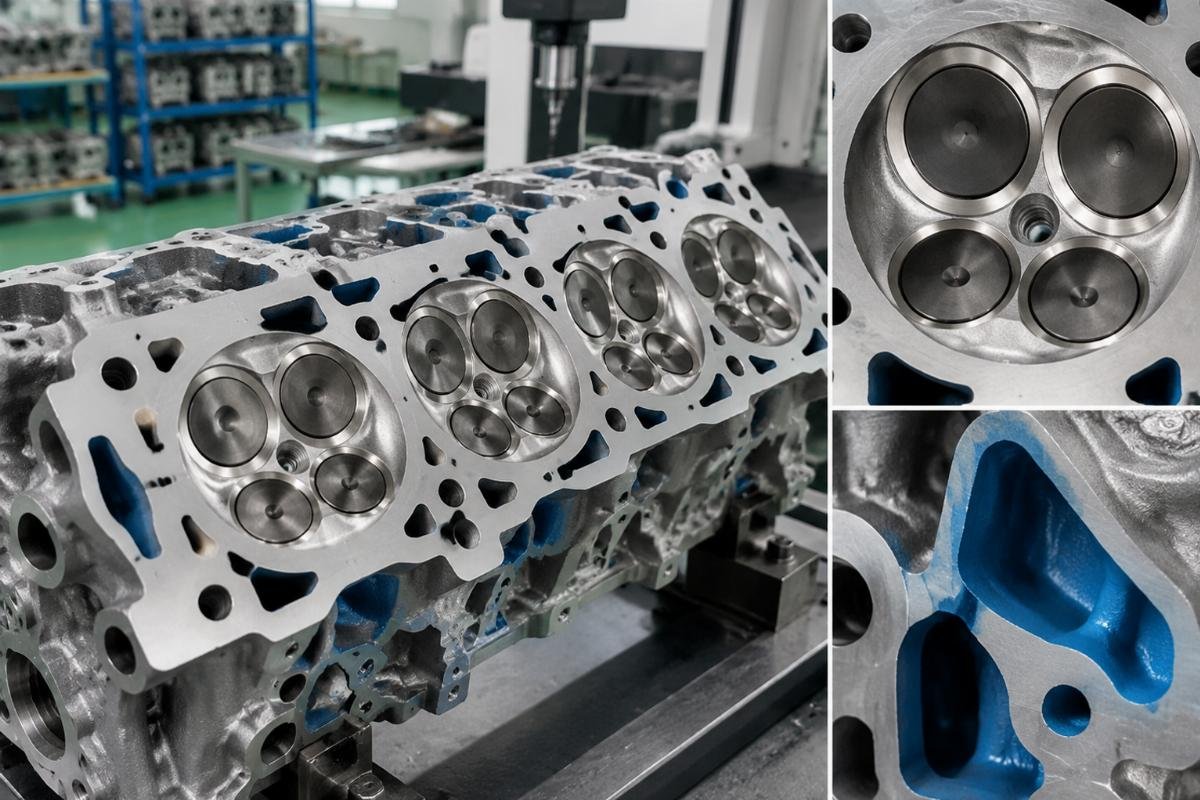
The high-silicon aluminum alloy A-Si12Cu1Mg casting provides dimensional stability under the thermal cycling typical of air-cooled diesel operation. Valve seat interference fit and induction hardening maintain sealing integrity through prolonged high-temperature exposure. The water jacket geometry directs coolant uniformly around combustion chambers, reducing localized hot spots that contribute to piston ring scuffing and pre-ignition. ISO 2768-mK machining tolerance keeps deck flatness within the range required for reliable head gasket sealing, and each unit holds 15 bar for 10 minutes during pressure testing to confirm internal passage integrity before dispatch.
The Cost of Skipping System-Level Verification
Fitting a new cylinder head without inspecting the root-cause fault that destroyed the previous one means the same failure mechanism will repeat. Coolant passage blockages, exhaust manifold warpage, and incorrect valve lash settings all transfer destructive loads back into the fresh casting. Shops that skip oversize grade verification after a prior rebuild regularly encounter valve-to-piston interference or blown head gaskets within the first service interval [NEED_CITE: root-cause analysis methodology for diesel cylinder head failures].
What This Supply Model Covers
Our own production lines and qualified sourcing partners operate under one account and one warranty, so the Deutz cylinder head engine rebuild components you order arrive with consistent quality documentation. Eight product categories mean head gaskets, valve stem seals, head bolt sets, and piston ring sets ship in a single consignment rather than arriving on mismatched timelines. Parts identification works from a part number, machine model, photograph, or nameplate image — useful when paint or corrosion has obscured the original stamping. Cross-reference verification covers superseded and alternate numbers across the 912/913 range. Sample supply lets you confirm fitment on the bench before committing to fleet-level quantities, and the technical team remains available for grade and compatibility confirmation.
Documentation & Verification
- Commercial invoice and packing list matched to cylinder head serial and quantity
- Part compatibility sheet listing engine serial ranges and cross-reference numbers (reference only)
- Dimensional inspection record covering deck flatness, valve seat concentricity, and guide bore diameter
- Pressure test certificate confirming 15 bar hold on coolant and combustion passages
- Warranty terms covering manufacturing defects for 3–12 months from delivery
- Packing photographs showing foam bracing and moisture barrier before crate closure
Installation & Rebuild Sequence
- Verify deck flatness on the block before placing the new cylinder head to ensure gasket sealing integrity
- Confirm head bolt set is new or within reuse limits, as torque-to-yield fasteners lose clamp load on second use
- Match valve stem seal inner diameter to the specific valve guide bore variant of your engine serial range
- Torque the cylinder head in the manufacturer-specified sequence and stages to prevent uneven clamping
- Run initial break-in at moderate load to seat valve faces and confirm coolant passage flow without air pockets
Rebuild Planning Inquiry
Provide the engine model, serial number, and any known overhaul history so we can confirm the correct cylinder head variant, matching gasket set contents, and oversize grade alignment for your specific Deutz BF4L913 or BF6L912 build.
Frequently Asked Questions
Q: What does a matched overhaul kit include alongside this cylinder head?
A: A complete kit typically pairs the cylinder head with a head gasket set, valve stem seals, head bolt set, and injector sleeve seals matched to the specific engine serial variant. We verify every line item against the engine build record so nothing critical is missing when the teardown begins.
Q: How do I determine the correct grade if the engine has been rebuilt before?
A: Share the engine serial number and any available rebuild documentation. We cross-reference the original bore grade with the oversize pistons and liners currently installed, then match head gasket thickness and combustion chamber volume to maintain the correct compression ratio.
Q: Are internal components the same across different engine serial variants of BF4L913?
A: No. Valve guide bore diameters, injector sleeve lengths, and coolant passage layouts changed across production runs. Confirming the serial range before ordering prevents fitment issues that only become visible once the old head is removed and the block is exposed.
Q: What root-cause system faults should be inspected before fitting a new cylinder head?
A: Coolant passage restrictions, exhaust manifold warpage, incorrect valve lash, and fuel injection timing drift all impose destructive loads on a fresh head casting. Identifying and correcting the fault that destroyed the previous head prevents the same failure from repeating within the first service interval.