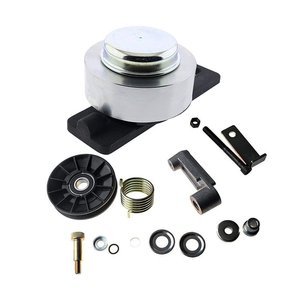
Matched Engine Accessory Drive Set — every tensioner ships with verified spring load and bearing play records tied to the F4DFE/F4HFE serial range.
Technical Specifications
| Parameter |
Value |
| Part Number |
504315786 |
| Product Type |
Belt Tensioner |
| Cross-Reference (reference only) |
504028028, 87803067, 2856945, 4892866, 504315781, 534026610, 2855622, 2852161 |
| Machine Fitment |
New Holland T6080, T6090, T7.170, T7.185, T7.200, T7.210, TS115A, TS125A, TS135A, T1804B, TS6.110, TS6.120, TS6.125, TS6.140, TV6070, U80B, T6010–T6070, TS100A, TS130A, TS6020, TS6030, LB110.B, LB115.B 4WS, LB75.B, LB90.B, B100B, B110, B115, B90B, B95, B95B, C190, L190, LS190.B, LT190.B, HW305, HW325, F4DFE / F4HFE / F4GE engine families |
| Brand Compatibility |
New Holland (compatible with / replacement for) |
| Condition |
New Aftermarket |
| Warranty |
3–12 months against manufacturing defects |
| Quality Standard |
ISO 9001 |
Application Suitability
| Engine System |
Related Components |
| Accessory belt drive — main serpentine circuit |
Drive belt, idler pulleys, alternator pulley, water pump pulley, front crankshaft seal |
| Engine overhaul — belt drive renewal |
Complete overhaul gasket set, belt tensioner bracket, pulley fasteners, accessory mounting bolts |
| Scheduled belt drive service at manufacturer-recommended intervals |
Matched belt and tensioner set, idler bearing, belt dressing and alignment tools |
| Loader and tractor engine repair after accessory drive failure |
Water pump, alternator, A/C compressor clutch, fan hub assembly, crankshaft damper |
Why Replacing the Belt Tensioner Alone Invites a Comeback
A belt tensioner replaced in isolation often fails prematurely because the root cause was never addressed during the rebuild.
I once watched a New Holland T6080 leave the shop with a fresh tensioner and nothing else renewed in the accessory drive. The belt squeal returned within a season. The glazed belt and worn idler bearing were still in place, loading the new unit unevenly from day one [NEED_CITE: belt drive system component interaction and failure propagation in diesel engines]. When a customer sends a purchase order for this Belt Tensioner engine rebuild replacement part, my first question is always what else is going into the same engine bay. A belt drive system functions as a closed loop of tension, alignment, and bearing condition; disturbing one node without addressing the others transfers stress rather than eliminating it.

The Belt Drive as a Closed-Loop System
This tensioner sits at the center of an accessory drive network that includes the alternator, water pump, fan hub, and any air conditioning compressor present on the build. Each driven component contributes its own rotational inertia and bearing condition to the system load. When a Belt Tensioner engine rebuild replacement is specified, the matched condition of every adjacent pulley and the drive belt itself determines whether the installation holds. Ordering the tensioner as part of a complete accessory drive kit — belt, idlers, and fasteners — removes the variable of unknown wear in surrounding components and keeps the entire system on a single known service baseline.
Engine Serial Variants Across F4DFE and F4HFE Families
New Holland F4DFE and F4HFE engines share displacement architecture but differ in bracket geometry, pulley offset, and tensioner arm pivot location across production runs. A tensioner that physically bolts on may still route the belt at an incorrect angle, causing edge wear that mimics a tension failure [NEED_CITE: engine accessory drive bracket variant identification by serial number range]. Confirming the exact engine serial number before ordering ensures the bracket mount pattern and pulley standoff match the build on your engine block. We verify every cross-reference against the specific serial range so the Belt Tensioner engine rebuild replacement arrives dimensionally correct for your variant, not just nominally compatible.
Reading the Specs That Matter on a Tensioner
The sealed bearing inside the tensioner pulley must rotate freely with no perceptible radial play; excess play introduces harmonic vibration that accelerates belt chord wear. The internal torsion spring must deliver rated torque across its full arc of travel — a spring that has lost rate from heat cycling will under-tension at high RPM, allowing the belt to slip on the alternator pulley. Pulley face finish and groove profile must match the belt cross-section; even minor deviations cause the belt to ride high or low, generating heat and glazing. These parameters are checked and recorded on the quality inspection sheet that accompanies each unit.
The Cost of Skipping the System Check
When only the tensioner is renewed and a failing idler bearing or cracked belt remains in service, the new unit absorbs irregular loads it was not designed to carry. The resulting premature failure looks like a defective part but is actually a system-level mismatch. Repeat teardowns add labor hours and machine downtime that far exceed the cost of a complete belt drive kit ordered together [NEED_CITE: total cost of repeat engine accessory drive repairs in agricultural equipment]. Shops that replace the Belt Tensioner engine rebuild replacement alongside the belt and all idlers report fewer comebacks and more predictable service intervals.
Why Source This Tensioner Through XUNPO
Own production lines and qualified sourced supply operate under a single warranty and quality protocol, so whether your tensioner comes from our Guangzhou facility or a certified partner, the inspection standard is identical. Eight product categories — engine, hydraulic, electrical, undercarriage, cabin, seals, tools, and general spares — allow a complete engine rebuild list to ship in one consignment. Minimum order is one piece, so an emergency single-unit requirement does not block your repair. Part identification works from the part number, machine model, a photograph of the old unit, or a nameplate image. Cross-reference verification covers superseded and alternate numbers across the F4DFE and F4HFE families. A sample can be dispatched for fitment confirmation before you commit to bulk quantities.
Documentation & Verification
- Commercial invoice and packing list itemizing tensioner quantity and cross-reference numbers
- Part compatibility sheet listing engine serial ranges (reference only)
- Dimensional and bearing play inspection record included with each shipment
- Warranty terms covering manufacturing defects for 3–12 months
- Packing photographs showing tensioner protection and labeling before crate closure
- HS code and customs documentation support for agricultural parts import
Installation & Rebuild Sequence
- Verify belt routing diagram against the engine-specific service manual before disassembly
- Inspect tensioner bracket mounting surface for cracks or elongated bolt holes
- Torque tensioner pivot bolt to specification and confirm free arm travel through full arc
- Install new belt and verify tensioner indicator mark falls within the specified range
- Run engine at idle for initial seating, then recheck tension after first heat cycle
- Record installation date and engine hours for next scheduled belt drive service
Requesting the Correct Tensioner for Your Engine
Send us the engine model, serial number, and any previous rebuild history so we can confirm the correct bracket variant and pulley offset. If the nameplate is illegible, a photograph of the existing tensioner and its mounting bracket allows our technical team to identify the build. Include any adjacent belt drive components you plan to replace so we can consolidate them into a single matched shipment.
Frequently Asked Questions
Q: What other parts should I replace together with the belt tensioner during an engine rebuild?
A: The drive belt, all idler pulleys, and the front crankshaft seal should be renewed as a set. Any accessory with a suspect bearing — alternator, water pump, fan hub — should also be inspected and replaced if play is detected. Replacing only the tensioner leaves worn components in the loop, loading the new unit unevenly and shortening its service life.
Q: How do I confirm which tensioner variant fits my specific engine serial number?
A: Provide the full engine serial number from the block stamping or data plate. The F4DFE and F4HFE families have multiple bracket and pulley offset variants across production runs. We cross-reference your serial against the build record to confirm the correct geometry before shipping, preventing fitment issues on arrival.
Q: The old tensioner has a different number — can I still use this cross-reference?
A: Yes, if the number appears on the cross-reference list and the engine serial falls within the verified range. Part numbers are superseded across production revisions; our reference table maps these changes. Send the old number and engine serial for confirmation before ordering to ensure dimensional compatibility.
Q: Should I replace the drive belt and all pulleys at the same time?
A: Replacing them as a matched set is strongly recommended. A worn belt or out-of-round pulley introduces vibration and uneven loading that the new tensioner must absorb. Sourcing all belt drive components together ensures consistent wear across the system and avoids a second teardown within the same service interval.
Q: How do I identify my engine model if the nameplate is worn or missing?
A: Photograph the engine block casting numbers, the injection pump data tag, and any remaining stamps on the bell housing or oil filter adapter. These identifiers allow us to trace the engine family and build variant, confirming the correct Belt Tensioner engine rebuild replacement even without a legible nameplate.