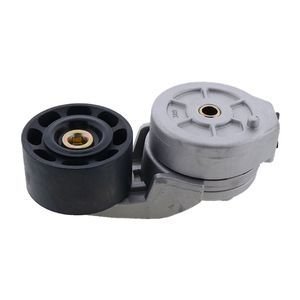
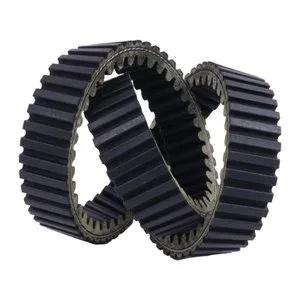
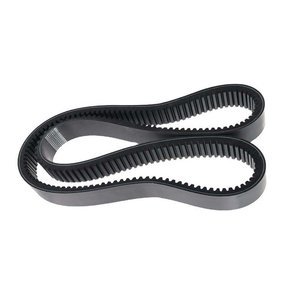
Matched Set Dispatch — belt tensioner verified against Cummins 4BT/6BT variant differences before shipment, paired with pulleys and belts in one consignment.
Technical Specifications
| Parameter |
Value |
| Part Number |
3936202 |
| Product Type |
Belt Tensioner |
| Cross-Reference (reference only) |
3936202, 3917485, 3918944, 3934817, 3936203, 3967188, 3964636 |
| Machine Fitment |
Hyundai R130LC-3, R130W-3, R140LC-7, R160LC-3, R170W-3, R180LC-3, R200NLC-3, R200W, R200W-2, R200W-3, R210LC-3, R210LC-3_LL, R210LC-7, R250LC-3, 33HDLL |
| Condition |
New Aftermarket |
| Material |
Forged steel bracket |
| Surface Treatment |
Zinc-nickel electroplated (ISO 9227 salt-spray 720+ hours) |
| Engine Compatibility |
Cummins 4BT, 6BT, 4B3.9, 6B5.9, 6C8.3, B4.5, QSL9 CM554, NH/NT 855, QSB6.7 CM850 (CM2850), C8.3 G |
| Operating Temperature |
–20°C to +110°C |
| Dimensional Tolerance |
±0.1 mm |
| Warranty |
3–12 months against manufacturing defects |
Application Suitability
| Engine System |
Related Components |
| Front accessory drive |
Serpentine belt, idler pulley, crankshaft damper, alternator bracket |
| Cooling system drive |
Water pump, fan hub assembly, fan belt, fan spacer |
| Air compressor drive |
Compressor mounting bracket, drive belt, compressor pulley |
| Full engine overhaul |
Complete belt drive kit, front seal, timing cover gasket, harmonic balancer bolt |
Why a Belt Tensioner Fails Again Weeks After an Engine Rebuild
Replacing the tensioner while leaving worn pulleys and aged belts in the system is the most frequent root cause of early comeback failures.
I have seen rebuilt Cummins 6BT engines returned to the shop within months because the belt tensioner engine overhaul rebuild was treated as a single-item fix. The adjacent idler pulley had bearing play that loaded the new tensioner asymmetrically, causing pivot wear well before its expected service interval. The belt itself had hardened from previous heat cycles and could no longer conform to the pulley grooves, transferring shock loads directly into the tensioner spring. These are not manufacturing defects in the replacement part — they are system-level oversights during teardown inspection. [NEED_CITE: belt drive system failure modes in diesel engine rebuilds]

The Belt Drive System as a Linked Assembly
The belt drive system on a Cummins 4BT or 6BT is not a collection of independent wear items. The belt tensioner engine overhaul rebuild component sits at the center of a load path that connects the crankshaft pulley to every front-mounted accessory — alternator, water pump, fan, and air compressor when fitted. When any one of these accessories develops bearing drag or axial play, the extra rotational resistance feeds back through the belt into the tensioner arm. Over hundreds of operating hours, this constant over-travel fatigues the internal spring and accelerates pivot bushing wear. Matching the replacement tensioner to a fully inspected set of pulleys and a fresh belt restores the designed load balance across the entire front-end drive.
Superseded Numbers and Engine Serial Variants
The Cummins B-series and C-series engine families have seen multiple part number revisions across production generations. A tensioner specified for an early 6BT 5.9 may differ in bracket geometry or spring rate from one intended for a later QSB6.7 CM850 build. Cross-reference verification against the specific engine serial number — not just the model designation — is essential before ordering. Superseded reference numbers such as 3917485 or 3918944 may point to earlier bracket configurations that were updated during mid-production engineering changes. Our verification process checks the engine data plate information against the applicable cross-reference table to confirm which tensioner variant the specific build requires. [NEED_CITE: Cummins B-series engine variant identification for aftermarket parts]
Reading the Specification Sheet
The forged steel bracket provides the structural rigidity needed to resist deflection under sustained belt loads in high-vibration excavator engine bays. A cast bracket under the same cyclic loading can develop micro-cracks at the pivot bore over time; forging aligns the grain structure along the load path, improving fatigue resistance. The zinc-nickel electroplated surface treatment, validated to 720+ hours under ISO 9227 salt-spray testing, addresses the corrosion environment typical of construction sites where salt, moisture, and fine abrasive dust combine to attack exposed steel. The ±0.1 mm dimensional tolerance on critical mounting and pivot surfaces ensures the tensioner arm aligns correctly with the belt plane — misalignment beyond this range causes the belt to track off-center, wearing the rib edges prematurely. The –20°C to +110°C operating temperature range covers the full envelope from cold-morning starts in winter quarry operations to sustained high-ambient running in tropical port terminals. [NEED_CITE: zinc-nickel plating corrosion protection for under-hood diesel components]
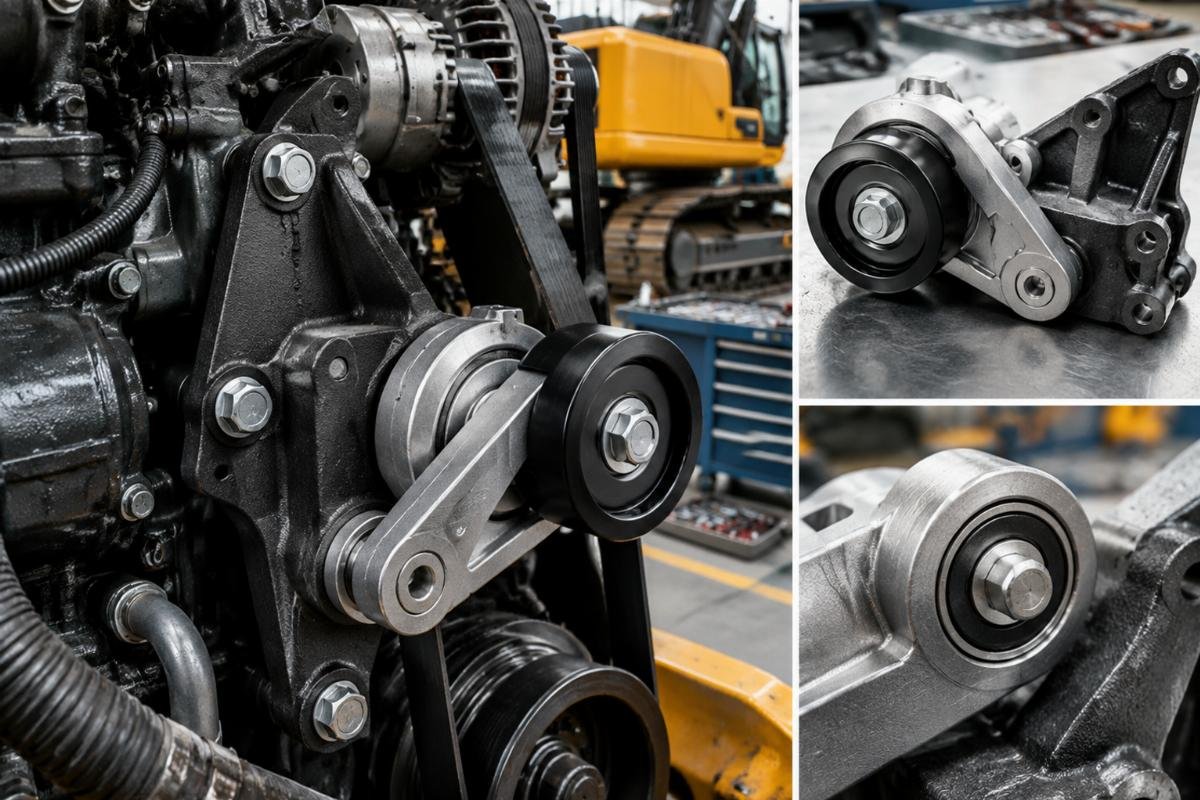
What a Mismatched Tensioner Costs the Rebuild Shop
Ordering the wrong tensioner variant for a specific engine serial is rarely discovered until the belt is routed during reassembly. By that stage, the engine may already be on the stand with the timing cover reinstalled, coolant lines connected, and the machine partially reassembled. Removing the tensioner to return it means stripping the belt, potentially disturbing the fan and alternator alignment, and losing a full day of technician time. Worse, if a borderline fitment is forced and the engine is returned to service, the resulting belt mistracking wears the ribbed belt and adjacent pulley grooves within weeks — triggering a second teardown that the shop absorbs under its own workmanship warranty. [NEED_CITE: cost of return visits in heavy equipment engine overhaul operations]
How This Supply Chain Supports Your Overhaul Bay
Self-produced tensioner lines and qualified sourced supply carry identical warranty terms under a single account, so a mixed-order belt drive kit ships with consistent coverage. Eight product categories — engine, hydraulic, electrical, undercarriage, cabin, seals, tools, and general spares — allow a complete overhaul parts list to consolidate into one consignment. Orders start from one piece for an emergency single-engine job or scale to matched sets for a fleet overhaul program without a minimum order threshold. Guangzhou warehouse stock enables same-day dispatch on common B-series tensioner configurations. Part identification works from a part number, machine model, a photograph of the old unit, or a nameplate image when paint and grime obscure the stamping. Cross-reference verification covers superseded and alternate numbers across Cummins engine generations. Sample supply is available for fitment confirmation before a bulk commitment is placed for a rebuild shop's stocking program.
Documentation & Verification
- Commercial invoice lists each tensioner variant with its confirmed cross-reference and engine serial applicability
- Compatibility sheet marks all OEM numbers as reference only alongside verified alternate part numbers
- Dimensional inspection record covering pivot bore, bracket mounting holes, and arm travel arc
- Warranty terms document stating coverage period and exclusions for system-level misapplication
- Packing photographs showing foam insert protection and branded carton condition before sealing
- HS code classification provided for customs clearance support on export consignments
Installation & Rebuild Sequence
- Inspect all pulleys for bearing play and groove wear before mounting the tensioner to avoid loading a new unit against a failing idler
- Clean the mounting face on the front cover to remove old gasket residue that could tilt the bracket out of the belt plane
- Route the new belt per the factory diagram before releasing the tensioner arm to prevent rib misalignment on multi-groove pulleys
- Torque the tensioner mounting bolt to the engine manual specification and verify arm travel falls within the specified arc
- Run the engine at idle for the initial warm-up cycle and observe belt tracking across all pulleys under no-load conditions
- Re-check tensioner pivot smoothness and bolt torque after the first operating cycle when thermal expansion has settled all fasteners
Before You Request a Quote
Provide the exact engine model and serial number from the data plate — for example, whether the unit is a Cummins 6BT 5.9 or a QSB6.7 CM850 — along with any previous rebuild history that may have introduced non-standard components. If the nameplate is unreadable, send a clear photograph of the old tensioner and the front cover mounting area so we can cross-reference the bracket configuration. For overhaul kit inquiries, share the full list of belt drive components you plan to replace so we can verify matched compatibility across the entire assembly.
Frequently Asked Questions
Q: What other belt drive components should be replaced together with the tensioner during an engine rebuild?
A: During a Cummins 4BT or 6BT overhaul, the serpentine or V-belt, all idler pulleys, and the crankshaft damper should be inspected and typically replaced as a matched set. Worn pulley bearings or a fatigued damper transfer irregular loads into the new tensioner, shortening its service life. Replacing the full front drive set in one consignment eliminates mismatched wear and avoids a second teardown.
Q: How do Cummins engine serial variants affect which tensioner number applies?
A: The B-series and C-series families span multiple bracket geometries and spring rates across production years. A tensioner for an early 6BT 5.9 may not suit a later QSB6.7 CM850 even though the block architecture is related. Provide the full engine serial number from the data plate so we can cross-reference the correct variant against superseded and alternate numbers.
Q: Are superseded OEM reference numbers still valid for ordering?
A: Superseded numbers such as 3917485 or 3934817 remain useful for identification purposes and cross-reference verification. However, the replacement part shipped may carry the current production number if the original was revised for improved performance or manufacturing changes. We confirm the applicable active number against your engine serial before dispatch to ensure correct fitment.
Q: What causes premature tensioner failure beyond the part itself?
A: Adjacent component faults — a seized idler pulley bearing, a worn water pump shaft, or a cracked crankshaft damper — add parasitic drag and shock loads that the tensioner absorbs. Contamination from coolant leaks or excessive oil mist in the engine bay can also degrade the pivot bushing. Always diagnose the system, not just the failed component, during teardown inspection.
Q: Can I get a sample tensioner to verify fitment before committing to a bulk order?
A: Yes. We supply sample units for fitment confirmation so your rebuild shop can check bracket geometry, mounting hole spacing, and belt plane alignment on the actual engine block before placing a stocking order. This is especially useful when dealing with engines that have undergone previous rebuilds with non-standard or mixed-generation components.