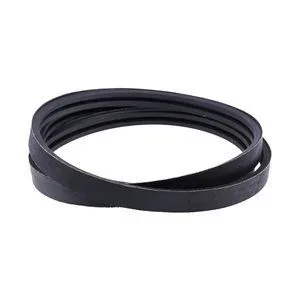
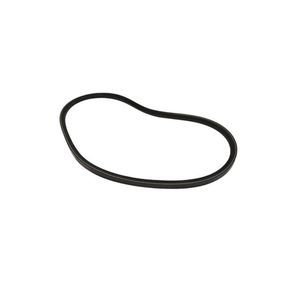
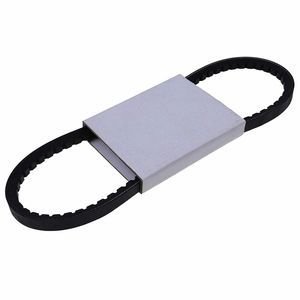
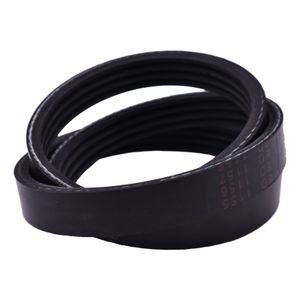
Engine sequence variants verified — each mower deck drive belt K5763-34711 order ships with a cross-reference sheet confirming fitment across superseded numbers and prior rebuild configurations.
Technical Specifications
| Parameter |
Value |
| Part Number |
K5763-34711 |
| Product Type |
Belt |
| Cross-Reference |
K5763-34711, K5763-34710, K5763-34712, K5371-34710 (reference only) |
| Machine Fitment |
RCK60-24B, RCK60-27B(A), RCK60-29B, RCK60-30B(A), RCK60-30BB, RCK60-32, RCK60B-22BX, RCK60B23BX, RCK60B-24G, RCK60B-75B, RCK60D-26BX, RCK60D-26BX-1, BX1800, BX2200, G2160, G2460G |
| Material |
EPDM rubber compound with high-tensile polyester cords |
| Operating Temperature |
Up to 120°C |
| Surface Finish |
Micro-textured |
| Condition |
New Aftermarket |
| Standards |
ISO 9001, ISO 4184, SAE J1459 |
| Warranty |
3–12 months against manufacturing defects |
Application Suitability
| Engine System |
Related Components |
| Deck drive power transfer (RCK60 series) |
Idler pulleys, spindle bearings, tensioner assemblies |
| PTO-driven mower deck (BX series tractors) |
Deck belt guards, pulley alignment shims, retaining hardware |
| Grounds maintenance drive system (G series) |
Matched belt sets, bearing kits, overhaul seal components |
Why Replacing the Belt Alone Invites Repeat Failure
A failed mower deck drive belt is usually a symptom, not the cause.
In my years working through teardowns in Shandong workshops, I watched crews swap belt after belt on RCK60-30B decks without ever pulling the spindle housings. The new belt would track fine for a week, then start riding the pulley edge and shred within a month. The real fault sat in a worn idler bearing letting the pulley wobble under load. Treating the mower deck drive belt as a standalone replacement without checking the full drive path is a pattern I see repeated across landscaping fleets. A systematic approach — verifying pulley groove condition, bearing play, and tensioner travel — before fitting the new belt prevents the costly cycle of repeat teardowns [NEED_CITE: mower deck drive system failure root cause analysis].

The Belt's Place Inside the Deck Drive System
The drive belt on an RCK60-series deck transfers torque from the input shaft to three spindle assemblies under continuous high-RPM load. When one component in that chain degrades — a spindle bearing developing play, an idler losing its spring tension — the belt absorbs the misalignment as accelerated wear on its sidewalls. Ordering this mower deck drive belt as part of a matched rebuild, alongside inspected or replaced bearings and tensioners, restores the system to its designed tolerances rather than patching one link in a worn chain.
Superseded Numbers and Prior Rebuild History
Kubota has revised belt part numbers across the RCK60 production run. The references K5763-34710, K5763-34711, K5763-34712, and K5371-34710 (reference only) appear across service documentation for overlapping deck variants. A deck that has already undergone one rebuild may carry a non-standard pulley configuration or a substituted tensioner from a different sub-model, changing which belt length actually fits. We verify cross-reference applicability against the specific deck serial prefix and any documented rebuild history before confirming shipment [NEED_CITE: Kubota RCK60 belt cross-reference supersession records].
Material and Dimensional Choices That Matter at the System Level
The EPDM rubber compound used in this belt resists heat buildup that accumulates inside enclosed deck housings during extended mowing runs. Where standard chloroprene belts stiffen and crack after repeated thermal cycles above 80°C, EPDM maintains flexibility up to 120°C, which directly affects how the belt seats in the pulley groove over time. The twisted polyester tensile cords handle harmonic vibration without stretching — a stretched belt loses tension and begins slipping on the aluminum pulleys, generating more heat in a compounding failure loop. The micro-textured surface finish provides grip on aluminum pulley grooves without accelerating groove wear, preserving alignment across the full service interval. Dimensional tolerance held at ±0.3 mm ensures consistent tracking across all three spindle stations when the belt is installed at proper tension.
What Happens When the System Check Gets Skipped
I recall one landscaping operation that ordered belts alone for a fleet of twelve RCK60B-75B decks heading into spring season. Eight of those decks were back in the shop before summer with shredded belts and scored pulleys. The root cause traced to idler bearings that had been marginal the previous autumn — still spinning freely by hand, but developing radial play under operating load. The cost of replacing bearings during the scheduled belt swap would have been marginal. The cost of emergency teardowns mid-contract, with crews idle and client properties unmowed, was substantial. Skipping the system-level diagnosis does not save time; it merely defers the repair to a more expensive moment [NEED_CITE: fleet maintenance cost of deferred component replacement].
Why Source This Belt Through Our Engine System Desk
We carry both self-produced and sourced supply under one account and one warranty structure, so a belt ordered alongside spindle bearings and tensioner springs arrives covered by the same quality terms. Our eight product categories mean a complete deck rebuild list — belts, seals, bearings, hardware — ships as one consignment rather than fragmenting across multiple suppliers with mismatched timelines. Minimum order is one piece, which matters when a single deck is down and the rest of the fleet is still running. Our technical team verifies cross-reference numbers against your specific deck serial and rebuild documentation, not just a generic table. Guangzhou warehouse stock on fast-moving belt references allows rapid dispatch when the machine cannot wait for a production run.
Documentation & Verification
- Commercial invoice listing each belt reference and cross-reference applied to your order
- Compatibility sheet mapping your deck serial to verified part number, marked reference only
- Dimensional inspection record covering belt length, width, and tensile sampling results
- Warranty terms stating coverage period and manufacturing defect conditions
- Packing photographs showing belt condition and labeling before crate closure
- HS code and customs documentation prepared for cross-border shipment
Installation & Rebuild Sequence
- Inspect all pulley grooves for scoring or hook wear before routing the new belt
- Check idler and spindle bearings for radial play under hand load, replace if any detectable movement
- Route the belt following the deck manufacturer diagram, confirming engagement at each spindle station
- Set tensioner to specified deflection, then run the deck unloaded for initial seating
- Re-check tension after the first operating cycle, as new belts seat into pulley grooves during break-in
Request a System-Matched Quote
Provide your deck model designation, serial prefix, and any known rebuild history so we can confirm which belt reference applies to your current configuration. If pulleys or bearings have been substituted during a prior overhaul, share photographs or part numbers for cross-verification. For fleet orders, send the full unit list and we will return a consolidated compatibility sheet with the quote.
Frequently Asked Questions
Q: What other components should I inspect when replacing the deck drive belt?
A: Check idler bearings for radial play, spindle housings for shaft wobble, and pulley grooves for hook wear or scoring. Inspect the tensioner spring for fatigue and verify its travel range matches specification. Any worn component left in place will force the new belt to absorb the misalignment, shortening its service life noticeably and inviting repeat teardown.
Q: How do superseded part numbers affect which belt fits my deck?
A: Numbers like K5763-34710 and K5763-34711 cover overlapping but not identical deck variants across production years. Prior rebuilds may have introduced non-standard pulley setups. We cross-verify against your specific deck serial prefix and service records to confirm which reference applies, rather than relying on generic interchange tables that carry forward errors.
Q: My deck was rebuilt once already — how do I confirm the correct belt?
A: Share your deck serial number and any documentation from the previous rebuild, including substituted part numbers. We check whether pulleys, spindles, or tensioners were swapped to different variants during that work, since those substitutions change the belt length and routing required for the current configuration.
Q: Can I order matched belts for an entire fleet's seasonal overhaul together?
A: Yes. Provide the model and serial list for each deck in the fleet, and we return a consolidated compatibility sheet alongside the quote. All belts and associated hardware ship as one consignment under a single warranty, eliminating split deliveries and the scheduling gaps they create during peak maintenance windows.