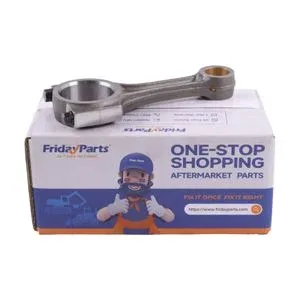
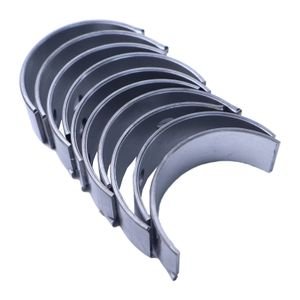
Matched Set Dispatch — Every connecting rod ships verified against its mating piston pin diameter and crankpin journal grade to eliminate mismatched clearances.
Technical Specifications
| Parameter |
Value |
| Part Number |
119E10-23001 |
| Product Type |
Connecting Rod |
| Cross-Reference |
119E10-23001, 119E1023001, 119E10-23000, 119E1023000 (reference only) |
| Machine Fitment |
Yanmar 3TNV88, 3TNV80, 3TNV80F-NGGEHR, 3TNV80F-NGPGE, 3TNV80F-NXDGZ, 3TNV80F-NXDKTF, 3TNV80F-NXDLST, 3TNV80F-NXDTR, 3TNV80F-SDWB, 3TNV80F-SNLY, 3TNV80F-SNSY, 3TNV80F-SPSPT, 3TNV80F-SPTB, 3TNV80F-SSLY, 3TNV80F-SSYU, 3TNV80FT-ZMTE, 3TNV80FT-ZMWM2, 3TNV80F-SPANM, 3TNV80F-ZXKLST |
| Material |
SAE 1045 medium-carbon steel |
| Surface Treatment |
Phosphate conversion coating, shot-peened rod beams |
| Assembly State |
New Aftermarket |
| Warranty |
6 months |
| Minimum Order |
1 piece |
| Standard |
ISO 9001 |
Application Suitability
| Engine System |
Related Components |
| Yanmar 3TNV88 bottom-end rebuild |
Con-rod bearing shells, main bearings, piston assemblies, thrust washers, full gasket set |
| Yanmar 3TNV80 single-cylinder repair |
Piston pin bushing, rod bolt set, crankshaft seal, cylinder hone verification |
| Engine rebuild shop stocking |
Matched rod-and-bearing sets graded to crankpin journal measurement |
| Compact excavator and mini-loader power units |
Complete overhaul kit including rings, liners, and valve train components |
Why an Isolated Connecting Rod Rebuild Fails Before the Next Service Interval
A connecting rod ordered without verifying crankpin journal grade and piston pin diameter creates a clearance mismatch that surfaces within the first operating hours.
When a workshop pulls a Yanmar 3TNV88 apart for rod knock, the temptation is to order rods and bearings by the default STD assumption from the last rebuild record. In practice, the crankshaft may have been reground previously, the piston pins may sit at a different tolerance class, and the overhaul gasket kit might still be pending from a separate supplier. I have watched this exact sequence in Shandong rebuild bays — the rod arrives, goes in, and the bearing spins within a week because the shell grade was guessed rather than measured [NEED_CITE: crankpin journal measurement and bearing grade selection for diesel engine overhaul].

The Rotating Assembly as a Measured System
Every connecting rod in a Yanmar 3TNV88 or 3TNV80 engine lives inside a rotating assembly where clearances compound. The big-end bore must be measured as a pair with its cap — these are line-bored together at the factory and cannot be swapped between cylinders without destroying the oil film geometry. A connecting rod engine rebuild that ignores this pairing rule introduces eccentric loading on the bearing shell, leading to localized wiping that mimics oil starvation.
Sequence, Grade, and Serial Variant
The correct con-rod bearing shell grade depends on the crankpin journal diameter as measured during teardown, not on the number stamped on the old shell — a previous regrind may have shifted the journal into an oversize class. Across the 3TNV80 variant range, bore and stroke differ between the 3TNV80 and 3TNV88 families, so a rod that physically fits may still produce incorrect piston-to-head clearance if the engine serial variant is not confirmed [NEED_CITE: engine serial variant identification for Yanmar 3TNV series internal parts].
Reading the Material and Surface Treatment
The SAE 1045 medium-carbon steel specification provides the tensile base needed to handle the alternating compression and tension loads in a three-cylinder diesel running at governed speed. Phosphate conversion coating on the bearing surfaces aids initial break-in by providing a sacrificial layer that holds oil during the first seconds of cranking. Shot-peening on the rod beams introduces compressive residual stress, which resists crack initiation at the transition radii between the beam and the big-end bore — the zone where fatigue failures typically originate.
The Cost of Skipping the Measurement Step
A rod installed with a default-grade bearing shell into a reground crankshaft journal will show no symptoms at startup. The damage accumulates as micro-welding on the bearing surface, progressing to flaking, and finally to a spun shell that scores the crankpin beyond repair. The secondary damage — crankshaft regrind or replacement, block machining, and a full second teardown — dwarfs the time it would have taken to micrometer the journals before ordering. I have seen this pattern repeat across compact excavator power units where the machine was needed back on site urgently and measurement steps were compressed [NEED_CITE: bearing failure progression and secondary crankshaft damage in compact diesel engines].
Sourcing Engineered for the Rebuild Sequence
Our selected production lines and qualified sourced supply operate under one warranty account, so rods, bearings, and gasket kits carry identical terms. Eight product categories mean a complete overhaul list — rods, pistons, rings, bearings, seals, and gaskets — consolidates into one consignment from one Guangzhou warehouse. Minimum order from one piece supports the single-cylinder repair without forcing a full-engine kit purchase. Part identification works from the part number, machine model, or a photograph of the worn nameplate. Cross-reference verification covers superseded numbers across the 3TNV80 and 3TNV88 families. Technical confirmation of bearing grade and piston pin diameter is available before commitment.
Documentation & Verification
- Commercial invoice and packing list referencing engine serial variant for each connecting rod line item
- Part compatibility and cross-reference sheet noting reference-only status for OEM interchange numbers
- Dimensional inspection record covering big-end bore, small-end bushing clearance, and bolt-hole concentricity
- Warranty terms aligned across rods, bearings, and gaskets within the same overhaul consignment
- Packing photographs showing matched sets grouped by cylinder number before crate closure
- HS code and customs documentation support for cross-border engine rebuild supply
Installation & Rebuild Sequence
- Verify crankpin journal diameter with a micrometer before selecting con-rod bearing shell grade
- Keep each rod paired with its original cap — never interchange caps between cylinders
- Confirm small-end bushing inner diameter matches the piston pin specification for the target engine variant
- Torque rod bolts to the manufacturer's sequence using new fasteners where stretch specifications apply
- Rotate the crankshaft by hand after each rod installation to check for binding before proceeding
- Run a low-load break-in cycle following the overhaul gasket kit and bearing manufacturer's procedure
Request a Matched Overhaul Quotation
Provide your Yanmar engine model, serial number, and any known regrind history on the crankshaft journals. This lets us confirm the correct connecting rod variant, match bearing shell grades to your measured clearances, and assemble a complete overhaul kit — pistons, rings, bearings, seals, and gaskets — that ships as one verified consignment.
Frequently Asked Questions
Q: What else does my Yanmar 3TNV88 overhaul kit need beyond the connecting rods?
A: A complete bottom-end rebuild requires con-rod bearing shells matched to your crankpin journal grade, main bearings, thrust washers, piston assemblies with rings, and a full gasket set specific to your engine serial variant. Supplying these as a matched kit prevents clearance mismatches that arise when components arrive from separate sources with uncoordinated specifications.
Q: How do I determine the correct bearing grade if my crankshaft has been reground previously?
A: The only reliable method is to micrometer each crankpin journal during teardown and record the diameter. Previous regrinds may have moved journals into an oversize class that the old bearing shell stamp will not reflect. Share these measurements when ordering so the correct graded shells ship with your connecting rod set.
Q: Are connecting rods for 3TNV80 and 3TNV88 interchangeable?
A: They are not directly interchangeable despite external similarity. The two engine families differ in bore and stroke, which changes piston pin height and rod geometry. Confirming your engine serial number ensures the rod supplied matches the block internals and maintains correct piston-to-head clearance after assembly.
Q: Can I order matched piston-and-rod assemblies pre-assembled?
A: Matched sets can be supplied with piston pins and retainers installed to the correct small-end bushing clearance. This removes the press-fit variable from the workshop floor and ensures each assembly is verified as a unit before dispatch. Specify your engine serial variant and any previous rebuild history when requesting quotation.