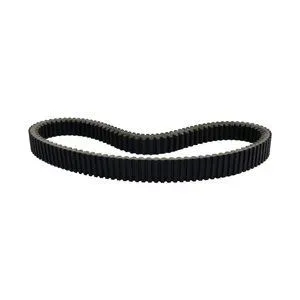
System-Level CVT Matching — Aramid-reinforced EPDM belt verified against Maverick X3 and Defender sheave profiles to prevent secondary clutch damage during engine rebuilds.
Technical Specifications
| Parameter |
Value |
| Part Number |
422280651/422280652 |
| Product Type |
Belt |
| Cross-Reference |
422280651, 422280652 (reference only) |
| Machine Fitment |
Can-Am Maverick X3 900 (2018), Maverick X3 Turbo (2017–2021), Turbo R (2017–2019), X DS Turbo R/RR (2017–2021), MAX X DS Turbo R/RR (2020–2021), X RS Turbo R (2017–2021), X RC/RS Turbo RR (2020–2021), X MR Turbo RR (2020–2021), MAX Turbo/Turbo R (2017–2021), MAX X MR Turbo R (2019–2021), Maverick 1000R 4x4 DPS/XC (2018), Defender HD8 4x4 (2016–2018), HD8 4x4 DPS, HD8 4x4 XT Cab DPS, HD8 4x4 XT DPS, HD8 4x4 XT Cab Camo DPS, HD8 4x4 Camo DPS, HD8 4x4 Convenience Package, HD8 4x4 XT Camo DPS, Defender HD10 4x4 (2016–2018), HD10 4x4 DPS, HD10 4x4 Mossy Oak Hunting Edition DPS, HD10 4x4 XMR (2018), HD10 4x4 XT Cab DPS, HD10 4x4 XT DPS, HD10 4x4 XTP (2018), HD10 4x4 Camo DPS, HD10 4x4 XT Cab Camo DPS, HD10 4x4 XT Camo DPS |
| Material |
Aramid-reinforced poly-V construction with high-temperature EPDM rubber compound |
| Temperature Range |
140°C continuous service |
| Tensile Strength |
≥1,850 N |
| Dimensional Tolerance |
±0.15 mm (length and width) |
| Rib Geometry |
Trapezoidal |
| Surface Texture |
Optimized for friction consistency in wet, dusty, and muddy conditions |
| Condition |
New Aftermarket |
| Warranty |
3–12 months against manufacturing defects |
| MOQ |
1 piece |
| Standards |
ISO 9001, ISO 3631-2 |
Application Suitability
| Engine System |
Related Components |
| CVT Primary Clutch Assembly |
Primary sheave, roller weights, spider, grease fittings |
| CVT Secondary Clutch Assembly |
Secondary sheave, torsion spring, helix, slider buttons |
| Engine Cooling & Ventilation |
CVT intake duct, exhaust fan, air filter housing |
| Drivetrain Output |
Drive shaft, front/rear differential fluid, axle seals |
Why CVT Rebuilds Fail Weeks After a New Drive Belt 422280651 422280652 engine rebuild replacement Goes In
A replacement belt is only as reliable as the sheaves it runs against.
When a machine comes back with a shredded belt within the first few service cycles, the instinct is to blame belt quality. In my experience across mining and remote infrastructure sites, the root cause is almost always upstream: a primary sheave with worn roller tracks, a secondary helix with scored surfaces, or misaligned CVT mounting that forces the belt to track off-center. The belt is the weakest link in a system that was already compromised before teardown [NEED_CITE: CVT system failure root cause analysis in utility terrain vehicles]. Rebuild shops that swap the belt without auditing the full clutch assembly end up absorbing the warranty cost and the reputation hit.

The Belt's Role Inside the CVT Power Transmission Loop
This Drive Belt 422280651 422280652 engine rebuild replacement sits at the center of a continuously variable transmission where the primary and secondary clutches modulate ratio by changing sheave spacing. The belt must maintain consistent friction against both sheave faces across the entire ratio sweep, from low-gear crawl on quarry access roads to high-RPM sustained runs on desert terrain. Any dimensional deviation in the belt translates directly into ratio hesitation, sheave scuffing, and thermal buildup inside the CVT housing.
Thermal Degradation and the Case for Aramid-Reinforced EPDM
The CVT enclosure on Maverick X3 Turbo models traps significant heat during prolonged high-load operation. Standard chloroprene belts soften and lose tensile integrity once internal temperatures climb past sustained thresholds. The EPDM compound used here maintains structural stability at 140°C continuous service, while the aramid cord reinforcement resists the tensile shock loads generated during rapid acceleration and sudden load reversals common in UTV operation [NEED_CITE: EPDM versus chloroprene thermal degradation in CVT belt applications]. This material pairing addresses the dominant failure mode — heat-induced delamination and cord separation — rather than treating the symptom.
Reading the Specs That Determine CVT System Compatibility
The ±0.15 mm dimensional tolerance on length and width is not a generic quality claim; it governs how the belt seats in the sheave groove at both full underdrive and full overdrive positions. A belt that is even marginally over-wide will ride high in the secondary sheave at low speed, causing slip, glazing, and accelerated wear on the sheave faces. The trapezoidal rib geometry must match the sheave groove angle precisely; a mismatch creates edge-loading that burns the belt sidewalls and scores the aluminum sheave surface. Tensile strength rated at ≥1,850 N ensures the aramid cord package can handle the shock loads of heavy-load low-speed gear engagement on Defender HD10 models without cord rupture. The surface texture is formulated for friction consistency across wet, dusty, and muddy conditions, which matters when CVT intake air carries abrasive particulate from mining or logging environments.
The Hidden Cost of Skipping System-Level Diagnosis
A shop that installs a new belt onto worn sheaves will see that belt fail prematurely — not because the belt was defective, but because the worn sheave profile creates uneven contact pressure that generates localized heat and accelerates rubber degradation. The machine comes back, gets another belt, and the cycle repeats. Each return visit costs labor hours, damages customer trust, and masks the actual fault. In fleet maintenance programs across ranching and mining operations, this pattern of repeat failure is the single largest driver of unplanned UTV downtime [NEED_CITE: fleet maintenance cost impact of repeated CVT belt failure without root cause correction]. Correct diagnosis before teardown — checking sheave wear with a straight-edge, measuring secondary spring tension, inspecting roller weight faces — prevents the entire cycle.
What XUNPO Brings to a CVT Rebuild Order
Production on selected belt lines and qualified sourced supply from ISO-certified partners operate under one account and one warranty structure, so a CVT overhaul kit ships as a single consignment. The eight-category catalog covers engine parts, seals, filters, and diagnostic tools, meaning the gaskets, roller weights, and CVT intake filters needed alongside this belt can be sourced in one order. Minimum order is one piece, so a single emergency replacement does not require a bulk commitment. Part identification works from number, machine model, photograph, or nameplate image — useful when the original belt is too damaged to read. Cross-reference verification covers superseded and alternate numbers across Maverick X3 and Defender sub-models. A sample belt can ship for physical fitment validation before a fleet-quantity commitment, reducing the risk of batch-level incompatibility.
Documentation & Verification
- Commercial invoice listing each belt part number and cross-reference designation
- Compatibility sheet confirming fitment across Maverick X3 and Defender HD8/HD10 variants
- Dimensional inspection record covering belt width, length, and rib profile
- Warranty terms covering manufacturing defects from dispatch date
- Packing photographs showing belt condition and protective wrapping before crate closure
- HS code and customs documentation for cross-border CVT parts shipments
Installation & Rebuild Sequence
- Inspect primary and secondary sheave faces for scoring or uneven wear before installing the new belt
- Clean CVT housing interior and intake duct to remove abrasive debris that accelerates belt sidewall wear
- Verify secondary spring tension and helix slider condition to ensure correct belt tracking under load
- Seat the Drive Belt 422280651 422280652 engine rebuild replacement fully in both sheaves before closing the CVT cover
- Run the engine at idle for a brief break-in period, then check belt alignment and tension at operating temperature
Request a Fitment Confirmation Before You Commit
Provide the exact Can-Am model designation, model year, and engine variant — Maverick X3 sub-models differ in CVT calibration across Turbo, Turbo R, and Turbo RR builds. If the original belt is still on the machine, a photograph of the part number and sheave condition helps verify the correct cross-reference and flag any system-level issues before the order ships.
Frequently Asked Questions
Q: What other CVT components should be inspected or replaced when changing the drive belt?
A: The primary sheave roller weights, spider, and grease fittings should be checked for wear. On the secondary side, inspect the helix sliders, torsion spring, and sheave bushing. Worn sheave faces or a fatigued secondary spring will cause premature belt failure regardless of belt quality. We supply matched component sets for complete CVT overhauls alongside this belt.
Q: How do I confirm the correct belt for my specific Maverick X3 sub-model and year?
A: Send us the machine model, year, and engine designation. Sub-models like X DS Turbo R and X RS Turbo RR may use different CVT calibrations. We cross-reference your details against verified compatibility tables and can ship a sample unit for physical fitment confirmation before you commit to a fleet-quantity order.
Q: Why does my replacement belt fail prematurely even though the part number matches?
A: Premature failure usually traces to worn sheaves, misaligned CVT mounting, or contaminated intake air rather than belt quality. A scored sheave face creates localized friction and heat that degrades the belt rapidly. We recommend auditing the full CVT system — sheaves, springs, rollers — before concluding the belt is the fault source.
Q: Are 422280651 and 422280652 interchangeable, or do they fit different model ranges?
A: Both numbers serve as cross-reference identifiers within the Can-Am CVT system, but they may correspond to different production runs or sub-model applications. We verify the correct reference against your specific machine model and year before confirming an order to ensure dimensional and fitment accuracy.
Q: Can I get a sample belt to verify fitment before ordering for the whole fleet?
A: Yes. We ship sample units at one-piece minimum so your workshop can validate physical fitment against the machine's sheaves and CVT housing before committing to bulk quantities. This eliminates the risk of a fleet-wide incompatibility and gives your technicians confidence in the part before scaling up.