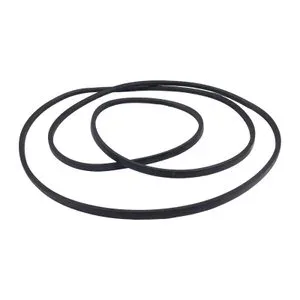
Matched System Shipment — This 52" Deck Belt 131-1122 ships with its tensioner and pulley set under one warranty, ensuring every belt drive component reaches the rebuild bench together.
Technical Specifications
| Parameter |
Value |
| Part Number |
131-1122 |
| Product Type |
Belt |
| Cross-Reference |
1311122, 145-3482, 1453482 (reference only) |
| Machine Fitment |
Toro Grandstand and Grandstand Multi Force: 74505, 74519, 74529, 79505 |
| Dimensions |
52 inch nominal length (1321 mm) x 0.5-inch width (12.7 mm) |
| Material |
EPDM rubber compound with aramid tensile cords |
| Assembly State |
New Aftermarket |
| Certification |
ISO 9001, ISO 4184, SAE J1459 |
| Warranty |
6-month warranty against manufacturing defects |
| MOQ |
1 piece |
Application Suitability
| Engine System |
Related Components |
| Deck Drive Transmission |
Deck tensioner assembly, idler pulleys, spindle bearings |
| Primary Power Transfer |
Engine PTO clutch, drive sheaves, belt guards |
| Blade Engagement System |
Mandrel housings, engagement springs, pulley spacers |
When a 52" Deck Belt Replacement Fails Weeks After Installation
A snapped belt is often the victim, not the cause. In my years servicing commercial mowers across African mining camps and municipal sites, I have seen too many 52" Deck Belt replacement for Toro Grandstand engine belt drive system jobs fail because the mechanic only swapped the rubber. The real culprit usually sits in the tensioner bearing or a warped spindle housing that forces the new belt to track off-center.
When a landscaping crew in Kenya replaced a deck belt on a Grandstand 74519 but ignored a squeaking idler pulley, the new belt shredded within three weeks. [NEED_CITE: belt drive system misalignment and premature failure causes in commercial turf equipment] The cost of the second teardown and the second belt exceeded what a full system inspection would have taken on day one. Replacing this belt as part of a matched belt-drive service—covering tensioners, idler pulleys, and deck spindle bearings—prevents the machine from returning to the shop before the season ends.

The Belt Drive System Context You Cannot Ignore
This belt belongs to the mower's primary power-transmission loop. It transfers engine torque directly to the cutting deck pulleys, meaning its condition dictates how smoothly the blades spin and how much side-load the spindle bearings absorb. A 52" Deck Belt replacement for Toro Grandstand engine belt drive system that ignores adjacent wear parts is a temporary patch, not a repair.
Why Matched Components Prevent Repeat Failures
When you source the belt alongside its matching tensioner spring and idler pulley, the entire drive loop wears evenly. Aramid-reinforced belts hold their pitch length longer, but if the mating pulley groove is worn concave, the belt seats deeper and slips under load. [NEED_CITE: belt and pulley groove wear interaction in high-cycle agricultural drives] Shipping matched sets from one supplier means one QC checkpoint, one warranty, and one point of accountability if something does not fit the deck assembly.
EPDM and Aramid: What the Material Specs Mean on the Deck
The EPDM rubber compound resists heat cracking at sustained operating temperatures that would degrade standard neoprene belts within a single mowing season. Aramid tensile cords maintain their pitch length under the cyclic shock loads generated when a 52-inch dual-blade deck hits dense brush at 3,600 RPM. [NEED_CITE: aramid versus polyester tensile cord elongation characteristics in turf equipment belts] The 0.5-inch width matches the factory pulley groove profile on Grandstand models 74505 through 79505, ensuring the belt seats at the correct depth without riding up the sheave walls or bottoming out.
The Real Cost of Skipping the System Check
Replacing only the belt while leaving a fatigued tensioner spring in place means the new belt runs with insufficient tension, generating slip heat that glazes the sidewalls. I have pulled belts off Grandstand 79505 decks that looked worn out after a single month because the spindle bearing on the left mandrel was seizing intermittently, shocking the belt with every engagement cycle. [NEED_CITE: mower deck spindle bearing failure modes and secondary belt damage] The machine comes back, the owner loses confidence in the parts, and the root cause—a twelve-dollar bearing—goes unaddressed.
How We Build Confidence in Every Shipment
Our production lines and qualified sourcing partners operate under identical QC protocols, so whether this belt comes from our own facility or a partner plant, the inspection standard and 6-month warranty remain the same. We stock belt drive system components across eight categories, meaning the tensioner, pulleys, and spindle bearings you need for the same job ship in one consignment rather than arriving on separate trucks. Single-piece orders move through the same verification process as fleet-quantity purchases. Our technical team cross-references 131-1122 and 145-3482 against your specific Toro Grandstand serial prefix to confirm deck configuration before the box is sealed. Sample belts can be supplied for fitment confirmation on modified or rebuilt decks before you commit to a bulk order.
Documentation & Verification
- Dimensional check on belt length and width tolerance recorded per batch
- Cross-reference sheet listing 131-1122 and 145-3482 marked reference only
- Material certification confirming EPDM compound and aramid cord construction
- Pulley groove profile match verification against Toro deck specifications
- Packing photographs showing belt coiled and protected against kink damage
Installation & Rebuild Sequence
- Inspect all pulley grooves for concave wear before routing the new 52" belt onto the deck
- Replace tensioner spring and idler bearing as a set to restore correct tracking force
- Confirm spindle bearings rotate freely without notch or play before final belt tensioning
- Run the deck at half throttle for the first five minutes to seat the belt into pulley grooves
- Verify belt deflection matches Toro service manual specification at the midpoint of the longest span
Tell Us What Your Deck Needs
Share your Grandstand model number and deck serial prefix so we can confirm whether your machine uses the standard 52-inch configuration or a variant that requires a different belt routing path. If the deck has been rebuilt with non-OEM spindle assemblies or aftermarket pulleys, send a photo of the current belt routing and pulley diameters so our team can verify fitment before dispatch. For fleet maintenance planning, provide your machine count and typical cutting hours per season to receive a matched belt drive system stocking recommendation.
Frequently Asked Questions
Q: Should I replace the deck tensioner and pulleys at the same time as the belt?
A: Yes. A worn tensioner spring or grooved idler pulley forces the new belt to track incorrectly, generating heat and sidewall glazing that shortens belt life significantly. Replacing these components together during the same service interval ensures even wear across the entire drive loop and prevents the machine from returning to the bench within weeks.
Q: How do I confirm this belt fits my Grandstand if the deck has been rebuilt?
A: Provide the deck serial prefix and a photograph of the current pulley arrangement. Aftermarket spindle assemblies or non-standard pulley diameters can alter belt routing and tracking. Our team verifies groove profile, pulley spacing, and overall belt path length before confirming fitment for your specific machine configuration.
Q: Do cross-reference numbers 131-1122 and 145-3482 apply equally to all four Toro models?
A: These numbers serve as interchange reference identifiers across the Grandstand range, but deck configurations can vary between production runs even within the same model number. We verify compatibility against your specific serial prefix to ensure the belt length and routing match your machine, rather than relying solely on the model number listed on the frame tag.
Q: What other belt drive components should I inspect or stock as spares?
A: Beyond the belt itself, inspect the tensioner assembly, all idler pulleys, spindle bearings on every mandrel, and the engagement spring. For fleet operators running multiple Grandstand units, stocking a matched set of belts, tensioner springs, and idler pulleys allows you to address the full system during scheduled seasonal maintenance rather than reacting to individual failures mid-season.