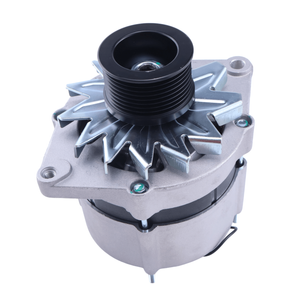
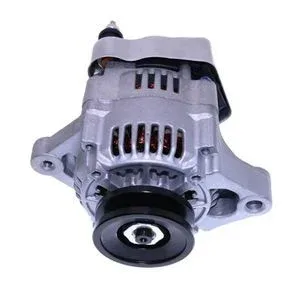
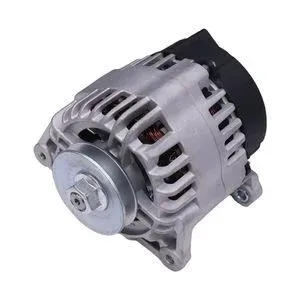
Matched Sets Shipped — alternator dispatched with verified belt and tensioner compatibility for CASE engine auxiliary systems.
Technical Specifications
| Parameter |
Value |
| Part Number |
A187873 |
| Product Type |
Alternator |
| Cross-Reference |
A186125, AQ187873, Q187873, 3604448, 3604448R, 3604448RX, 3604480RX, 3604480, 3911248, 3920679, 39206791, J920679, 1103174, 1105170, 132000090065, 4029/70017, 700710688, 8003/00355, 402970017, 800300355 (reference only) |
| Machine Fitment |
CASE 1150E, 1150H, 1550, 650G, 650K, 850K, 170C, 220B, 480F, 580K, 580SM, 590SM, 5120, 5230, MX110, 1845C, 95XT, 570MXT, 621, 821, 586G, 688G |
| Voltage |
12V |
| Continuous Output |
90A |
| Ripple Voltage |
<150mV peak-to-peak |
| Copper Winding Rating |
Continuous 120°C operation |
| Bearing Type |
Sealed ball bearings |
| Bearing Grease |
NLGI #2, ISO-L-XBCGB2, rated for 10,000+ hours at 4,500 RPM |
| Voltage Regulator IC |
ISO 7637-2 pulse immunity |
| Housing Material |
Die-cast aluminum |
| Surface Treatment |
Black oxide finish |
| Salt Spray Resistance |
Up to 96 hours |
Application Suitability
| Engine System |
Related Components |
| Charging System |
Drive belts, belt tensioners, wiring harness connectors |
| Cranking & Starting |
Starter motor, battery cables, ignition switches |
| Engine Management |
ECU power supply circuits, voltage sensors |
| Auxiliary Electrical |
Cab HVAC controls, GPS guidance modules, work lighting |
Diagnosing the Root Cause Before Replacing the 12V Alternator A187873
A failed charging circuit often masks underlying system faults rather than isolated component wear.
Replacing the 12V alternator A187873 engine replacement without tracing the failure back to its source frequently leads to repeat breakdowns within weeks. I've seen workshops swap alternators three times before discovering a corroded ground strap was starving the regulator of stable reference voltage [NEED_CITE: electrical ground path resistance diagnostic procedures]. The new unit inherits whatever systemic problem destroyed its predecessor, turning a straightforward repair into a cycle of warranty claims and machine downtime.
The Charging Circuit as an Integrated Engine System
The 12V alternator A187873 engine replacement sits at the center of a network that includes belt drive components, voltage regulation pathways, and battery storage capacity. When this unit fails on CASE backhoe loaders or tractors, the root cause often traces back to adjacent components: a slipping belt reduces rotational input, a seized tensioner creates excessive bearing load, or deteriorated wiring introduces voltage drops that force the regulator into continuous high-output mode [NEED_CITE: alternator failure mode analysis in heavy equipment]. System-level diagnosis before parts ordering prevents the wrong component from arriving on site.
Matching Dimensions to Engine Rebuild History
Engines that have undergone previous overhauls may carry non-standard clearances or modified mounting configurations that affect alternator alignment and belt tracking. The rotor shaft runout tolerance of ±0.01mm assumes factory-specification bracket geometry, but resurfaced mounting faces or aftermarket brackets can shift the pulley plane relative to the crankshaft drive. Verifying engine serial number variants and rebuild documentation ensures the replacement unit interfaces correctly with whatever configuration currently exists in the machine, rather than the configuration that left the factory years ago.
Electrical Specifications and Thermal Management
The 90A continuous output rating addresses the cumulative electrical load of modern CASE machines running GPS guidance systems, cab climate control, and extensive lighting arrays simultaneously. Copper windings rated for continuous 120°C operation handle the thermal stress of high-output duty cycles without insulation breakdown, while sealed ball bearings with high-temperature grease maintain rotational stability through thousands of heat cycles [NEED_CITE: bearing lubrication degradation rates at elevated temperatures]. The die-cast aluminum housing with black oxide finish dissipates heat while resisting corrosion from engine compartment contaminants, extending service life in dusty construction environments and humid port operations.

The Cost of Skipping System Verification
Ordering a replacement alternator without confirming belt condition, tensioner function, and wiring integrity often results in the new unit failing prematurely from the same unresolved system fault. I've watched machines return to the workshop within a month because the charging system diagnosis stopped at the obvious failed component rather than tracing through the entire circuit [NEED_CITE: repeat electrical failure patterns in mobile equipment]. The labor cost of multiple removal-and-replace cycles, combined with extended machine downtime, far exceeds the time investment in comprehensive system testing before parts procurement.
Why Source Through This Channel
Self-produced alternator lines and qualified sourced supply carry identical warranty terms and quality inspection protocols, so buyers receive consistent documentation regardless of production origin. Eight equipment categories under one account mean charging system components ship alongside related engine electrical parts, filters, and seals in a single consignment rather than arriving on staggered schedules from multiple suppliers. Minimum order of one piece supports emergency single-unit replacements, while Guangzhou warehouse stock on common items enables rapid dispatch when machines are already down. Technical verification covers engine model compatibility, serial number variants, and cross-reference accuracy including superseded part numbers, with sample supply available for fitment confirmation before bulk commitment.
Documentation & Verification
- Commercial invoice listing A187873 with cross-reference numbers marked for identification purposes
- Compatibility sheet confirming CASE machine model and engine serial range match
- Quality inspection record covering winding resistance, brush length, and full-load voltage output
- Warranty terms specifying coverage for manufacturing defects under real engine operating conditions
- Packing photographs showing protective packaging and component condition before dispatch
- HS code and customs documentation support for international shipping requirements
Installation & Rebuild Sequence
- Verify belt and tensioner condition before alternator installation to prevent immediate overload on new bearings
- Clean mounting bracket contact surfaces to ensure proper electrical grounding path
- Confirm pulley alignment with crankshaft drive to prevent belt tracking issues
- Torque mounting fasteners to specification and verify connector engagement
- Test charging voltage at battery terminals under load to confirm system function
Requesting Technical Verification
Provide the engine model, serial number, and any previous rebuild documentation to confirm the correct alternator variant for your specific machine configuration. If the existing unit's nameplate is worn or painted over, photographs of the mounting pattern, connector type, and pulley configuration enable cross-reference verification against CASE engine variants. For fleet operators managing multiple machines sharing the same charging system platform, supply the equipment list to identify commonality and optimize spare parts stocking decisions.
Frequently Asked Questions
Q: What other engine components should I check when replacing the alternator?
A: Inspect the drive belt for glazing or cracking, test the tensioner for proper spring pressure and smooth rotation, and verify wiring harness connector integrity including ground paths. These adjacent components directly affect alternator service life and should be addressed during the same repair event to prevent repeat charging system failures.
Q: Does the same A187873 reference fit different CASE engine serial variants?
A: The cross-reference covers multiple CASE machine families, but mounting bracket configurations, pulley sizes, and connector types can vary across engine serial ranges. Providing your specific engine model and serial number enables verification that the replacement unit matches your machine's exact configuration rather than a similar but incompatible variant.
Q: How do I confirm my engine model and charging system specifications?
A: Locate the engine serial number plate, typically on the valve cover or block, and cross-reference with CASE documentation. If the plate is missing or illegible, photographs of the existing alternator's mounting pattern, connector, and pulley allow technical verification against known configurations for your machine family.
Q: Is it worth replacing the belt and tensioner at the same time as the alternator?
A: Yes, because worn belts and weak tensioners create the exact conditions that accelerate alternator bearing wear and reduce charging output. Addressing these components together during the same repair event prevents the new alternator from inheriting the same adverse operating conditions that contributed to the previous unit's failure.
Q: What system-level fault diagnosis should I do before ordering a replacement alternator?
A: Test battery voltage with the engine running to confirm charging system failure, check for voltage drops across cables and connections, and inspect the belt drive system for slippage or misalignment. This verification prevents ordering an alternator when the actual fault lies elsewhere in the charging circuit, avoiding unnecessary parts replacement and machine downtime.