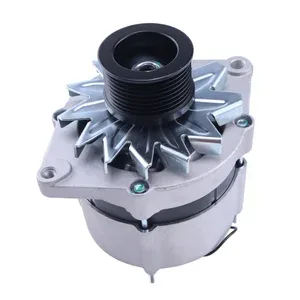
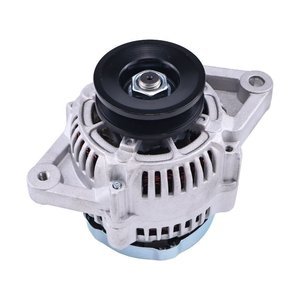
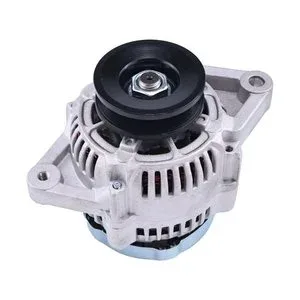
Matched Set Dispatch — alternator, regulator, and belt tension specs verified against the 4391 engine serial variant before packing.
Technical Specifications
| Parameter |
Value |
| Part Number |
A187873 |
| Product Type |
Alternator |
| System Voltage |
12V |
| Condition |
New Aftermarket |
| Cross-Reference (reference only) |
A186125, AQ187873, Q187873, 3604448, 3604448R, 3604448RX, 3604480RX, 3604480, 3911248, 3920679, 39206791, J920679, 1103174, 1105170, 132000090065, 4029/70017, 700710688, 8003/00355, 402970017, 800300355 |
| Machine Fitment |
CASE Backhoe Loader (480E, 480F, 580E, 580K, 580L, 580M, 590L, 590SM), CASE Dozer (650K, 750K, 850K, 1150E, 1150H), CASE Excavator (170C, 220B), CASE Skid Steer (1845C, 450C, 90XT), CASE Wheel Loader (621, 721, 821, 921), CASE Tractor (5120, 5130, 5140, MX100, MX110, MX120) |
| Quality Standard |
ISO 9001 |
| Warranty |
3-12 months against manufacturing defects |
Application Suitability
| Engine System |
Related Components |
| Primary Charging Circuit |
Voltage regulator, battery isolator, main power cable |
| Accessory Drive |
Serpentine or V-belt, tensioner pulley, idler bearing |
| Engine Overhaul Refresh |
Complete gasket set, crankshaft seal, front cover alignment |
| Electrical Diagnostics |
Wiring harness connectors, ground strap, dash voltmeter |
Why Alternator Replacements Fail Within Weeks of Installation
The component is blamed when the actual fault sits in the battery or belt drive.
A 12V Alternator A187873 engine replacement for CASE equipment often arrives after the machine has sat dead on a site for days. In my time auditing spare parts inventories for Middle East depots, I saw technicians swap the alternator three times on a single backhoe loader before finding a cracked ground strap. When a workshop does not load-test the battery or verify belt tension, the new alternator absorbs the full deficit current, overheating the rectifier diodes prematurely. This pattern of repeat failure is common when the charging system is treated as a single isolated component rather than a matched loop [NEED_CITE: SAE recommended practices for mobile equipment charging system diagnostics].

The Charging Loop as a Complete Engine Subsystem
Replacing a 12V Alternator A187873 engine replacement for CASE machines without checking the adjacent subsystem leads to immediate repeat failure. The alternator works within a triangle: the battery provides the initial field current, the drive belt transfers mechanical energy from the crankshaft, and the regulator manages output. If the battery has an internal short, the alternator runs at maximum output continuously, burning out the stator windings. Addressing the root cause means verifying the complete loop before fitting the new unit.
Verifying the Rectifier and Bearing Under Continuous Load
Construction equipment operates in environments where dust and vibration are constant. The sealed bearing system in this unit is selected to prevent contamination ingress that typically destroys open bearings in quarry or demolition applications. The rectifier diode assembly is rated for the continuous heavy electrical loads demanded by machine lighting, HVAC, and control systems running simultaneously. Verifying these internal specifications ensures the unit survives the actual duty cycle, not just the bench test [NEED_CITE: ingress protection ratings for mobile alternator applications].
Interpreting Voltage Output and Thermal Limits
A 12V system in a diesel engine application requires stable output across a wide RPM band, from idle to rated speed. The copper winding construction addresses heat buildup, the primary cause of insulation breakdown and stator failure. Maintaining stable voltage under load prevents undercharging, which causes battery sulfation, and overcharging, which damages sensitive electronic control modules. The thermal management of the housing and internal fan design directly determines whether the unit survives a full shift in high ambient temperatures.
The Hidden Cost of Ignoring the Wiring Harness
Installing a new unit onto degraded wiring creates a voltage drop that the regulator attempts to compensate for by increasing output. This continuous overwork shortens the service life of the replacement. In older CASE 580 and 590 series machines, the insulation on the main charge wire often becomes brittle from years of engine bay heat. Ignoring this harness condition guarantees that the new alternator will fail from thermal stress, resulting in a second unplanned downtime event and a disputed warranty claim [NEED_CITE: electrical resistance and voltage drop standards in heavy machinery wiring].
Why Source This Component Through XUNPO
We supply this 12V Alternator A187873 engine replacement for CASE applications with the same warranty terms whether it comes from our own production line or a qualified partner. You consolidate the alternator, belt, and tensioner under one account and one shipment, preventing split freight costs. Guangzhou warehouse stock allows fast dispatch on these high-demand items. Our technical team verifies the cross-reference number against your engine serial to confirm the mounting pattern and pulley offset before dispatch. Sample supply is available for fitment confirmation before you commit to a bulk order for your fleet.
Documentation & Verification
- Commercial invoice listing the specific CASE model and serial number.
- Part compatibility sheet confirming cross-reference numbers (reference only).
- Quality inspection record showing no-load, full-load, and ripple factor test results.
- Warranty terms defining the manufacturing defect coverage period.
- Packing photographs of the unit and accessory box before crate closure.
- HS code and customs documentation support for destination clearance.
Installation & Rebuild Sequence
- Disconnect battery negative first to prevent shorting the main terminal during 12V Alternator A187873 installation.
- Inspect the drive belt for glazing and cracks; replace if wear indicators are visible.
- Verify pulley alignment with the crankshaft pulley to prevent premature belt wear.
- Torque mounting bolts to the manufacturer specification to prevent casing distortion.
- Check system voltage at idle and rated RPM to confirm regulator function and battery acceptance.
Requesting a Fitment Confirmation
Provide the engine serial number and the specific CASE machine model, such as 580E or 590SM, to confirm the mounting bracket and connector type. If the nameplate is missing, a clear photograph of the old unit's pulley and rear terminal layout allows our team to verify the correct variant. Mention if the engine has undergone a previous rebuild, as this can affect accessory drive alignment.
Frequently Asked Questions
Q: What other engine components should I inspect when replacing the alternator?
A: You must inspect the drive belt for wear and tension, the battery for load capacity, and the main power cable for voltage drop. On older machines, check the wiring harness insulation for brittleness caused by engine heat. Fitting a new alternator without verifying these components often leads to repeat failure of the charging system within a short period.
Q: How do I confirm which cross-reference number matches my specific CASE engine?
A: Provide the engine serial number or the machine model, as the same base engine may use different mounting brackets or pulley offsets across model generations. We verify the cross-reference against the specific build record to ensure physical fitment and electrical compatibility, rather than relying on generic interchange tables.
Q: Can a weak battery cause the new alternator to fail prematurely?
A: Yes. A battery with an internal short or degraded plates forces the alternator to operate at maximum output continuously to compensate. This constant high-load state overheats the stator windings and rectifier diodes, leading to early failure. Always perform a battery load test before installing a new unit.
Q: Does the alternator fit all CASE 580 and 590 series variants?
A: While this part number covers a broad range of the 580 and 590 series, variations exist in the connector type and mounting ear configuration between early and late production models. Verification against the specific machine serial number is required to ensure the correct variant is supplied for your engine bay.
Q: What testing is performed before the alternator ships?
A: Each unit undergoes a three-point performance test covering no-load voltage output, full-load current capacity, and ripple factor. This validates that the rectifier and regulator function correctly under simulated operating conditions. The quality inspection record documenting these results ships with the unit.