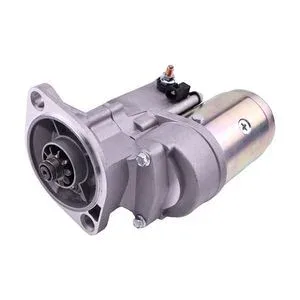
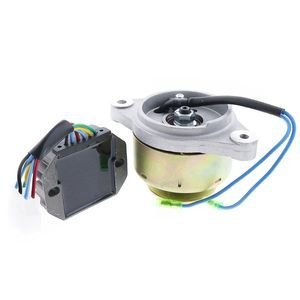
Engine Serial Variants Confirmed — 6670727 starter matched to Bobcat E-series engine build records before dispatch
Technical Specifications
| Parameter |
Value |
| Part Number |
6670727 |
| Product Type |
Starter Motor |
| Cross-Reference |
6670727, SND0408, NDAS228000-6921, 228000-6921, 410-52186, 18447 (reference only) |
| Machine Fitment |
Bobcat Excavator 325, 328, 329, 331, 334, 335, 337, 341, E25, E26, E32, E32i, E35, E35i, E42, E45, E50, E55; Bobcat Loader S100 |
| Voltage |
12 V |
| Power Output |
2.2 kW |
| Rotation |
CW |
| Pinion Teeth |
10 T |
| Condition |
New Aftermarket |
| Warranty |
3–12 months against manufacturing defects |
| Standards |
ISO 9001, SAE J1171, ISO 4014, SAE J2012 |
Application Suitability
| Engine System |
Related Components |
| Engine Auxiliary (Cranking & Start Sequence) |
Flywheel ring gear, battery cables and terminals, solenoid relay, alternator |
| Top-End Rebuild (Valve Train & Head) |
Head gasket set, valve stem seals, head bolts, intake/exhaust manifold gaskets |
| Bottom-End Overhaul (Block & Rotating Assembly) |
Main and rod bearing shells, piston ring set, thrust washer, rear main seal |
| Charging & Electrical System |
Alternator, voltage regulator, battery isolator switch, wiring harness connectors |
Why a New Starter Motor Fails Within Weeks of Installation
Root cause almost always lies in the surrounding engine auxiliary system, not the replacement unit itself.
In repair sheds across West African mine sites, I have pulled starter motors that were barely two weeks old off Bobcat E35 and E45 excavators. The unit on the bench tested fine — the armature spun, the solenoid clicked. The actual failure sat elsewhere: corroded battery lug connections dropping voltage below the solenoid pull-in threshold, or a flywheel ring gear with chipped teeth that battered the pinion into early disengagement [NEED_CITE: common root causes of premature starter motor failure in diesel auxiliary systems]. Replacing the starter without tracing the electrical path and mechanical engagement interface simply transfers the same destructive load to the next unit.
A Starter Motor engine rebuild replacement for Bobcat Excavator applications must be evaluated as one node in a cranking circuit that includes the battery state of charge, cable resistance, solenoid coil health, and ring gear tooth condition. Skip any of those checks and the new 2.2 kW motor inherits the same fault that killed its predecessor.

The Starter's Position Inside the Engine Auxiliary System
The starter motor sits at the intersection of the electrical and mechanical halves of the engine auxiliary system. During cranking, the 10-tooth pinion gear must mesh cleanly with the flywheel ring gear while drawing high current from a 12 V battery circuit. If the engine has been opened for a top-end or full overhaul, this is the logical point to verify ring gear tooth profile, mounting flange alignment, and solenoid throw distance before the engine goes back into service. A Starter Motor engine rebuild replacement for Bobcat Excavator platforms belongs in the same work sequence as the rear main seal and flywheel inspection — pulling it later means disturbing the bell housing again.
Matching Cranking Torque to Engine Displacement and Compression
Bobcat compact excavators in the E25 to E55 range span several engine displacements and compression ratios. A 2.2 kW output at 12 V means this unit delivers the cranking torque required for the mid-range Kubota-family diesels common in the E35, E42, and E45. Engines that have been rebuilt with oversize pistons or higher-compression head gaskets demand more from the starter during cold starts [NEED_CITE: diesel engine cranking torque requirements relative to compression ratio and displacement]. Matching the starter's torque curve to the actual engine build prevents the slow-crank condition that operators often misdiagnose as a weak battery. When an engine rebuild shop quotes a full overhaul, confirming whether the block has been bored or the head resurfaced changes the compression the starter must overcome.
Reading the Specifications That Matter in the Field
The 10-tooth pinion gear must match the flywheel ring gear tooth count and module exactly — a mismatch as small as one tooth in engagement depth causes the pinion to ride the tooth tips rather than seat fully, producing the grinding noise that precedes ring gear destruction. The CW rotation specification aligns with the flywheel direction on these Bobcat diesel platforms; a reversed-rotation starter would spin the engine backward, causing no-start and potential valve timing damage. SAE J1171 compliance covers ignition protection, relevant when the starter operates near fuel lines and vapor in enclosed engine compartments. The 2.2 kW rating at 12 V draws substantial current, so battery cable cross-section and terminal condition must support that load without voltage drop exceeding the solenoid's minimum engagement threshold [NEED_CITE: SAE J1171 ignition protection and marine electrical standards for starter motors].
The Cost of Skipping System-Level Diagnostics
Replacing a failed starter without inspecting the charging circuit and ring gear creates a pattern of repeat failures that no warranty will cover. The new unit absorbs the same voltage sag, the same mechanical shock from damaged ring gear teeth, and fails in the same timeframe. For a machine already down on a job site, that second teardown doubles the labor cost and extends the equipment outage by days. In fleet operations running multiple Bobcat E-series machines, undiagnosed charging system faults can cascade — an alternator that is not replenishing the battery between start cycles starves every subsequent crank event, wearing out starters across the fleet rather than on a single unit [NEED_CITE: fleet electrical system diagnostic protocols for compact diesel equipment]. The hidden cost is never the part itself; it is the repeated downtime and the labor of removing and reinstalling the same component.
Why Source This Starter Motor Through XUNPO
Own-production and qualified sourced lines carry the same QC protocol and warranty terms, so a 6670727 starter ships with documented no-load current draw and engagement timing regardless of which facility built it. Eight product categories under one account mean the starter can dispatch alongside the flywheel inspection tools, battery terminal kits, and overhaul gasket sets in a single consignment. Minimum order of one piece supports the workshop replacing a single failed unit on an E35 without padding the order. Guangzhou warehouse stock on common Bobcat auxiliary components enables fast dispatch before the machine downtime window widens. Part identification from engine serial number prefix, machine model, or a photograph of the worn nameplate resolves the variant question before the unit ships. Cross-reference verification covers the full interchange chain — SND0408, 228000-6921, 410-52186, 18447 — including superseded numbers that older parts catalogs still list.
Documentation & Verification
- Commercial invoice listing part number 6670727 with cross-reference numbers marked reference only
- Compatibility sheet confirming fitment against provided Bobcat engine serial number prefix
- Quality inspection record showing no-load amperage, cranking torque, and solenoid engagement timing
- Warranty certificate covering manufacturing defects for the stated 3–12 month term
- Packing photographs documenting the unit condition and protective wrapping before crate closure
- HS code and customs classification support for starter motor imports into destination country
Installation & Rebuild Sequence
- Inspect flywheel ring gear teeth for chipping or wear before mating the new 10T pinion during reassembly
- Verify starter mounting flange bolt torque and alignment to prevent pinion-to-ring-gear offset under load
- Clean battery cable terminals and measure voltage drop across the cranking circuit before first energization
- Confirm alternator output meets recharge specification so the 12 V system sustains repeated start cycles
- Perform initial no-load bench spin to validate CW rotation and solenoid throw before engine installation
Before You Request a Quote
Provide the Bobcat machine model, engine serial number prefix, and any records of prior rebuilds or overhauls so the correct starter variant is confirmed against the engine build. If the nameplate is illegible, a photograph of the old unit's mounting flange and pinion gear allows cross-reference verification. Mention whether the engine is currently open for service — this determines whether a ring gear inspection should be included in the work scope.
Frequently Asked Questions
Q: What other engine auxiliary components should be inspected when changing the starter motor?
A: Inspect the flywheel ring gear for tooth damage, test battery cable resistance and terminal condition, verify alternator output voltage, and check the solenoid relay. On Bobcat E-series machines, the starter draws significant cranking current, and any weakness in these adjacent components will stress the new unit identically to how it destroyed the previous one.
Q: How do I confirm the correct starter variant for my specific Bobcat engine serial number?
A: Provide the full engine serial number or the serial prefix from the engine nameplate. Bobcat E-series excavators span multiple engine generations, and the starter variant can differ by engine build date even within the same machine model range. We cross-reference 6670727 against superseded and alternate numbers to confirm fitment.
Q: My previous starter failed quickly — how do I identify the root cause before installing the replacement?
A: Measure voltage drop across the battery cables during cranking, inspect the flywheel ring gear teeth through the inspection port, and test alternator recharge rate. Premature failure on Bobcat compact excavators most often traces to corroded terminals or ring gear damage rather than the motor itself.
Q: Does the engine overhaul gasket kit include any starter-related hardware?
A: Standard overhaul gasket kits typically do not include starter mounting hardware or pinion-related seals. When the engine is open for rebuild, verify the starter mounting flange bolts and any sealing washer separately. We can confirm which items your specific engine build requires and add them to the same shipment.
Q: How do I verify the flywheel ring gear is compatible with this starter's 10-tooth pinion?
A: Confirm the ring gear tooth count, module, and pressure angle from the engine service manual or by direct measurement when the flywheel is exposed. A mismatch produces tip-riding and grinding during engagement. On Bobcat E25 through E55 platforms, ring gear specifications vary by engine generation and rebuild history.