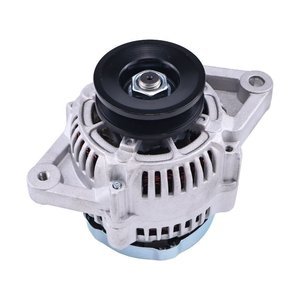
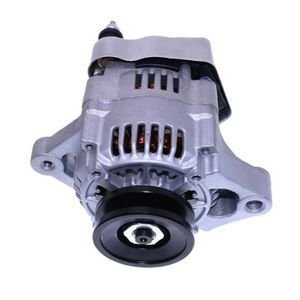
Matched Charging System Set — Alternator and regulator verified against Kubota B-Series engine serial variants before dispatch.
Technical Specifications
| Parameter |
Value |
| Part Number |
15531-64017 |
| Product Type |
Alternator |
| Cross-Reference |
15531-64017, 1553164017, 15531-54013, 1553154013, 15531-64016, 1553164016, 6C040-59252, 6C04059252 (reference only) |
| Regulator Cross-Reference |
15531-64603, 15531-64601, RS5101, RS5155 (reference only) |
| Machine Fitment |
Kubota B1550D, B1550E, B1700DT, B1700E, B1700HSD, B20, B2100HSD, B2400HST-DB, B2630HSD, B2910HSD, B3030HSD, B5200DT, B6200HSD, B7300HSD, B7500DT, B7800HSD-F, B8200HSE, B9200HSD, BX1800D, BX2200D, BX23LB, F2100E, G2000, G4200H, GF1800E-R, KH41, RTV500, ZD21, ZD28 |
| Voltage |
12V |
| Current |
14A |
| Output Stability |
13.8–14.4V under variable loads |
| Regulation Accuracy |
±0.2V |
| Ripple Voltage |
<5% |
| Winding Material |
High-purity copper |
| Housing Material |
Precision-machined aluminum |
| Continuous Output Temperature Rating |
85°C ambient |
| Thermal Rise |
≤35K |
| Diode Standard |
JIS D5602 |
| Brush Assembly Life Rating |
1,200+ hours |
| Shaft Runout |
≤0.03mm |
| Corrosion Protection |
Electrocoated, verified per ISO 9227 salt-spray test for 96 hours |
| Condition |
New Aftermarket |
| Warranty |
3–12 months against manufacturing defects |
Application Suitability
| Engine System |
Related Components |
| Charging circuit |
Rectifier regulator (matched pair), battery cables, belt drive tensioner |
| Engine auxiliary |
Drive belt, pulley alignment hardware, mounting bracket fasteners |
| Electrical diagnostics |
Wiring harness connectors, fuse panel, ignition switch contacts |
| Overhaul refresh |
Complete gasket set, seal kit, thermostat, water pump when engine is open |
Why the Charging Circuit Fails Again After a New Alternator Goes In
The alternator alone rarely causes the fault — the regulator, wiring, or belt drive often sits at the root.
Rebuild shops across Shandong see the same pattern: a 12V 14A alternator for Kubota engine rebuild gets installed, the battery light goes out, and three weeks later the tractor is back on the bench. The charging circuit operates as a closed system, and swapping one component without tracing the failure origin leads to repeat teardowns. [NEED_CITE: electrical charging system diagnostic procedures for small diesel engines]
I have seen rectifier regulators that passed a bench test at room temperature but lost regulation accuracy once engine bay heat climbed past 70°C. The alternator was blamed, pulled, and replaced — only for the same regulator fault to resurface. Matching the alternator with its verified regulator pair eliminates this diagnostic loop.

System-Level Matching Eliminates the Usual Suspects
This 12V 14A alternator ships paired with its integrated rectifier regulator as a matched charging system set. The pair is verified for output compatibility — regulation accuracy within ±0.2V and ripple voltage held below five percent work together because both components are bench-tested as a circuit. Repair centres quoting a Kubota B-Series charging system replacement receive both units under one part number and one warranty.
Engine Serial Variants Change the Mounting Pattern
Kubota B-Series engines span production runs where bracket configurations, pulley diameters, and connector positions shifted between batches. A regulator cross-reference such as RS5101 or 15531-64603 may apply to an earlier build, while RS5155 or 15531-64601 fits a later revision. Confirming the engine serial number before dispatch ensures the correct alternator variant reaches the bench. [NEED_CITE: Kubota B-Series engine serial number identification guide]
Reading the Specifications That Matter on the Bench
Voltage and current ratings tell only part of the story. The shaft runout tolerance of ≤0.03mm directly affects brush wear — excessive runout accelerates uneven brush contact and introduces ripple into the output waveform. High-purity copper windings sustain rated output at the 85°C ambient temperature rating typical of enclosed engine compartments, while the aluminum housing dissipates thermal load to keep thermal rise within 35K. The JIS D5602 diode specification governs reverse-current blocking, which is the component-level cause of overnight battery drain when diodes leak current back through the stator.
The Hidden Cost of Treating the Alternator as a Standalone Swap
Installing a replacement alternator without verifying the regulator match or inspecting the belt drive tension creates a predictable cycle. The new unit absorbs the electrical load the failing regulator can no longer manage, overheats prematurely, and the machine returns to the shop. Rebuild shops absorb the warranty cost, the customer absorbs the downtime, and the root cause — often a corroded connector or a glazed belt — remains unresolved. [NEED_CITE: charging system failure root cause analysis in agricultural equipment]
Why Engine Rebuild Shops Source This Pair Here
Selected part lines are produced in our own Guangzhou facility while the remainder is sourced from ISO-certified manufacturing partners, and both carry identical QC standards and warranty terms. Eight product categories mean the alternator-regulator set ships alongside overhaul gaskets, seal kits, and belt drive components in one consignment. Minimum order is one piece — a single emergency unit dispatches without MOQ barriers. Cross-reference verification covers superseded regulator numbers, and the technical team confirms fitment against engine serial numbers before release. Sample units are available for bench verification before bulk commitment.
Documentation & Verification
- Commercial invoice listing matched alternator and regulator as a single charging system set
- Cross-reference sheet mapping superseded regulator numbers (reference only)
- Bench test record showing ripple voltage and regulation accuracy for each unit
- Warranty terms covering both alternator and regulator as a matched pair
- Packing photographs documenting foam protection and carton condition before sealing
- HS code and customs documentation support for international engine parts shipments
Installation & Rebuild Sequence
- Inspect mounting bracket and pulley alignment before bolting the alternator to the block
- Verify regulator connector pin count and orientation against the engine harness
- Set belt tension to specification — overtightening loads the alternator bearing prematurely
- Confirm output voltage between 13.8V and 14.4V at idle and under accessory load
- Run the engine at operating temperature to validate thermal regulation stability
Request a Fitment-Verified Quote
Provide the Kubota engine model and serial number along with any previous rebuild history. If the original regulator part number is known, include it for cross-reference confirmation. Photographs of the existing alternator mounting pattern and connector help resolve variant differences across B-Series production batches.
Frequently Asked Questions
Q: Should I replace the regulator along with the alternator, or can I reuse the existing one?
A: Reusing a regulator with unknown service history introduces a variable that complicates diagnostics. The matched pair ships bench-tested together, so regulation accuracy and ripple control are verified as a circuit. If the existing regulator has been in service through a previous alternator failure, replacing both eliminates it as a future fault source.
Q: How do I confirm which alternator variant fits my specific Kubota engine serial number?
A: Kubota B-Series engines shifted bracket and connector configurations across production runs. Providing the engine serial number allows our technical team to cross-reference the correct mounting pattern and regulator variant. Photographs of the old unit's connector and mounting ears accelerate confirmation.
Q: What other engine auxiliary components should I inspect when the charging system fails?
A: Check belt condition and tensioner function — a glazed or slipping belt reduces alternator output and mimics internal failure. Inspect battery cable terminals for corrosion, and verify wiring harness continuity between the alternator output terminal and the fuse panel. These checks take minutes and prevent repeat visits.
Q: Why does my battery still drain overnight after alternator replacement?
A: Overnight drain typically traces to reverse current leaking through a faulty diode in the regulator or rectifier assembly. The matched set supplied here meets JIS D5602 diode standards for reverse-current blocking. If drain persists, inspect the wiring harness for parasitic draws unrelated to the charging circuit.
Q: Can I get a sample unit to verify fitment and output before ordering for the shop?
A: Sample supply is available for fitment confirmation before bulk commitment. The sample ships with the same bench test documentation as production units, allowing your bench to verify mounting pattern, connector type, and output regulation against the specific engine serial range your shop services.