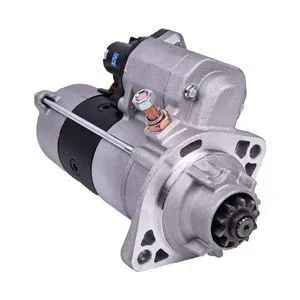
Engine serial variants confirmed — Each 4996706 starter motor is verified against Cummins B4.5, 6B5.9, and QSB6.7 CM designations to prevent variant mismatch during overhaul.
Technical Specifications
| Parameter |
Value |
| Part Number |
4996706 |
| Product Type |
Starter Motor |
| Cross-Reference |
4280007090, 4280007091, 4280007092, 4380003110, 5128000980 (for identification purposes) |
| Machine Fitment |
Cummins 4B3.9, 6B5.9, 6C8.3, B3.3, B4.5, B4.5 CM2350 B146C, B4.5 CM2350 B160M, B6.7 CM2350 B136C, F3.8 CM2350 F128C, G5.9, ISB/ISD6.7 CM2150 SN, ISB4.5 CM2150, ISB6.7 CM2250, QSB4.5 30 CM550, QSB4.5 CM2250 EC, QSB4.5 CM2350 B106, QSB4.5 CM850, QSB5.9 30 CM550, QSB5.9 CM850, QSB6.7 CM2250, QSB6.7 CM2250 EC, QSB6.7 CM2350 B105, QSB6.7 CM850 |
| Voltage |
12V |
| Drive Gear Teeth |
10T |
| Warranty |
3–12 months against manufacturing defects |
| Quality Standard |
ISO-certified manufacturing partners |
Application Suitability
| Engine System |
Related Components |
| Starting circuit |
Battery cables, solenoid relay, ignition switch, flywheel ring gear |
| Engine electrical auxiliary |
Alternator, voltage regulator, wiring harness connectors |
| Cranking and combustion initiation |
Glow plugs, fuel solenoid, stop solenoid |
| Overhaul reassembly |
Engine gasket set, crankshaft seals, bearing shells matched to journal grade |
Why the Wrong Starter Motor Still Cranks — and Still Fails
A starter motor engine rebuild replacement that spins but won't engage, or engages but won't spin, often traces back to a variant mismatch tied to engine serial number rather than a defective unit.
In mining and heavy construction environments, I have seen rebuilt engines sit idle for days because the starter engaged the flywheel ring gear with incorrect tooth alignment. The root cause was not the starter itself. It was an unchecked CM designation on the engine dataplate — a CM850 versus a CM2250 — that dictated a different pinion geometry. Cummins B-series and QSB-series engines share base architectures but diverge at the electrical auxiliary level across production runs [NEED_CITE: Cummins B-series engine serial variant identification practices]. When a starter motor engine rebuild replacement is ordered by base engine family alone, without confirming the CM build code, the result is a unit that benches fine but fails under load on the machine.

The Starting Circuit as a System, Not a Single Part
The starter motor sits at the junction of the battery, solenoid, flywheel ring gear, and cranking wiring harness. Replacing it during an engine overhaul without checking adjacent components invites repeat failure. A weak solenoid can starve the starter motor engine rebuild replacement of the engagement force needed to mesh the 10T drive gear fully into the ring gear, producing partial engagement and tooth shearing. Battery cable resistance, often overlooked when cables are reused from the previous build, drops cranking voltage below the threshold the starter needs to achieve rated torque. In engine rebuild shops, bench-testing the starter before reinstallation isolates the motor from circuit faults and confirms it meets cranking specifications independent of the machine wiring.
Engine Serial Variants and CM Designation Differences
Cummins assigns CM codes — CM850, CM2250, CM2350, CM550, CM2150 — to identify specific calibration and hardware configurations within the same engine family. A QSB6.7 CM2250 may require a different pinion throw or solenoid throw length than a QSB6.7 CM850, even though both share the 4996706 cross-reference number (interchange reference). During overhaul sequencing, the engine serial number and CM plate must be read before the starter is ordered. Previous rebuilds compound the problem: a shop that replaced the flywheel ring gear with an aftermarket unit may have altered tooth count or pitch, making the original 10T engagement pattern incorrect [NEED_CITE: flywheel ring gear tooth profile compatibility in rebuilt diesel engines]. Confirming the ring gear condition and tooth count is as critical as confirming the starter part number itself.
Voltage, Tooth Count, and Cranking Load Explained
The 12V rating defines the electrical system this starter motor engine rebuild replacement is designed for; connecting it to a 24V system — common in larger equipment where two batteries are series-wired — will destroy the windings within seconds of engagement. The 10T drive gear specification determines physical engagement with the flywheel ring gear: a mismatch of even one tooth in count means the pinion cannot seat, and forced cranking strips the gear teeth. Cranking amperage draw, governed by engine compression ratio and ambient temperature, determines whether the starter can overcome initial resistance on a freshly rebuilt engine with new piston rings and tighter bearing clearances. Higher-compression variants within the B5.9 and QSB6.7 families demand that the starter deliver peak torque at lower RPM, making pre-installation load testing a practical safeguard.
The Hidden Cost of Swapping the Starter Without Finding the Fault
Replacing a failed starter without diagnosing the underlying circuit fault is the most common reason for repeat starter failure within the first month after an engine rebuild.
A starter that burned out due to a sticking solenoid will burn out again if the solenoid is not replaced. A starter that failed from voltage drop across corroded battery terminals will fail again if the terminals are cleaned but the cable crimps are not inspected. In my experience working with equipment across mining sites, I have seen the same machine return to the workshop with a second starter failure because the root cause — a failing isolation switch upstream in the cranking circuit — was never traced [NEED_CITE: electrical fault diagnosis sequence for diesel engine starting circuits]. The cost is not only the second starter. It is the second teardown, the second round of downtime, and the erosion of confidence in the parts supply chain. A starter motor engine rebuild replacement solves the symptom; system-level diagnosis solves the failure.
Why Source This Starter Through a System-Level Supplier
This starter motor is supplied under the same quality and warranty framework whether it ships alone or as part of a full engine overhaul kit. Selected product lines are produced in-house, with the remainder sourced from ISO-certified manufacturing partners, so warranty terms remain consistent across all items on your rebuild list. You can order a single unit for fitment confirmation before committing to fleet-level quantities, and technical support is available to verify CM designation compatibility against your engine serial number. Cross-reference verification covers superseded and alternate numbers, catching mismatches that copied reference tables miss. For engine rebuild shops managing multiple Cummins-powered machines, eight component categories ship under one account with consolidated documentation.
Documentation & Verification
- Commercial invoice listing each starter by part number, CM designation, and engine serial cross-reference
- Compatibility sheet confirming 10T engagement and 12V rating for your specific Cummins engine variant (reference only)
- Pre-shipment cranking performance test record showing no-load and loaded amperage draw
- Warranty certificate covering manufacturing defects for 3–12 months from dispatch
- Packing photographs showing individual unit protection and terminal cap coverage
- HS code provided for customs clearance support across importing jurisdictions
Installation & Rebuild Sequence
- Bench-test the starter motor before installation to confirm engagement stroke and free-spin current draw within specification
- Inspect flywheel ring gear teeth for wear, chipping, or previous partial-engagement damage before mating the 10T drive gear
- Clean battery cable terminals and crimps, then measure voltage drop across the full cranking circuit under load
- Torque mounting bolts to the engine block flange specification to prevent misalignment-induced gear wear
- After engine reassembly, verify cranking RPM and start-up time before returning the machine to service
- Log starter installation date and engine hour meter reading for future overhaul interval tracking
Share Your Engine Details for a System-Matched Quote
Provide your Cummins engine model, serial number, and CM designation so we can confirm the exact starter variant and cross-reference it against your build configuration. If the engine has been rebuilt previously, share the overhaul history and any flywheel ring gear replacements so we can verify 10T engagement compatibility. For fleet-level or distributor orders, include the full engine list to consolidate matched electrical auxiliary components into a single shipment.
Frequently Asked Questions
Q: How do I confirm which starter variant fits my Cummins engine serial number?
A: Share the engine dataplate photograph or serial number along with the CM designation code. We cross-reference against variant-specific fitment records to confirm pinion throw, solenoid type, and 10T drive gear compatibility. This verification catches mismatches that base-model-only lookups miss, especially across QSB and ISB production runs.
Q: What other starting circuit components should I inspect or replace during an engine rebuild?
A: Inspect battery cable crimps, the solenoid relay, the ignition or start switch, and the flywheel ring gear tooth condition. Reusing any degraded component alongside a new starter motor engine rebuild replacement invites repeat failure. We supply matched solenoids and ring gears alongside the starter when you provide the engine serial number.
Q: My engine has been rebuilt before — does that change which starter I need?
A: Yes, if the previous rebuild replaced the flywheel ring gear with a different tooth count or pitch variant, or if the engine block was machined in a way that altered starter mounting geometry. Share the overhaul record and we will verify whether the standard 10T engagement remains correct for your current build configuration.
Q: What is the difference between CM850 and CM2250 designations for starter fitment?
A: CM codes identify specific hardware and calibration packages within the same Cummins engine family. CM850 and CM2250 variants may differ in solenoid throw length, pinion engagement depth, or mounting flange configuration. Providing your CM code ensures the starter motor engine rebuild replacement matches your exact build, preventing engagement failures after reassembly.
Q: Can I get a sample to verify engagement and cranking performance before committing to bulk?
A: Yes. Single-piece sample orders are available for fitment and bench-test confirmation. This is especially practical for distributors and rebuild shops managing multiple Cummins variants, allowing physical verification of 10T engagement and cranking torque before larger quantities are released from stock.