Block & Internal Parts
Connecting Rod 4956017 for Cummins B3.3 QSB3.3 – Engine Grade Overhaul Component
<ul> <li>Dimensional inspection record and hardness certificate ship with each order.</li> </ul>
View Details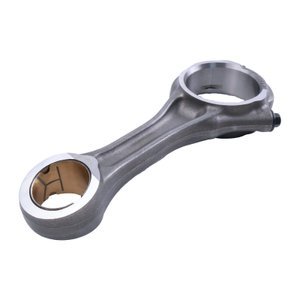
<p>Matched weight-balance rod sets ship with dimensional inspection records confirming bore concentricity and grade alignment.</p>
MOQ
1 Piece
Lead Time
2-5 Business Days
Shipping
120+ Countries
Warranty
3-12 Months
Compatible Brands
Matched Weight-Balance Sets — Every connecting rod 4943977 is grouped by weight grade so multi-cylinder QSB6.7 rebuilds stay balanced from the first start-up.
| Parameter | Value |
|---|---|
| Part Number | 4943977 |
| Product Type | Connecting Rod |
| Cross-Reference | 4943977 (reference only) |
| Machine Fitment | Cummins QSB6.7 |
| Material | 4340 Alloy Steel |
| Surface Treatment | Shot-peened Finish |
| Bore Tolerance | ±0.005 mm |
| Weight Balance | ±2 g |
| Condition | New Aftermarket |
| Warranty | 6 Months Against Manufacturing Defects |
| MOQ | 1 Piece |
| Standards | ISO 9001, SAE J429 Grade 8.8 |
| Engine System | Related Components |
|---|---|
| Bottom-End Rotating Assembly | Main Bearings, Rod Bearings, Crankshaft |
| Cylinder & Piston Group | Piston, Liner, Piston Pin Bushing |
| Lubrication System | Oil Pump, Oil Cooler, Filter Head |
| Short-Block / Long-Block Overhaul | Gasket Set, Seal Kit, Fastener Kit |
A connecting rod is only as reliable as the bearing shell sitting between it and the crankshaft journal.
In our experience sourcing bottom-end components for QSB6.7 rebuilds across the Yangtze River Delta fleet workshops, the most costly rework happens when rod bearings are ordered in standard size while the crankshaft has already been reground to an undersize dimension. The engine runs for a few hours, oil pressure drops, and the entire assembly comes back out [NEED_CITE: crankshaft journal regrind identification procedures for mid-range diesel engines]. This connecting rod 4943977 must be paired with bearing shells whose grade matches the actual journal diameter — not the factory-original specification on the engine data plate. Previous rebuilds may have altered that baseline, and assuming STD size without measuring is a common root cause of premature rod bearing failure.
The connecting rod 4943977 transfers combustion force from the piston to the crankshaft, operating under cyclic tensile and compressive loads every revolution. Within the QSB6.7 bottom end, it interfaces directly with the piston pin through the small-end bushing and with the crankshaft journal through the split big-end bore and cap. Any dimensional drift in either bore affects oil film thickness and load distribution across the bearing shells.
When a QSB6.7 has been overhauled before, the piston pin bore may already be at an oversize grade. Ordering this connecting rod without confirming the small-end bushing inner diameter against the actual piston pin diameter leads to either excessive clearance or interference fit [NEED_CITE: piston pin to bushing clearance specifications for turbocharged diesel engines]. We verify small-end bore specifications against the piston selection so that the replacement rod matches the existing rebuild state rather than the original factory build.
The 4340 alloy steel construction provides high tensile strength and fatigue resistance, which matters most in turbocharged applications like the QSB6.7 where peak cylinder pressures are elevated. Shot-peening introduces compressive residual stress on the rod surface, delaying crack initiation at stress concentration points near the big-end transition radius. The ±0.005 mm bore tolerance ensures consistent bearing crush and oil wedge formation, while the ±2 g weight balance across a matched set prevents harmonic vibration from transferring into the main bearing caps.
Installing a connecting rod whose big-end bore tolerance does not align with the bearing shell grade results in either insufficient crush — allowing the shell to spin and block oil holes — or excessive crush that distorts the bore and starves the journal of lubrication. Both outcomes cause bearing material transfer onto the crankshaft within the first hundred operating hours. The engine must then be removed, the crankshaft inspected or reground again, and the entire bottom-end kit replaced a second time [NEED_CITE: connecting rod bearing failure modes related to bore concentricity and crush height].
We produce selected part lines in our own facility and source the remainder from qualified ISO-certified manufacturing partners, so both self-produced and sourced supply carry the same QC and warranty terms. For a QSB6.7 overhaul, this means the connecting rod 4943977, matched bearing sets, piston kits, and gasket sets all ship under one account with consistent dimensional records. Our technical team confirms compatibility and grade before dispatch, and sample supply is available for fitment confirmation before bulk commitment. Minimum order is one piece for emergency single-cylinder repairs.
Provide your QSB6.7 engine serial number and build code so we can confirm whether your crankshaft journals are at standard or reground dimensions. If the engine has been rebuilt previously, share the oversize or undersize grades currently installed. We will return a system-level parts list covering rods, bearings, pistons, and gaskets matched to your engine's actual rebuild state.
Q: What else should be replaced alongside the connecting rod during a QSB6.7 bottom-end overhaul? A: A complete bottom-end job typically includes rod bearings, main bearings, piston rings, piston pin bushings, rod bolts, and the full lower gasket set. Reusing any of these after a rod failure risks early repeat failure since each component has already been subjected to the same contamination or overload event that damaged the original rod.
Q: How do I determine whether my crankshaft needs STD or undersize bearings? A: Measure each crankshaft journal with a micrometer and compare readings against the factory specification range. If journals have been reground during a previous overhaul, they will be below the standard dimension and require undersize bearing shells. Never assume STD grade based on the engine data plate alone.
Q: Do different QSB6.7 serial ranges require different connecting rod dimensions? A: Yes. Production changes across QSB6.7 serial ranges can affect big-end bore diameter, rod bolt thread specification, and small-end bushing length. Providing your full engine serial number allows us to verify dimensional compatibility before dispatch rather than relying on general model-level assumptions.
Q: What system faults commonly cause connecting rod failure beyond normal wear? A: Oil starvation from pump failure or blocked galleries, chronic overloading beyond rated torque, coolant intrusion into cylinders causing hydraulic lock, and sustained overheating that degrades oil film strength all place abnormal loads on the rod assembly and accelerate fatigue beyond normal service life.
Q: Can connecting rods be supplied in weight-matched sets for multi-cylinder balance? A: Yes. We group rods by measured weight into matched sets so that all cylinders in your QSB6.7 carry balanced reciprocating mass. This reduces harmonic vibration transmitted to the main bearings and improves long-term crankshaft and bearing shell life across the entire engine.
<ul> <li>Dimensional inspection record and hardness certificate ship with each order.</li> </ul>
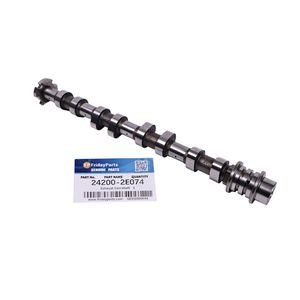
View Details<p>Stop losing uptime to camshaft-related misfires, rough idling, or failed emissions tests — this <strong>exhaust camshaft</strong> delivers OEM-matched timing accuracy and lift profile right out of the box, restoring smooth power delivery and valve train harmony in your 2.0L Gamma engine.</p> <ul> <li>Direct-fit replacement for Hyundai Elantra (2016–2020), Kona (2018–2021), Veloster (2019–2021), and Kia Forte/Seltos/Soul (2019–2024) — no machining or adjustments needed</li> <li>Features hardened nitrided lobes and precision-ground journals — a critical spec that prevents premature wear on Gamma-series hydraulic lash adjusters</li> <li>Built to match original base circle diameter and lobe separation angle — ensures correct phasing with the intake cam and avoids ECU correction errors</li> <li>Ships from our Guangzhou warehouse with full traceability and 6-month warranty — no guesswork, no delays, no counterfeit risk</li> </ul>
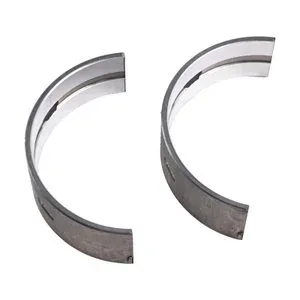
View Details<p><strong>Main Bearing 04132003 for Deutz TD 2.9 4L / D2.9 4L, Tri-Metal (Pb-Sn-Cu) Overlay, DIN 7185 Clearance</strong> — replacement for Deutz engine rebuilds requiring matched crankshaft journal tolerances.</p> <ul> <li>C45 forged steel substrate with 0.3 mm tri-metal overlay compatible with low-ZDDP oils in Tier 4 Final applications</li> <li>Radial clearance 0.042–0.058 mm and surface finish Ra ≤ 0.4 μm to maintain oil film stability under sustained loads</li> <li>Fits Deutz TD 2.9 4L and D2.9 4L power units — verify oversize grade (STD / 0.25 / 0.50) against actual crankshaft measurements after any prior regrind</li> </ul> <p>Oversize grade confirmed against your crankshaft's rebuild history before shipment.</p>
View Details<p><strong>Push Rod 733817M1 for Massey Ferguson valve train rebuild</strong> — high-strength steel replacement for Perkins-family diesel engines. Correct length and end-profile matching prevents bent valves and cam damage during first start-up after overhaul.</p> <ul> <li>Belongs to the valve train system; replace with matched lifters and rocker arms to maintain correct valve timing</li> <li>Identify root cause of previous bending: stuck valve, worn lifter or incorrect clearance before fitting new set</li> <li>Cross-reference verification and engine serial confirmation available before dispatch</li> </ul>
View DetailsSend us your inquiry and our technical team will verify the part and provide a competitive quote within 24 hours. MOQ starts from 1 piece.
Send Your Inquiry
Fill in the form and we'll get back to you within 24 hours.