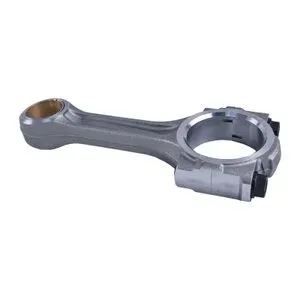
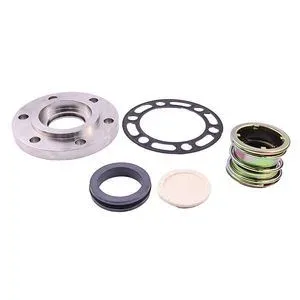
Engine System-Matched Supply — Connecting rod grade confirmed against crankshaft journal condition and engine serial variant before dispatch
Technical Specifications
| Parameter |
Value |
| Product Type |
Connecting Rod |
| Compatible Engine |
Hino J08E, J08ET, J08E-VC |
| Machine Fitment |
Kobelco SK260-8, SK330-8, SK350-8, SK350LC-8 |
| Material |
Forged 42CrMo alloy steel |
| Heat Treatment |
Quench-and-temper (28–32 HRC) (source value — verify against manufacturer catalog) |
| Pin Bore Tolerance |
±0.01 mm (source value — verify against manufacturer catalog) |
| Surface Finish |
Ra ≤0.8 μm (source value — verify against manufacturer catalog) |
| Anti-rust Coating |
ISO 8502-3 compliant anti-rust oil (source value — verify against manufacturer catalog) |
| Warranty |
12 months against manufacturing defects |
| MOQ |
1 piece |
| Standards |
ISO 9001, JIS G4105, ISO 4287, ISO 8502-3 |
Application Suitability
| Engine System |
Related Components |
| Block & Rotating Assembly |
Crankshaft journals, main bearings, con rod bearings, thrust washers |
| Piston & Cylinder Group |
Piston assemblies, piston pins, cylinder liners, piston rings |
| Lubrication Circuit |
Oil pump, oil cooler, full-flow and bypass filters, gallery plugs |
| Gasket & Seal Set |
Rod bearing cap nuts, main bearing cap bolts, sump gasket, rear main seal |
Why an Engine Rebuild Fails Before the First Hour
A Hino J08E connecting rod engine rebuild often fails not because of the rod itself, but because the surrounding system was never dimensionally reconciled before assembly. The rod, bearings, crankshaft journals, and pistons must be ordered as one matched system, not as isolated line items.
Rebuild shops regularly encounter crankshafts that have been ground to an undersize during a previous overhaul, yet the new rods and bearings are ordered at standard size. The resulting clearance mismatch produces bearing shell wipe within the first few hundred operating hours. In other cases, the root cause of the original rod failure — lubrication starvation from a blocked oil gallery, excessive combustion pressure from a failing injector, or turbo over-boost — is never diagnosed, so the replacement rod inherits the same destructive conditions. [NEED_CITE: diesel engine connecting rod failure root cause analysis methodology]

Matching the Rod to the Bottom-End Assembly
The Hino J08E connecting rod engine rebuild process begins with understanding that this component sits at the center of a tightly toleranced rotating assembly. It transfers combustion loads from the piston to the crankshaft journal, meaning its big-end bore, pin bore, and weight class must align with the crankshaft condition, the bearing shell grade, and the piston assembly mass. Supplying a rod in isolation without confirming the state of these adjacent components shifts the failure risk onto the entire bottom end.
Engine Serial Variants and the Oversize Trap
Internal geometry across J08E, J08ET, and J08E-VC variants is not identical. Differences in piston crown profile, compression height, and rod length appear across production batches and emissions-tier updates. [NEED_CITE: Hino J08E engine serial variant identification guide] A workshop in Jakarta once received rods for a J08E based solely on machine model — the big-end bore width differed by several millimeters from the engine variant actually installed, forcing a hard press that destroyed the bearing shells during break-in. Confirming the engine serial number, not just the model badge, eliminates this class of error. After a previous rebuild, crankshaft journals may already be ground to 0.25 or 0.50 undersize; ordering standard-size rods and bearings for a reground crank guarantees premature bearing failure.
How Forged 42CrMo Steel Handles Cyclic Loading
The 42CrMo alloy steel forging provides a balance of tensile strength and fatigue resistance suited to the high cyclic loads inside a turbocharged diesel block. Quench-and-temper heat treatment targets 28–32 HRC, placing the material in a range that resists crack initiation at the bolt bore and big-end transition radii without becoming brittle under shock loads. The ±0.01 mm pin bore tolerance maintains the interference fit with the piston pin, preventing pin float and the resultant scoring of the small-end bushing. Surface finish at Ra ≤0.8 μm on the bearing bore reduces micro-asperity contact during the critical boundary-lubrication phase of each crankshaft revolution, extending bearing shell life before hydrodynamic film fully establishes. [NEED_CITE: metallurgical requirements for forged steel connecting rods in heavy-duty diesel engines]
The Cost of Skipping System-Level Verification
When a connecting rod is replaced without diagnosing why the original failed, the new component enters the same destructive environment. Lubrication starvation from a clogged oil passage, a worn oil pump, or incorrect oil viscosity will starve the big-end bearing within hours of operation, wiping the shell and scoring the crankshaft journal beyond repair. Excessive cylinder pressure from a sticking injector nozzle or a boost control fault overloads the rod in compression, accelerating fatigue crack growth at the shank. Shops that replace the rod without addressing these system faults face repeat teardowns, and each successive rebuild increases the likelihood that the crankshaft will need replacement rather than regrind.
What This Supply Channel Delivers
Selected production lines run in our own facility, while the remainder is sourced from qualified ISO-certified partners — both carry identical quality control and warranty terms, so a rod from either source performs to the same standard. Eight product categories under one account mean the rod ships alongside the matching bearing shells, gasket set, and piston rings in a single consignment, eliminating the delays caused by coordinating multiple suppliers. Minimum order starts at one piece, so a single-cylinder emergency repair does not require buying a full engine set. Identification support covers engine serial numbers, machine model plates, and workshop photographs when nameplates are illegible. Cross-reference verification accounts for superseded and alternate part numbers. Samples are available for fitment confirmation before any bulk commitment. The technical team confirms bearing grade and oversize requirements against your crankshaft journal measurements.
Documentation & Verification
- Commercial invoice and packing list itemizing each rod by weight class and matched set number
- Part compatibility and cross-reference sheet for J08E, J08ET, and J08E-VC variants (reference only)
- Dimensional inspection record covering big-end bore, pin bore, and center distance tolerances
- Material certification confirming 42CrMo grade and heat treatment hardness
- Packing photographs showing anti-rust coating and protective wrapping per rod
- HS code and customs documentation support for engine component export
Installation & Rebuild Sequence
- Verify crankshaft journal diameter and out-of-round before selecting bearing shell grade
- Clean all oil galleries in the block and crankshaft with solvent and compressed air
- Assemble rod with matched bearing shell and check crush height before torquing cap bolts
- Confirm rod side clearance on each crankpin with feeler gauge after final torque
- Prime the lubrication system and verify oil pressure at the gallery before first start
Preparing Your Enquiry
Provide the exact engine variant designation (J08E, J08ET, or J08E-VC) along with the engine serial number so internal component differences can be confirmed. If the crankshaft has been previously reground, share the current journal measurements so the correct bearing grade and oversize can be matched to the rod. For a complete bottom-end overhaul kit, send the full list of required components to ensure no items are missed for your specific engine build.
Frequently Asked Questions
Q: What other components should be replaced together with the connecting rod during an overhaul?
A: A full bottom-end overhaul should include matched con rod bearing shells, main bearings, thrust washers, piston ring sets, and the complete gasket kit. If the crankshaft journals show scoring or exceed wear limits, regrind or replacement is necessary. Reusing old bearing shells with a new rod transfers prior wear patterns and compromises clearance specifications.
Q: How do I determine the correct bearing grade if my crankshaft has been previously reground?
A: Measure each crankshaft journal with a micrometer to determine its current diameter. Compare these readings against the engine manufacturer's service manual specifications for standard, 0.25, and 0.50 undersize grades. The bearing shell grade must match the reground journal dimension, not the original factory specification.
Q: Are internal parts identical across J08E, J08ET, and J08E-VC engine variants?
A: No. These variants differ in piston crown design, compression ratios, and sometimes rod dimensions depending on production batch and emissions tier. Ordering solely by engine family name risks fitment and clearance errors. The engine serial number is required to confirm the correct internal component configuration.
Q: What system-level faults should I check to prevent the new rod from failing prematurely?
A: Investigate lubrication system health including oil pump output, gallery blockages, and oil cooler condition. Check fuel injection timing and injector spray pattern for signs of over-fueling or secondary injection. Verify turbo boost pressure and wastegate operation to rule out excessive cylinder pressure.
Q: Can I order a complete matched rod set with bearings and piston assemblies as one kit?
A: Yes. Matched weight sets are available alongside bearing shells, piston assemblies, rings, and gaskets configured for your specific engine serial variant. Consolidating these into one order ensures dimensional compatibility across the entire rotating assembly and simplifies inventory management.